Digital Health Anxiety | Online Self-Diagnosis | Book Design
“SQUIGGLE TIME NOW” WORKSHOP
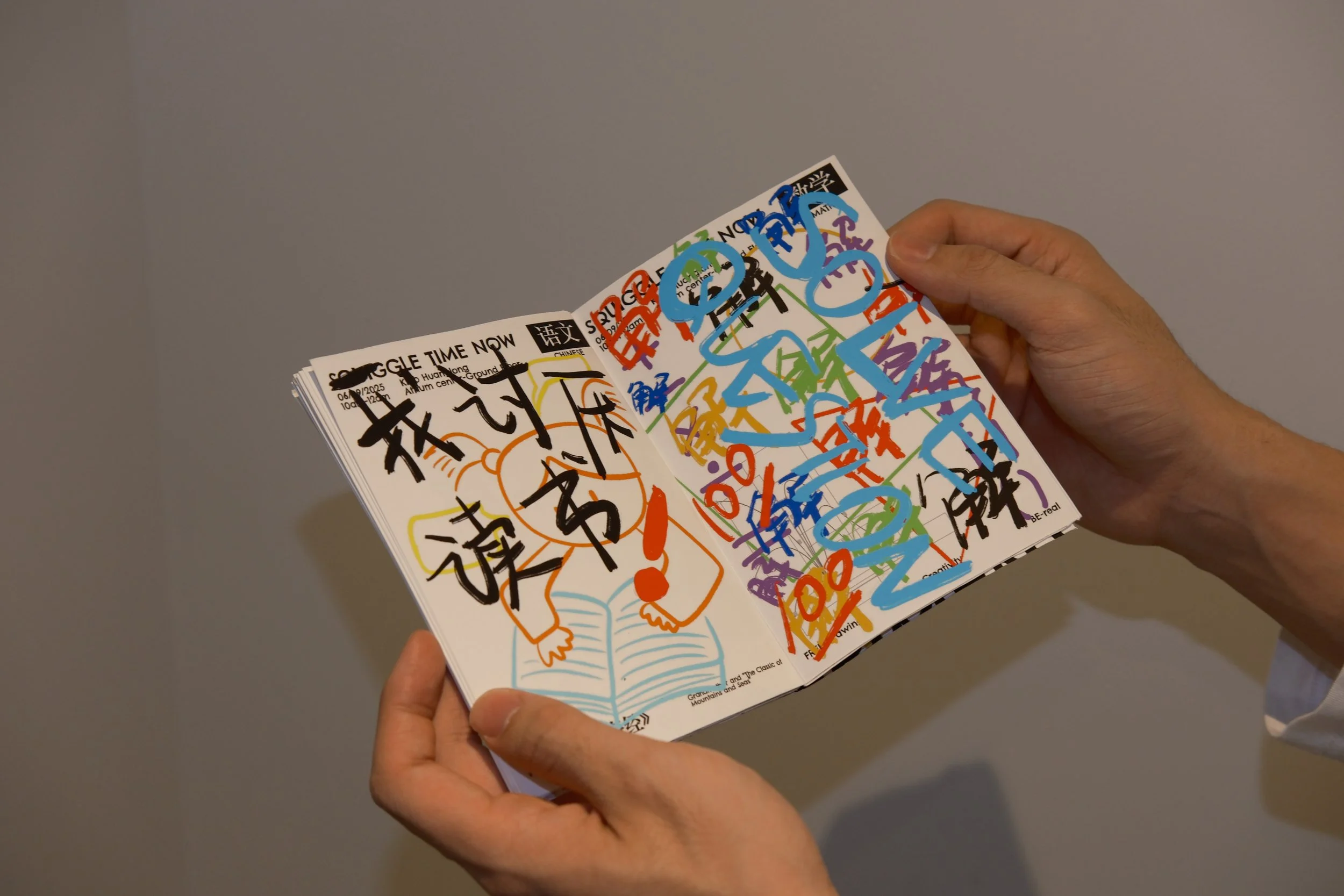
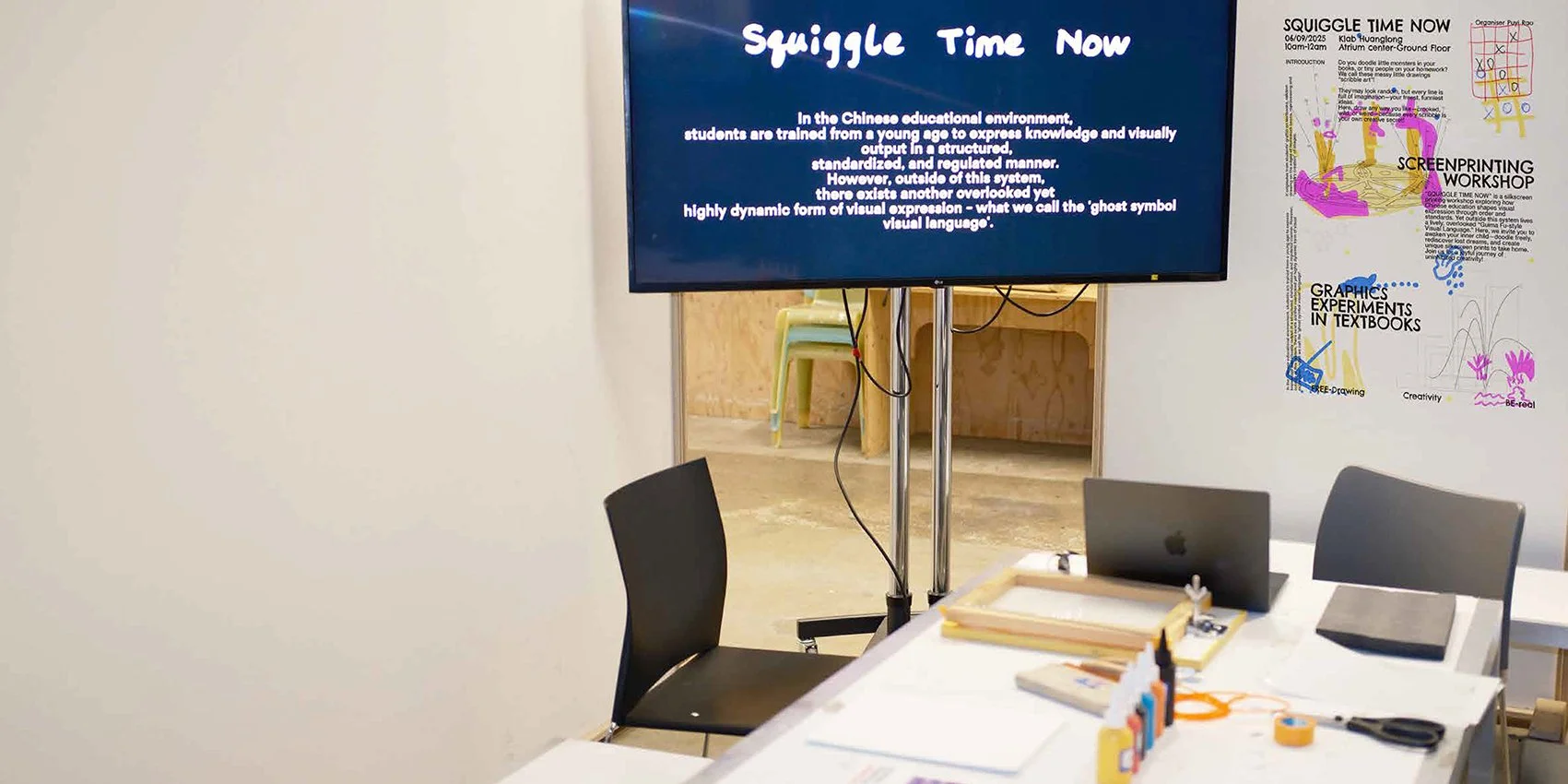
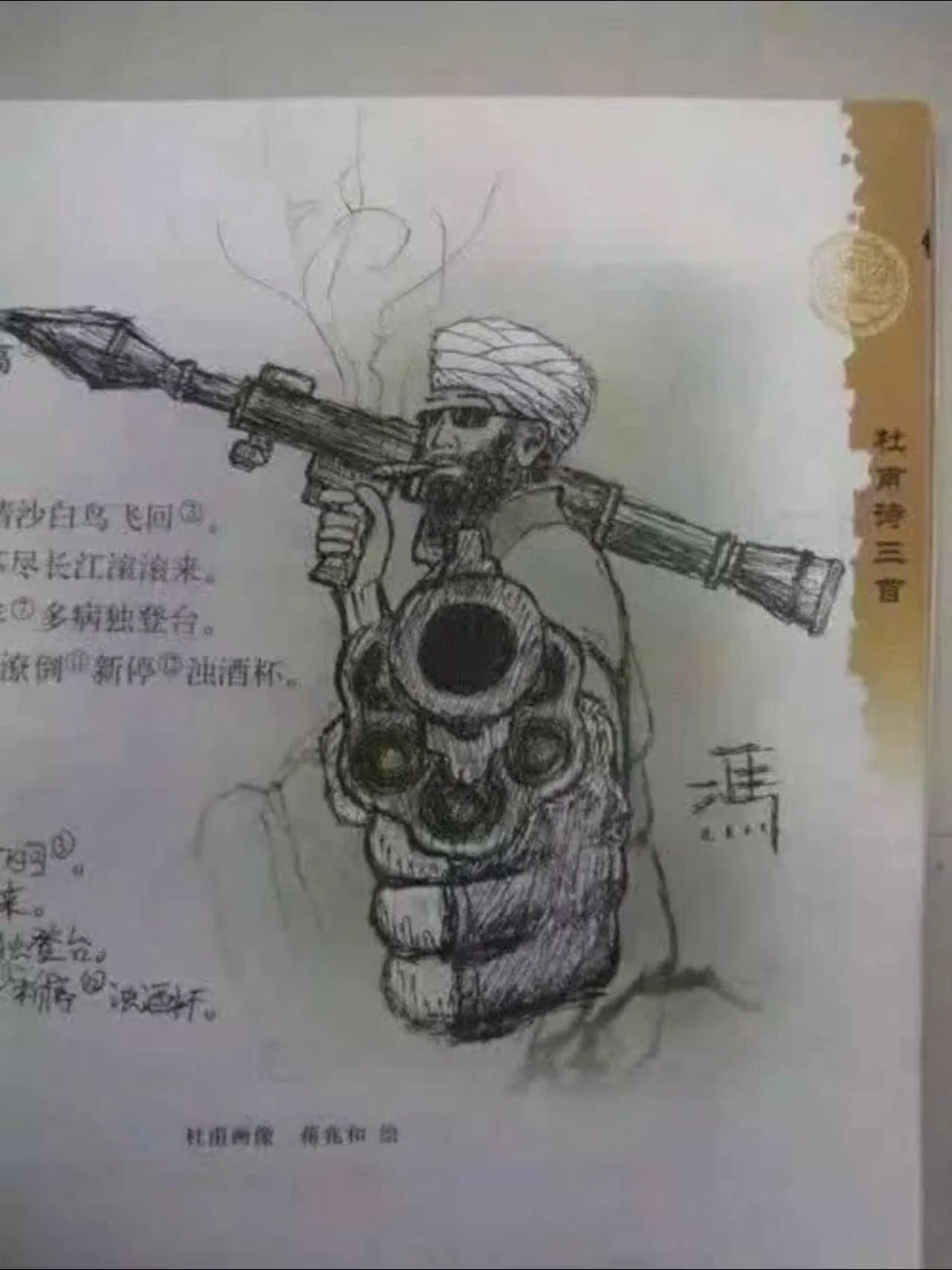
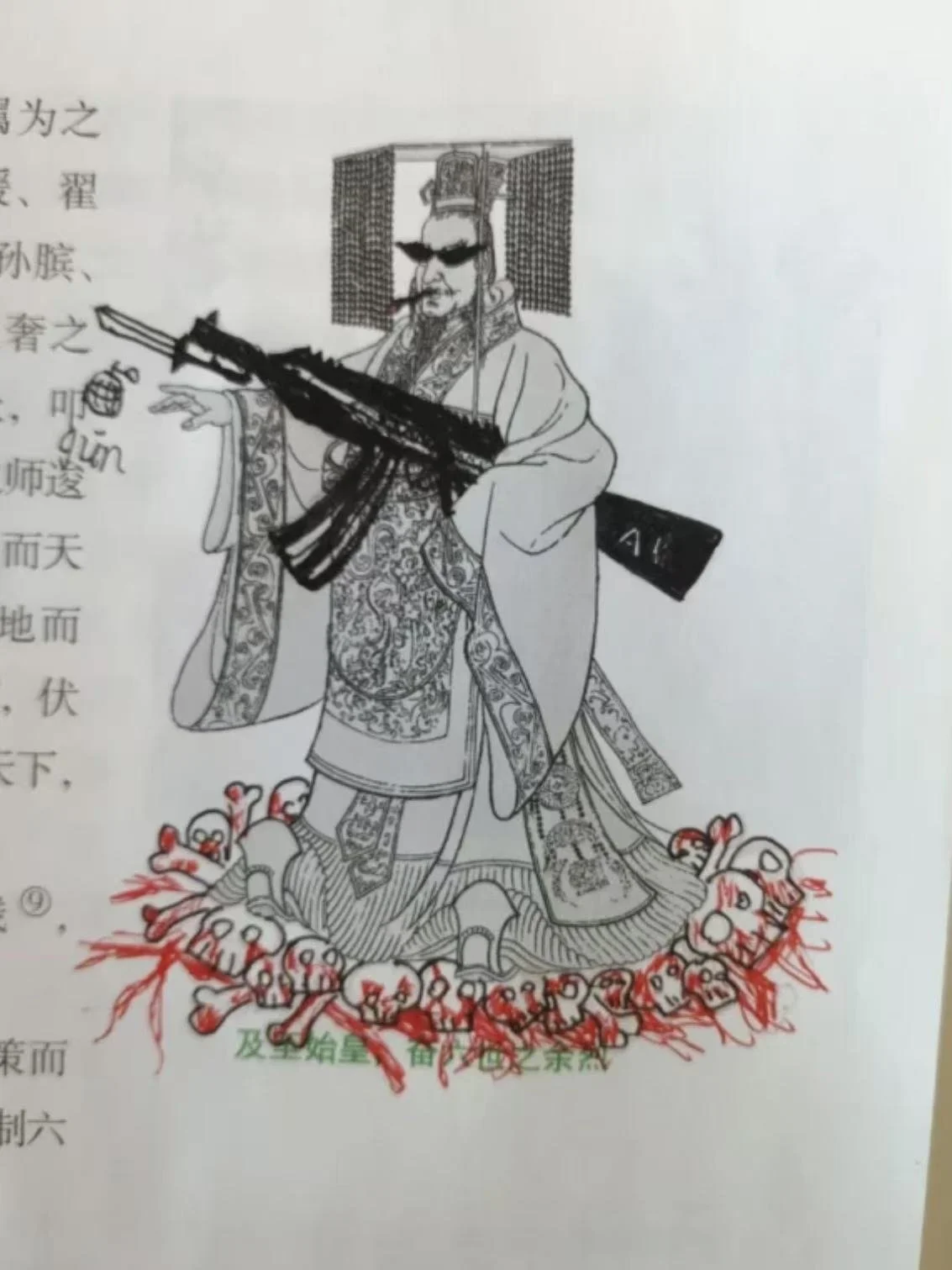
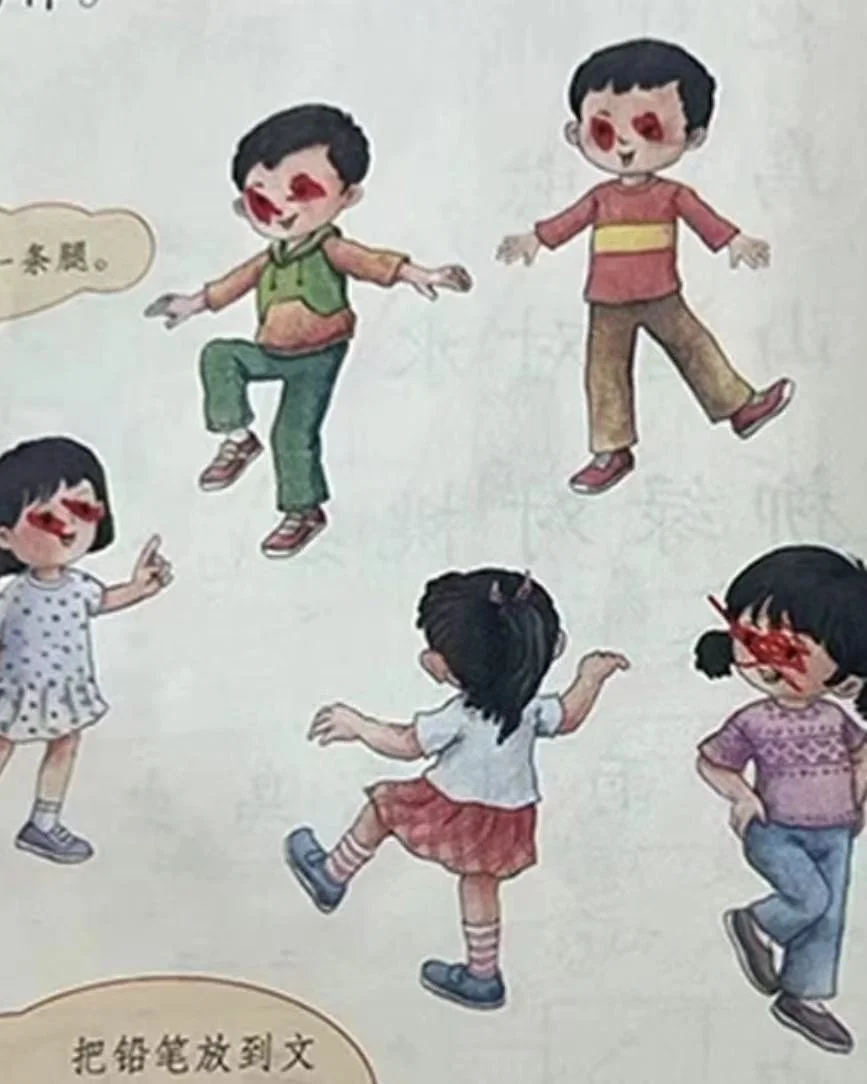
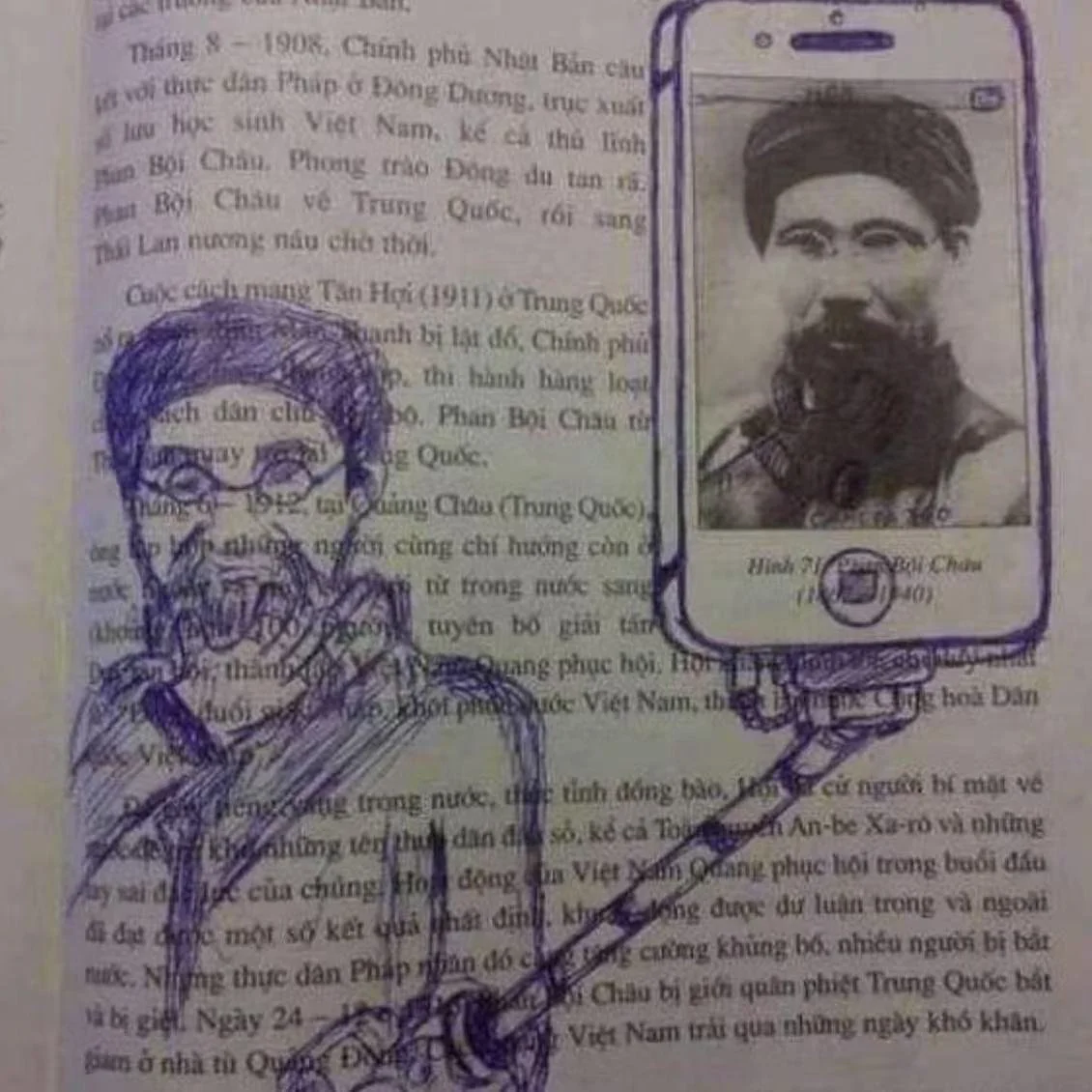
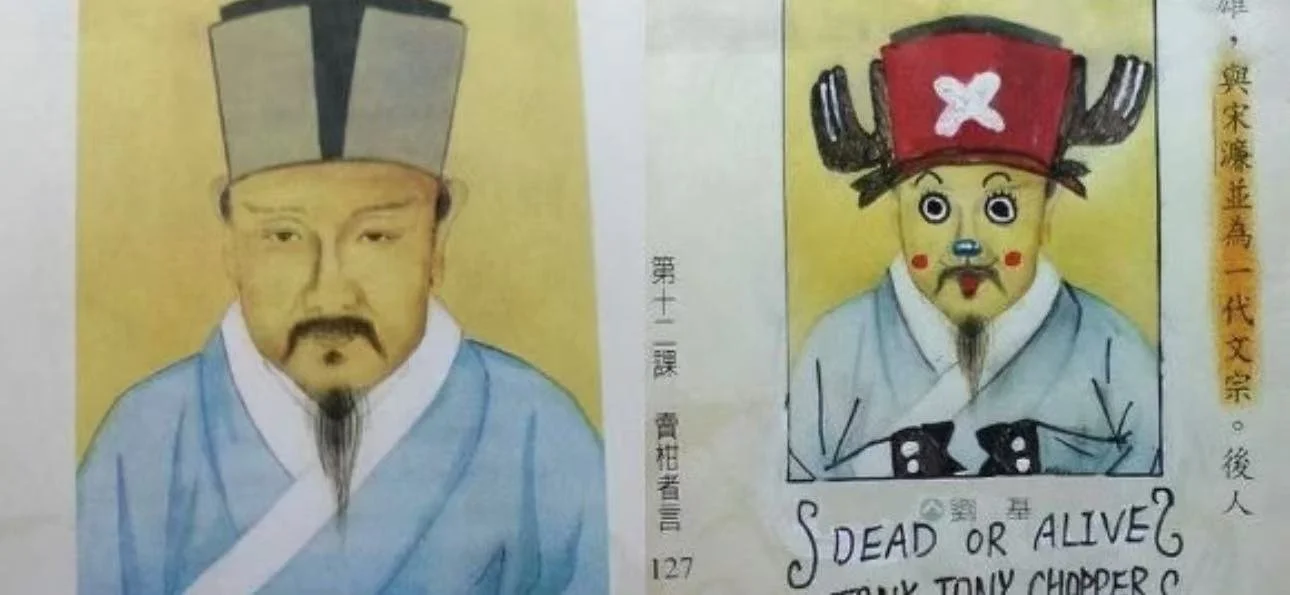
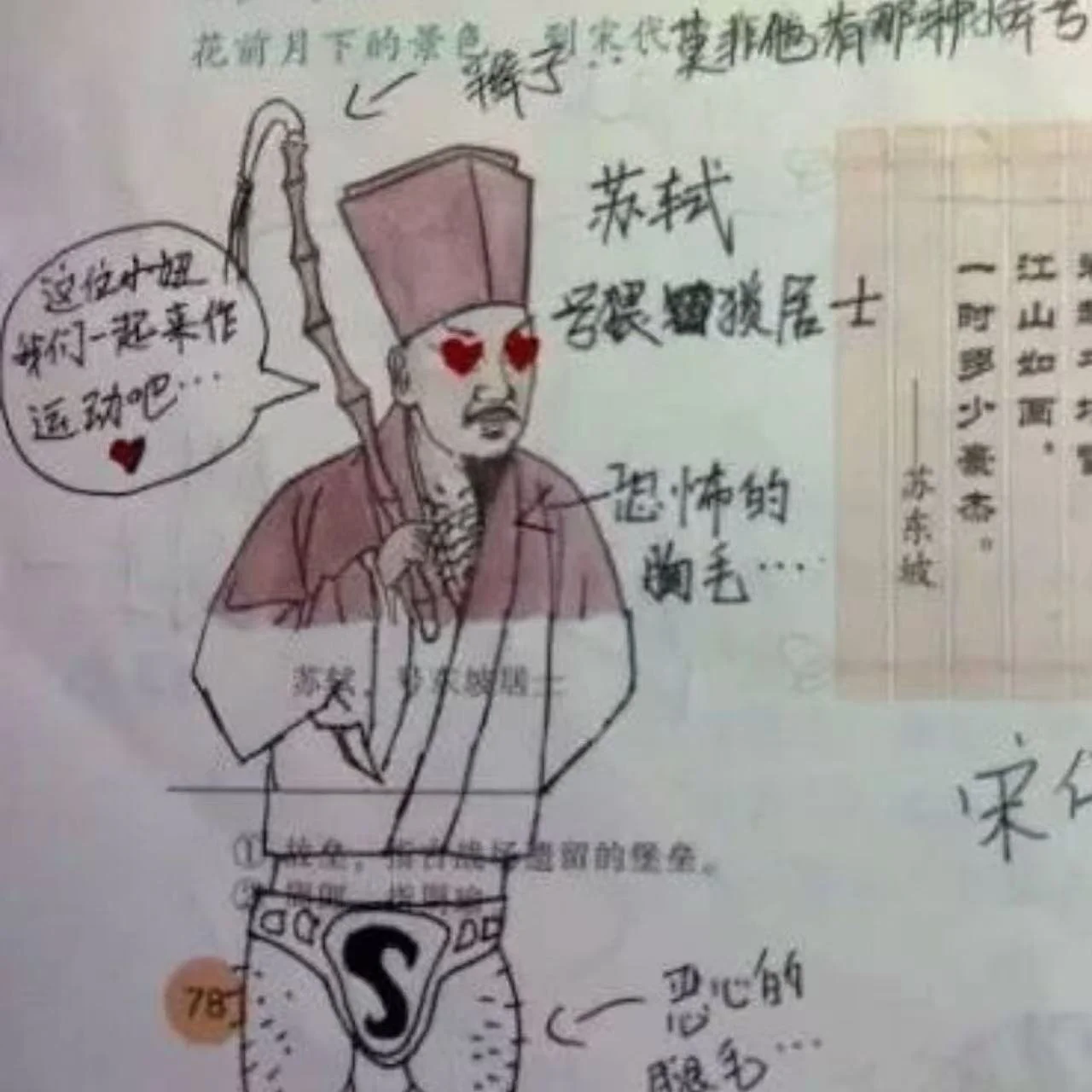
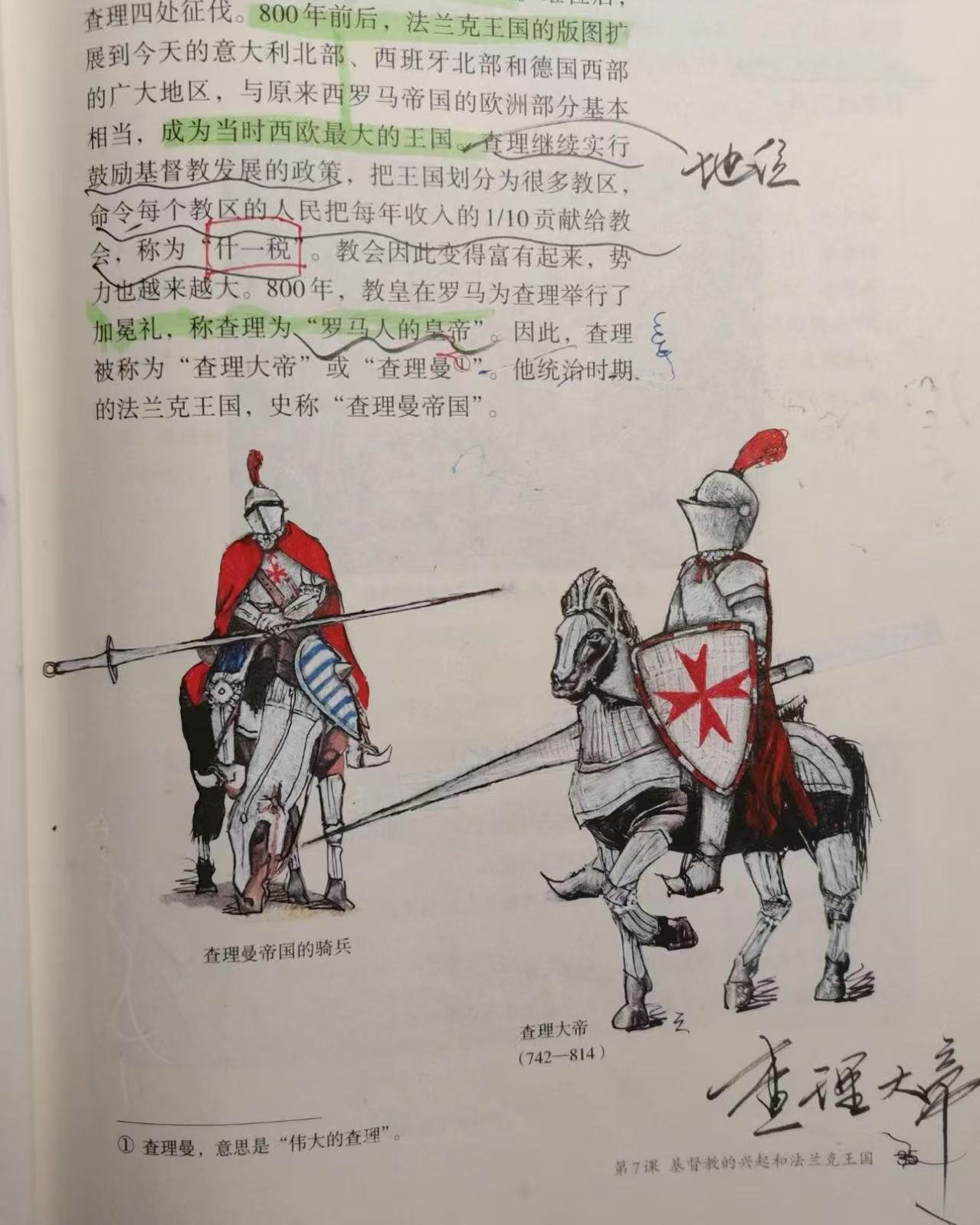
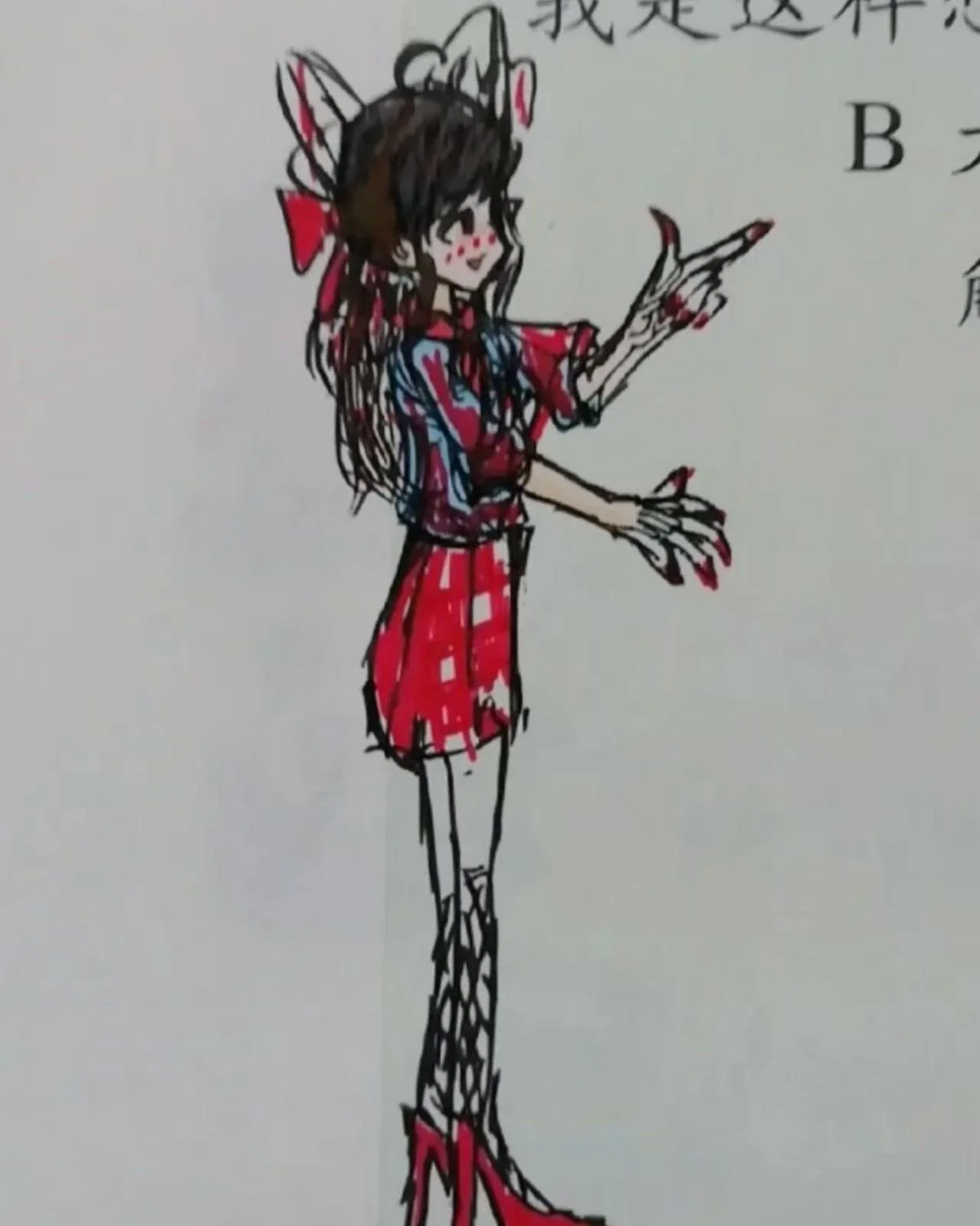
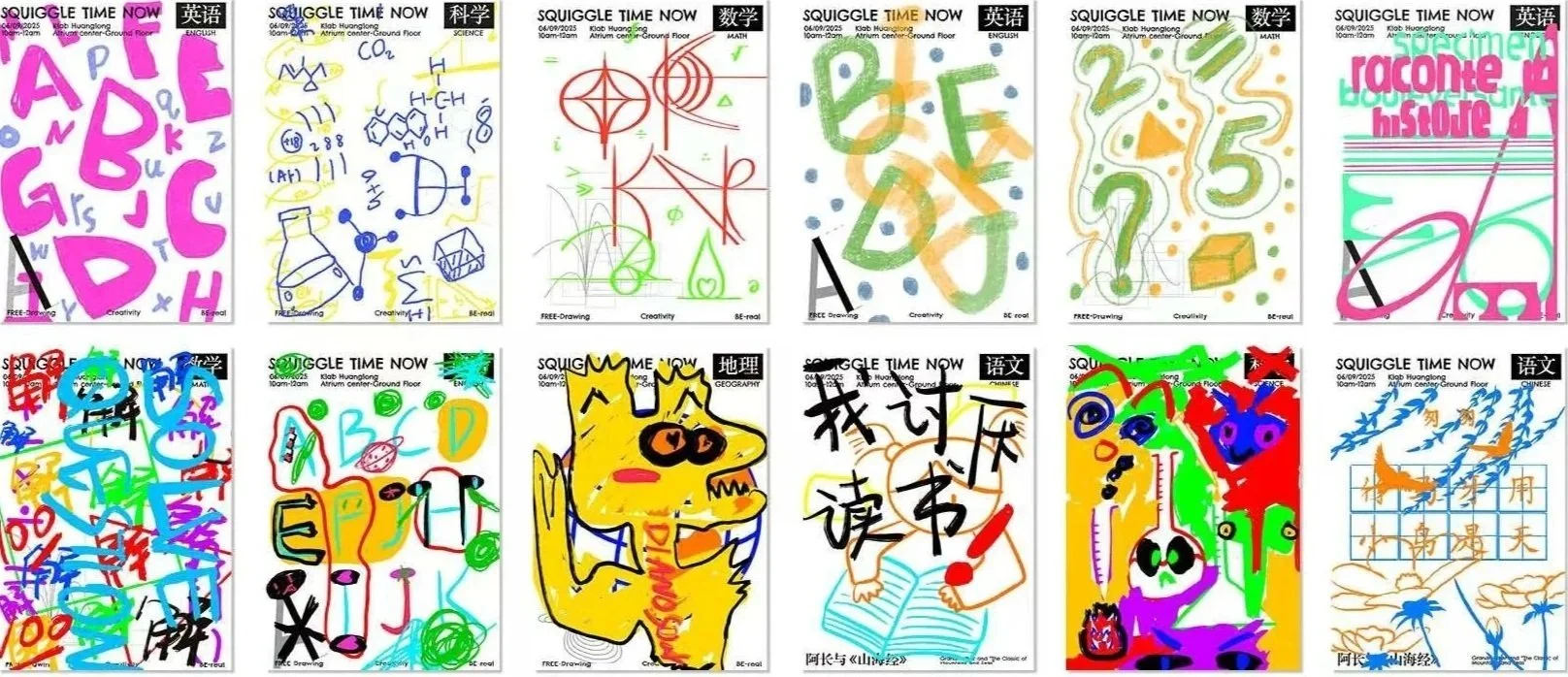
SQUIGGLE TIME NOW focuses on the “Guimafu-style Visual Language” — a spontaneous and vibrant form of visual expression that quietly emerges on the fringes of China’s exam-oriented education system. Originating from students’ casual doodles on textbooks and notebooks, these untrained, unpolished marks serve as outlets for emotion and traces of wandering thoughts. Through a silkscreen printing workshop, this project invites participants to reconnect with their inner child and creative instincts, rediscovering raw creativity and gentle resistance in what is often dismissed as “mistakes” or distractions.
STARTING POINT
01.SECOND-HAND RESEARCH-THE PHENOMENON IN CHINESE SCHOOLS
Oppressive Learning Space
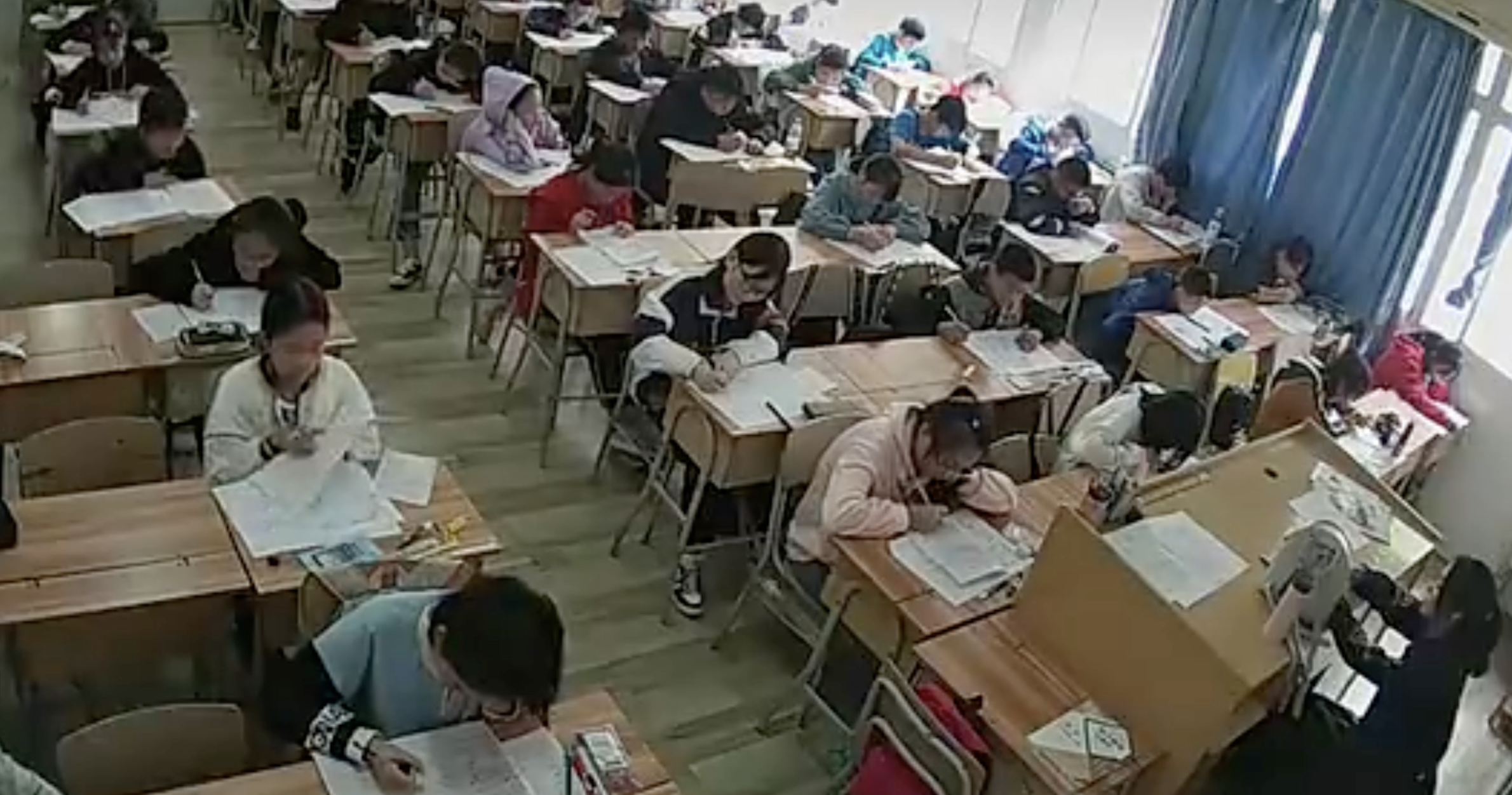
Taking place in a real classroom, students are tense about preparing for the high school entrance exam, studying diligently with no time for breaks during class.
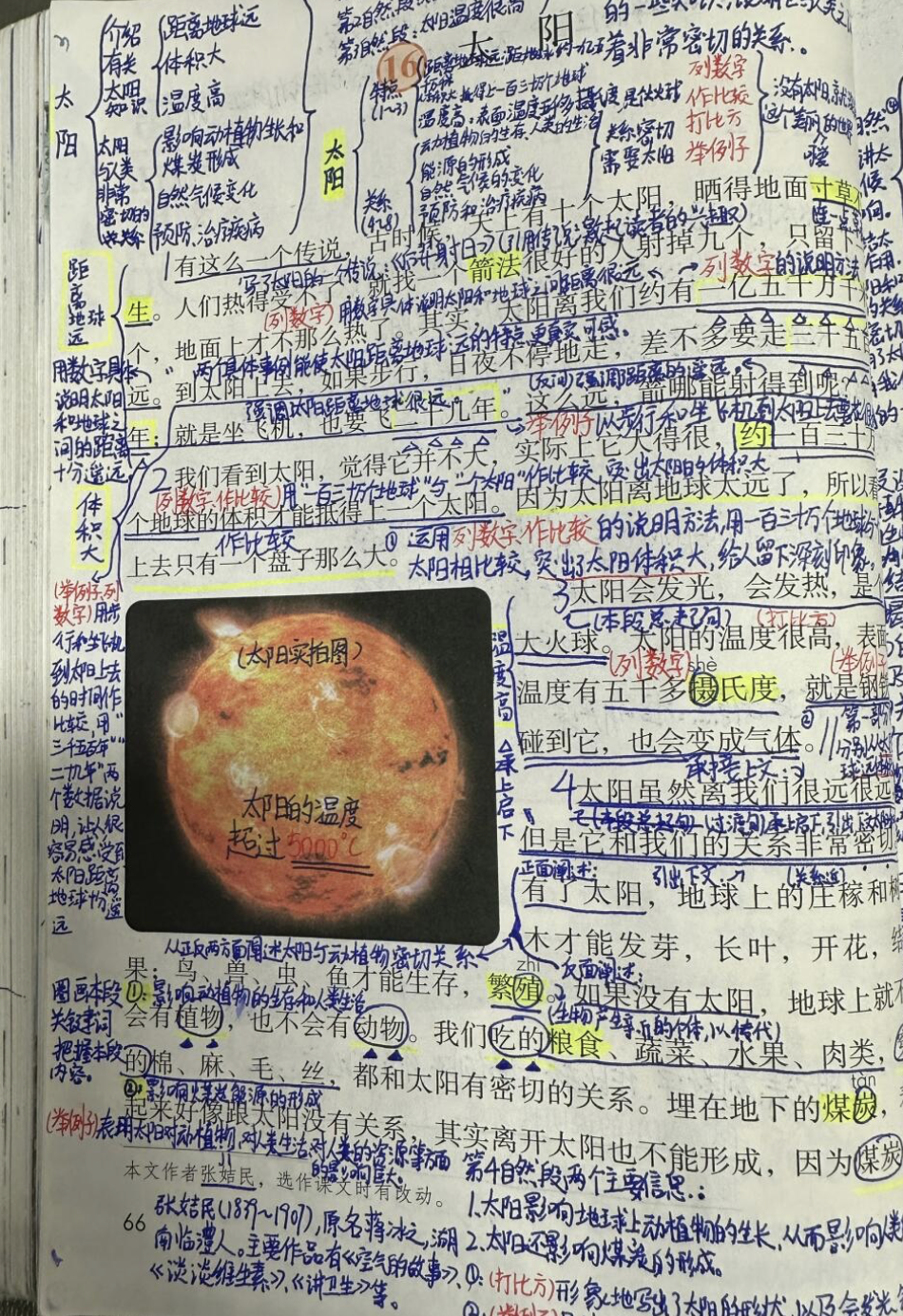
Students' class notes
Students are required to use different colored pens to highlight their class notes, and they must write in standard regular script. The more detailed and extensive the notes are, the more it shows that the student is taking the class seriously.
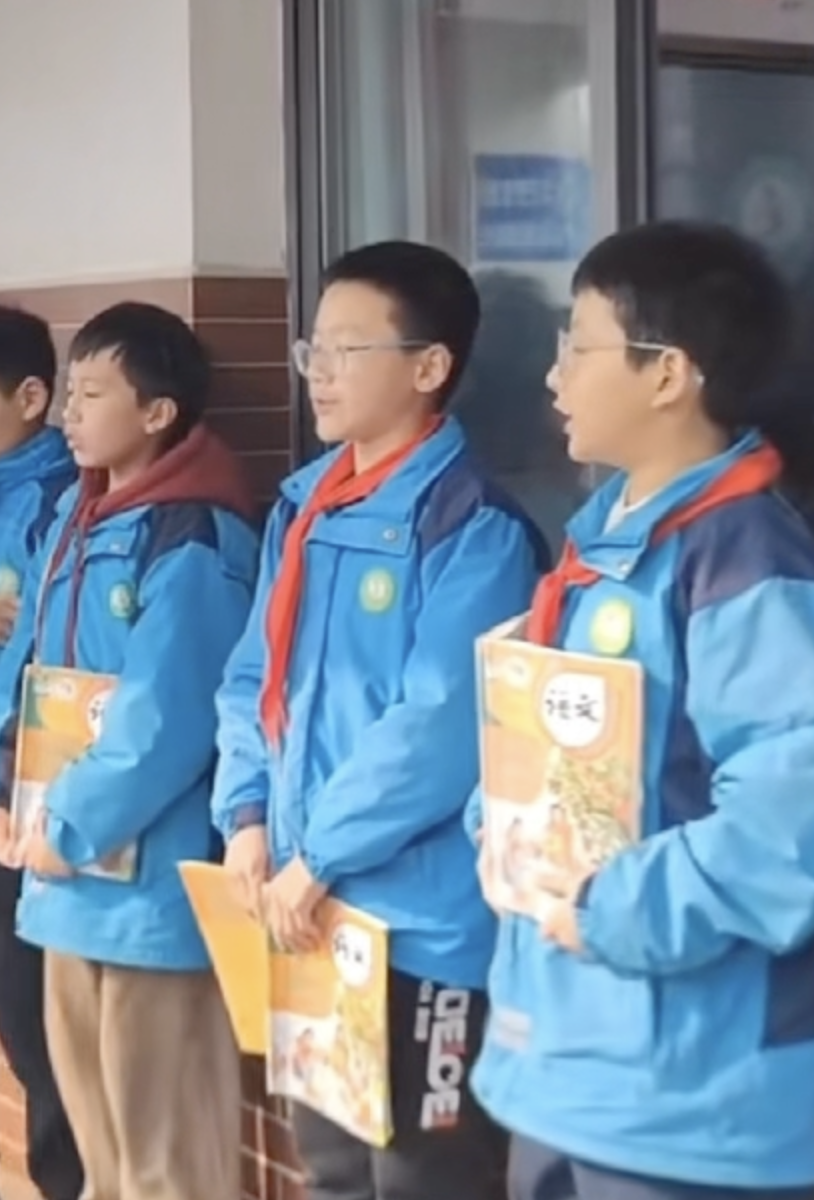
Morning reading outside the classroom
Whether in the morning or during breaks, students are required to recite texts aloud outside the classroom. Most of the texts in the books must be memorized completely, and those who cannot recite are punished with standing.
02.COLLECTING DOODLES FROM THE BOOKS.
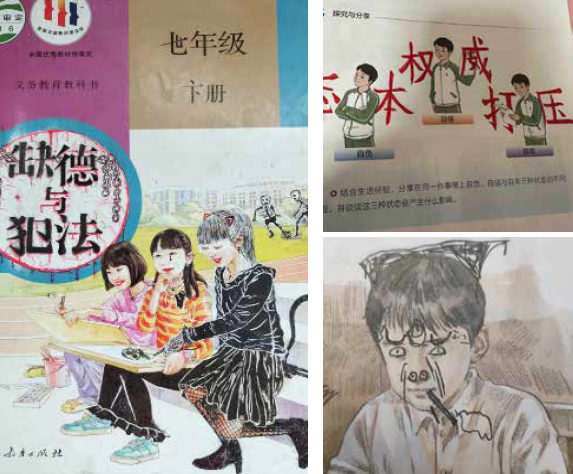
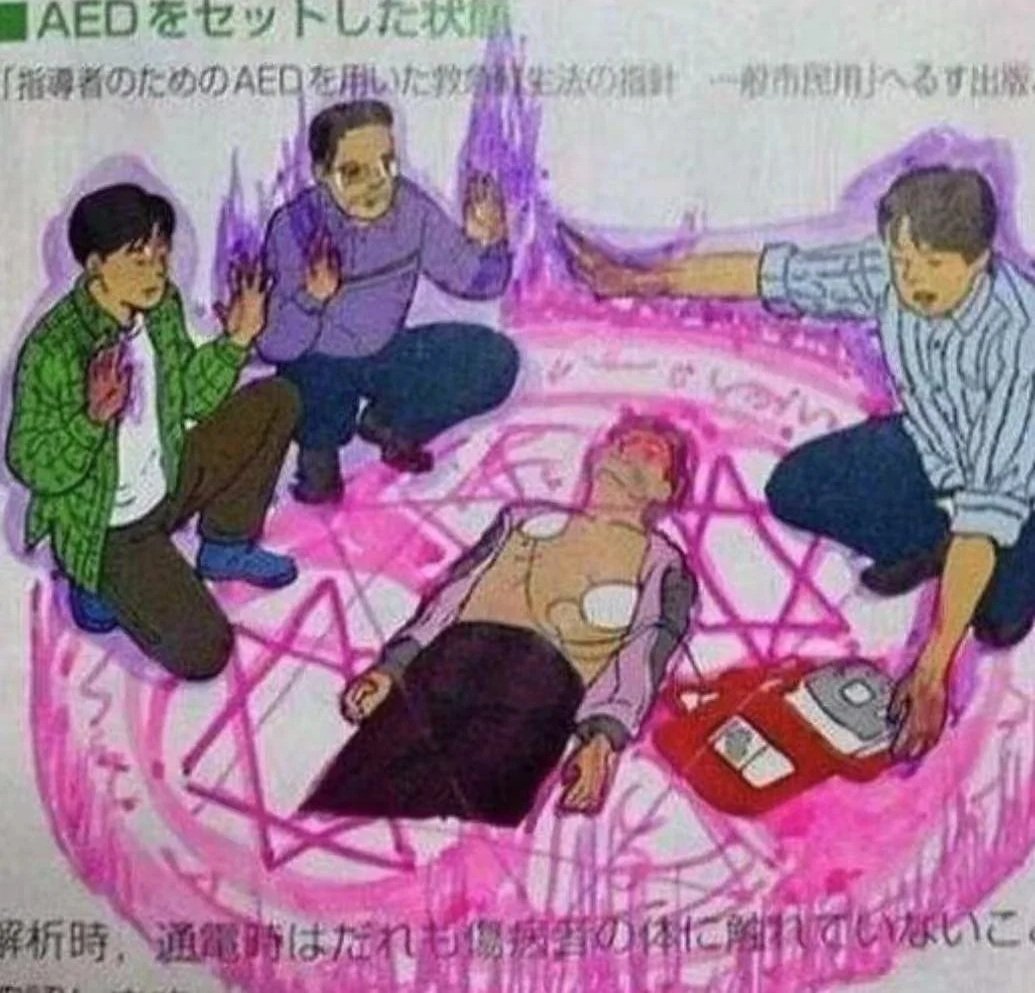
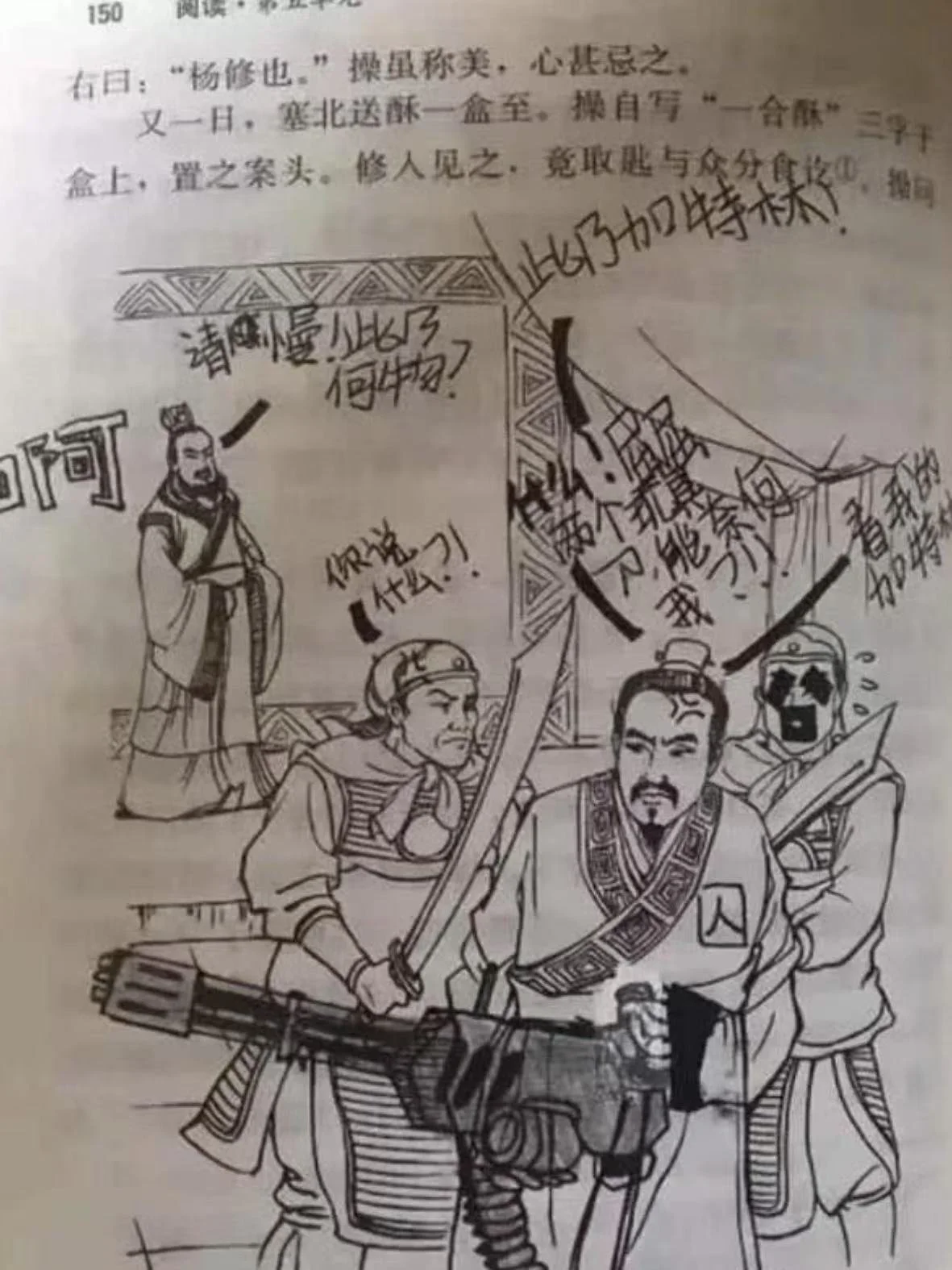
These are some authentic records of doodles on textbooks.
By chance, I observed my sister doodling some playful graffiti on her middle school textbooks. In the end, she was criticized by her teacher and mother for not studying well and not paying enough attention in class. I noticed that this phenomenon is very common in Chinese education. Students are trained from a young age to complete knowledge expression and visual output within a framework of order, norms, and standards. However, beyond this system, there exists another overlooked but vibrant form of visual expression — what we refer to as "squiggle Visual Language."
Research Question
Is "Guima Fu" an aesthetic of chaos or intuition?
Why do our handwriting become more orderly as we grow up?Why do we enjoy drawing in class?
BACKGROUND RESEARCH
CONCLUSION
The 'Squiggle' is not only a reproduction of childhood memories, but also an untrained but highly personalized form of image expression that truly records the wandering and bursting of thinking in non-linear states. It is a miniature rebellion against classroom order, a natural dismantling of standardized visual language, and the most authentic way of expression for a designer before being shaped.
FIRST-HAND RESEARCH
PROCESS
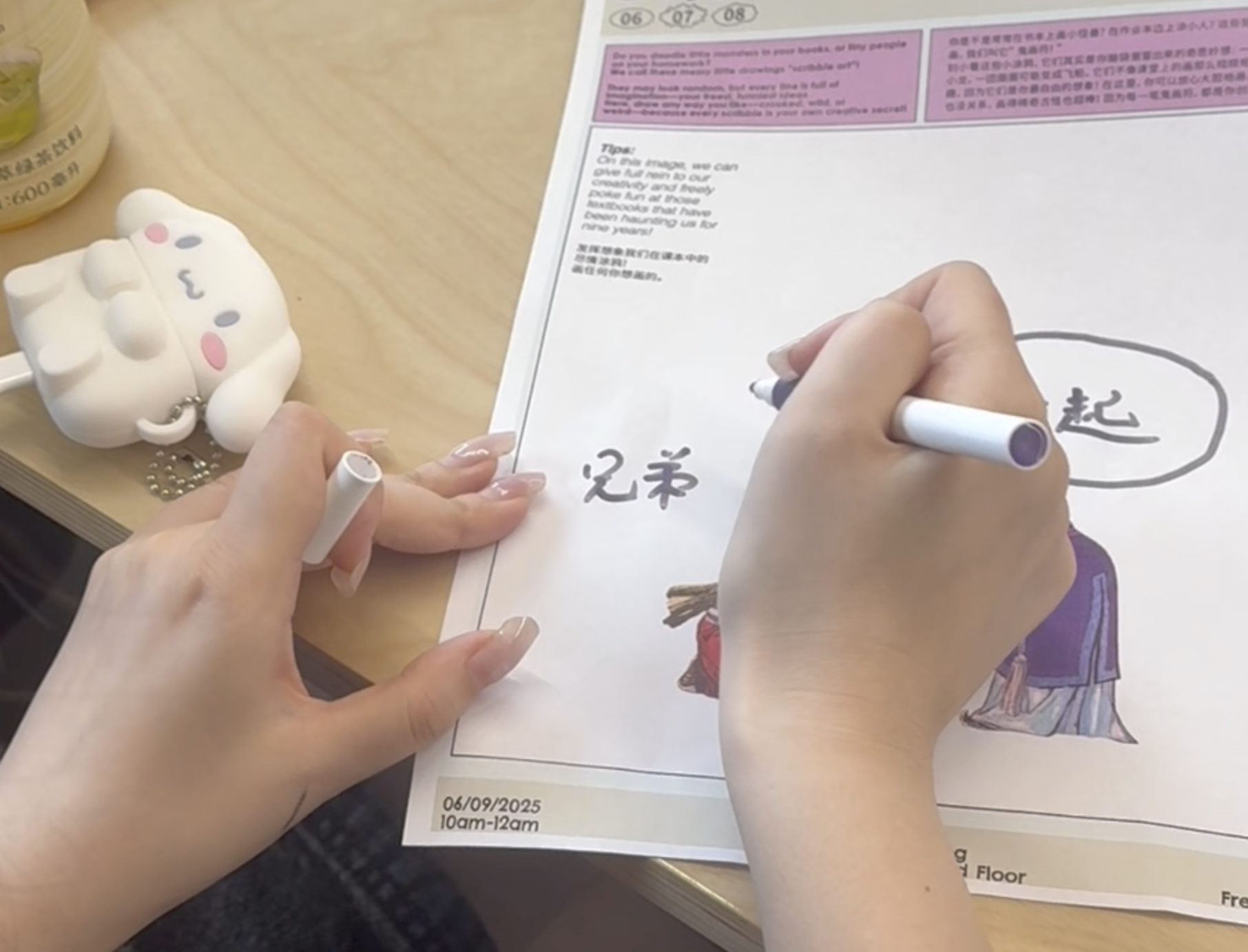
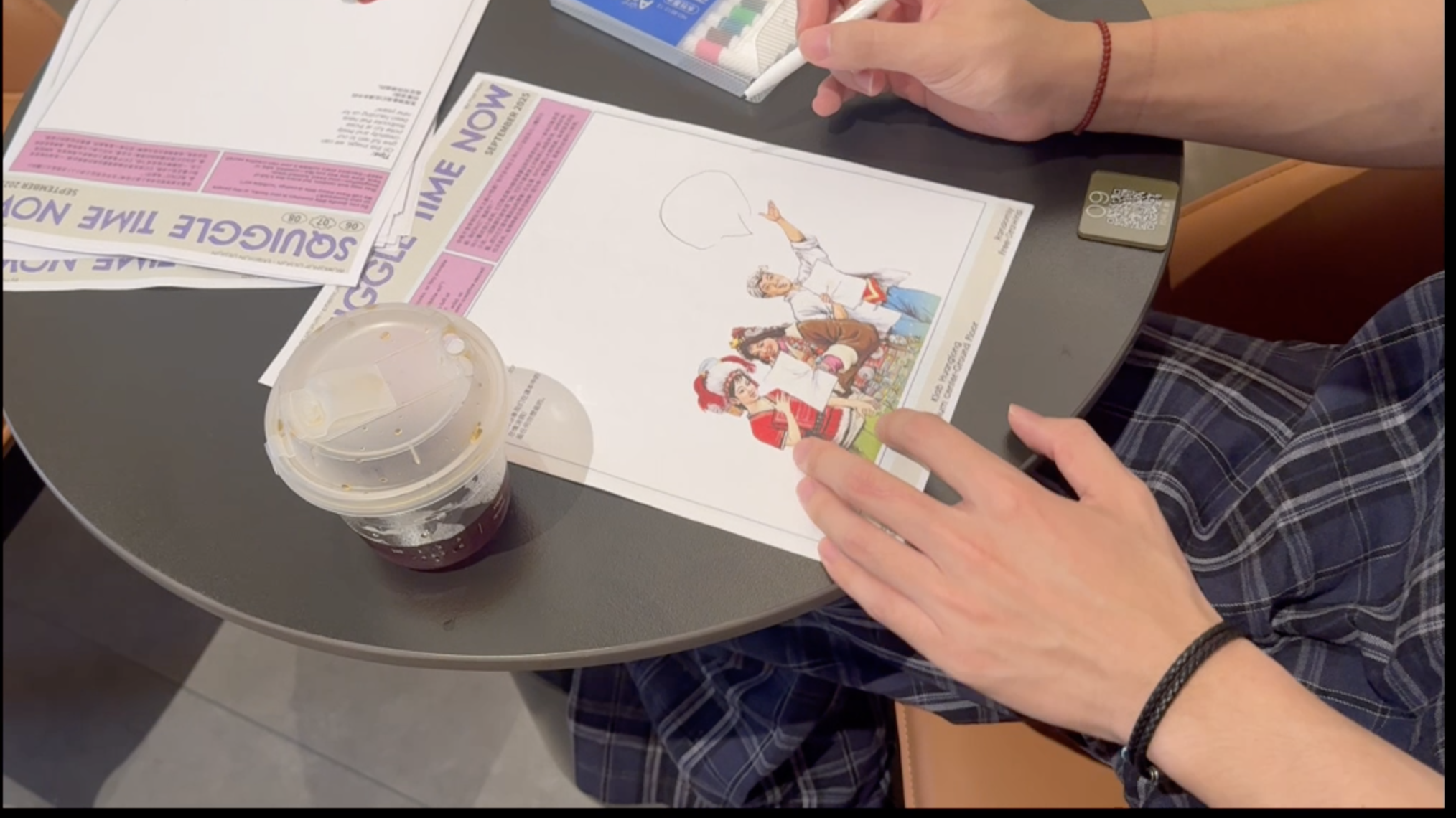
We collected drawings from thirty participants of different age groups.
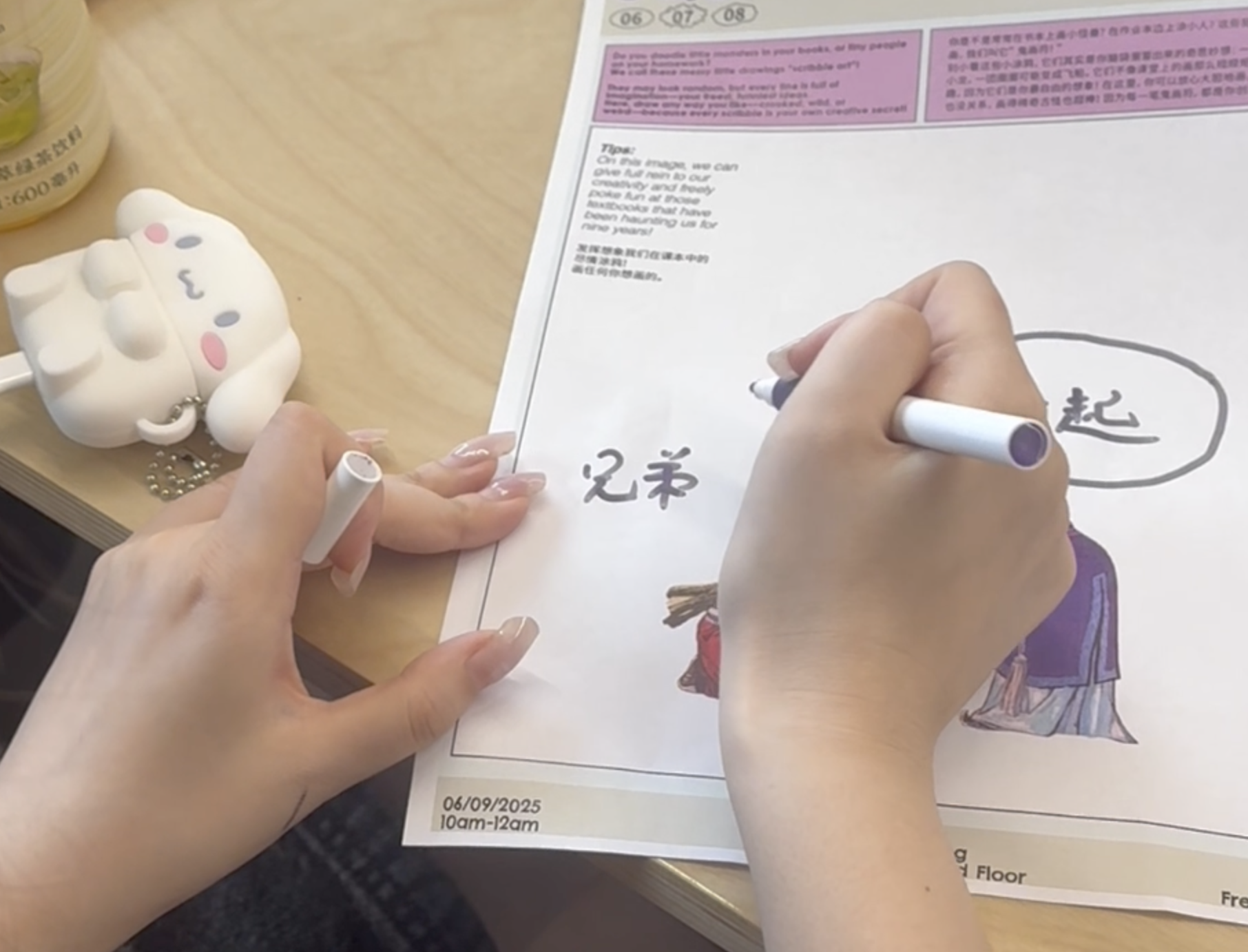
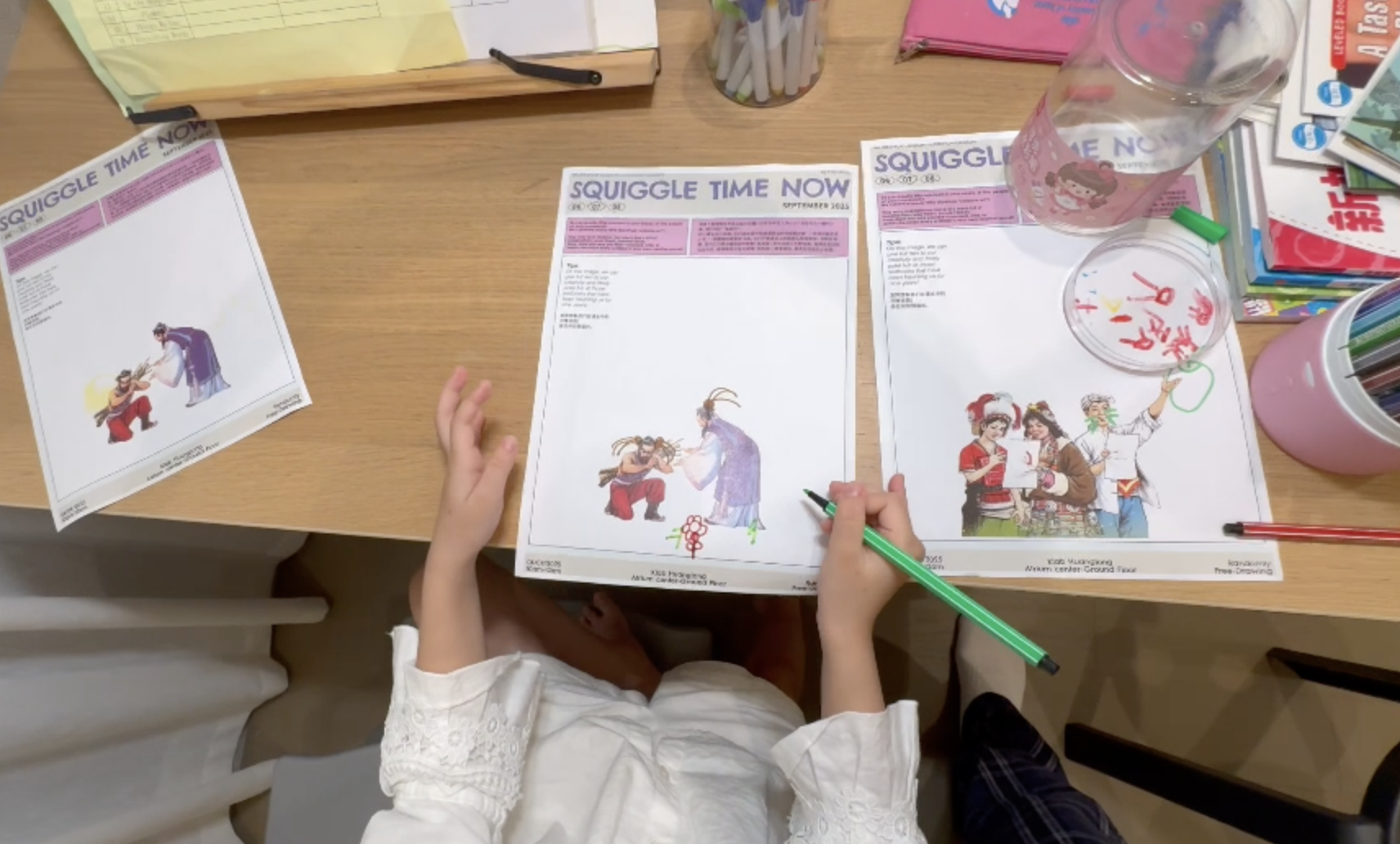
QUESTIONNIRE
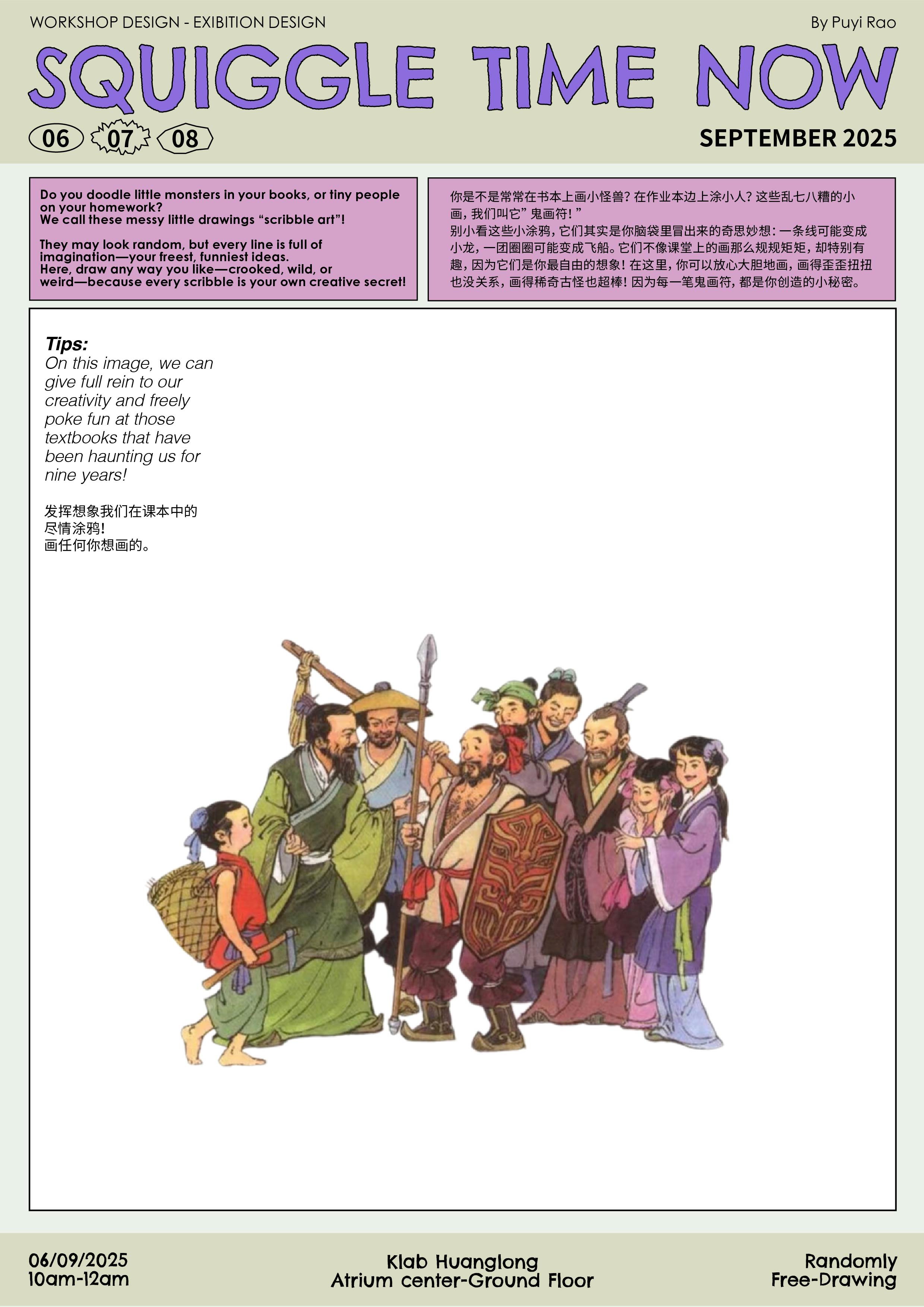
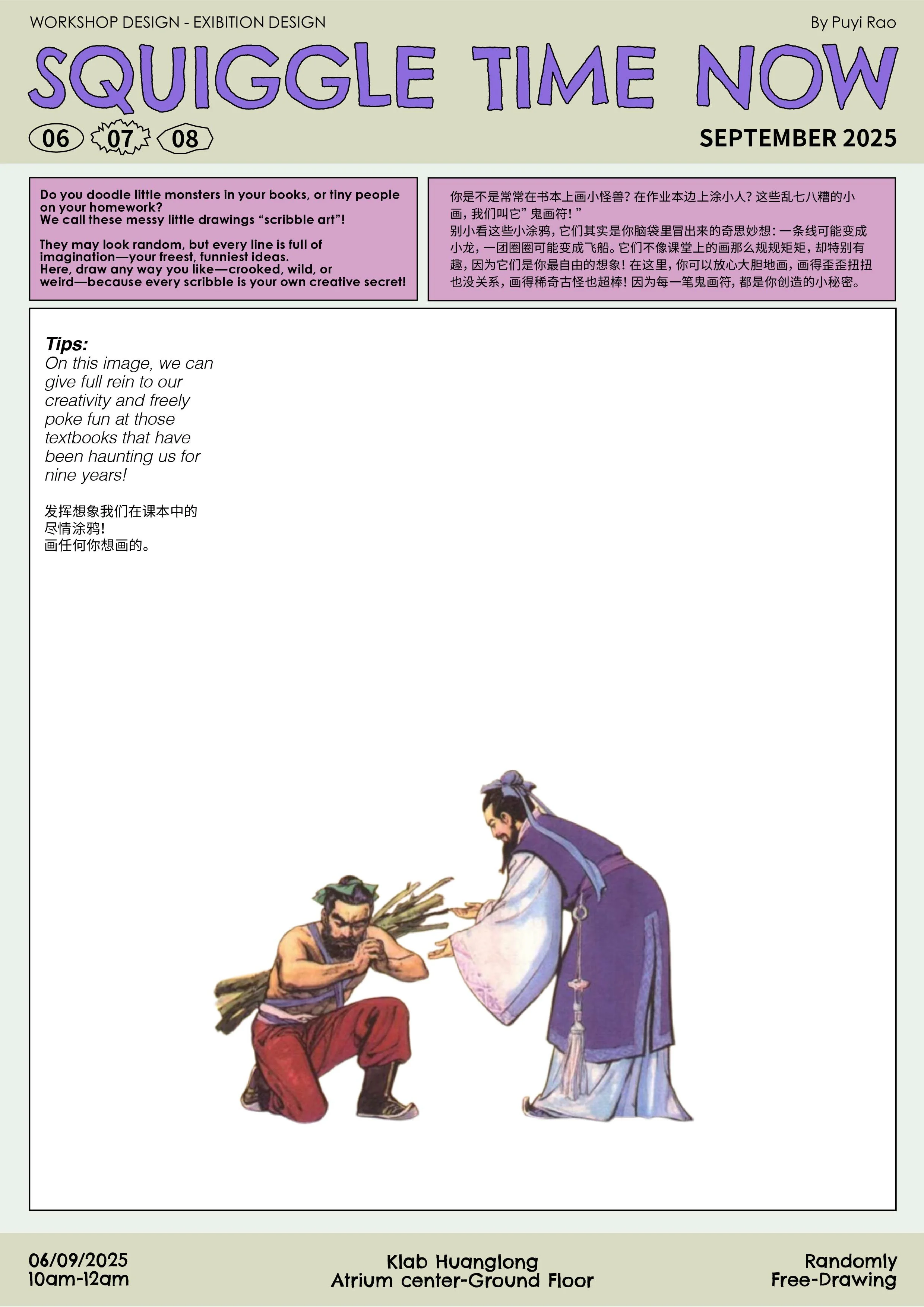
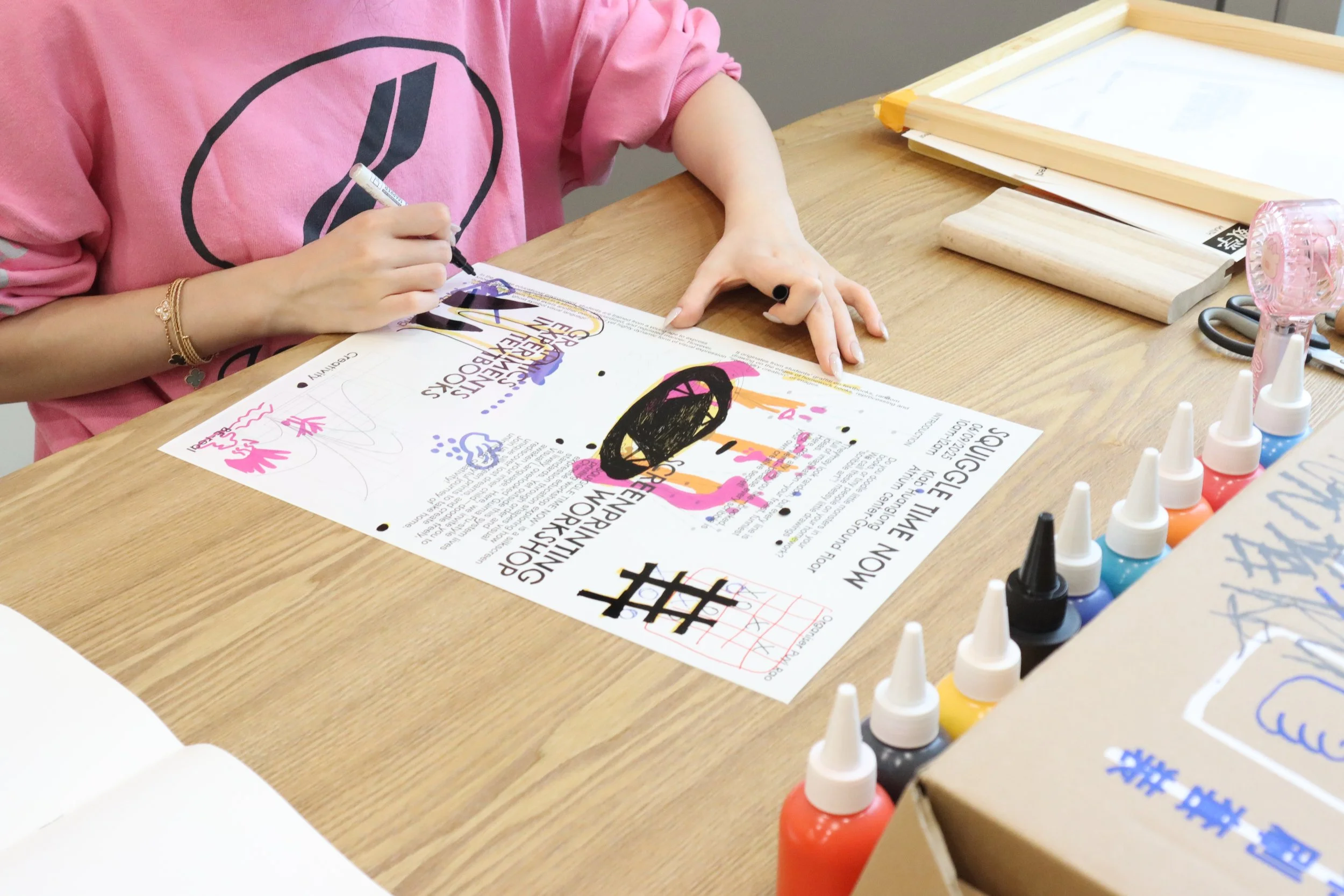
Before conducting street interviews, I created a questionnaire poster for the series, allowing participants to freely draw on the poster. During the process, I also added relevant textbook illustrations.
WORKSHOP CONCEPT
03.PROCESS
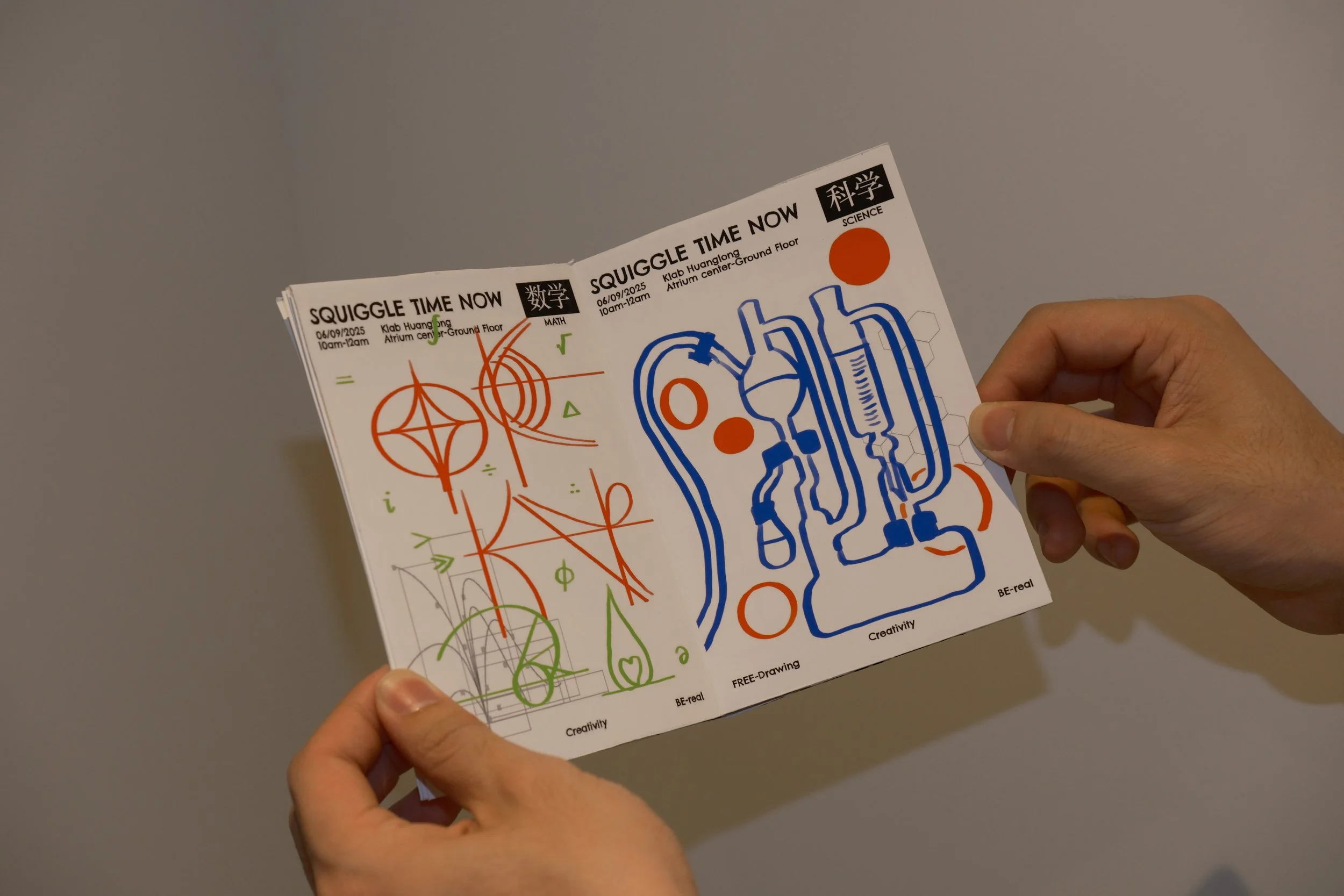
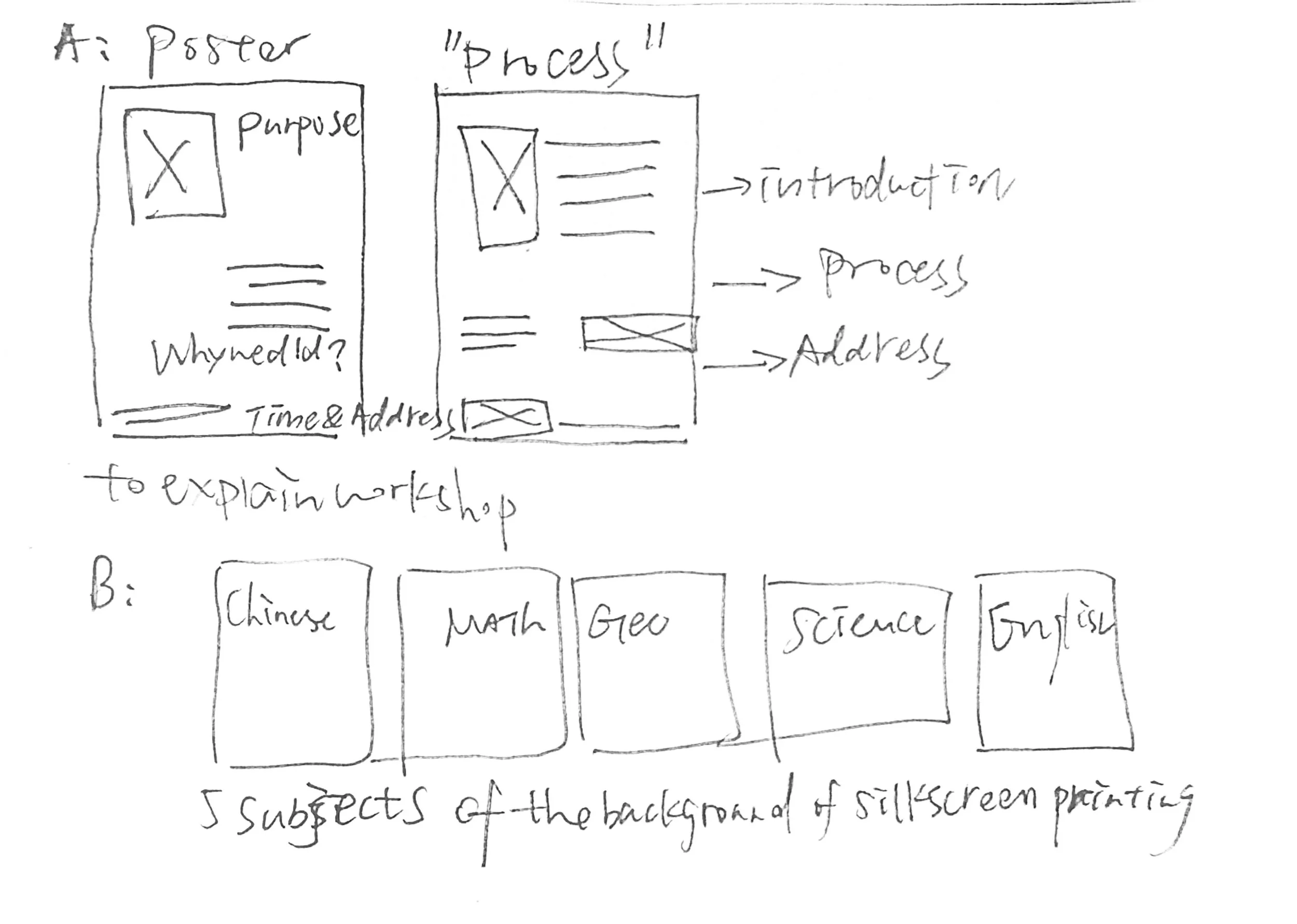
We finally created a poster outlining the entire workshop process, from introduction to demonstration, creation, and conclusion, listing all the steps. Five posters on silkscreen printing across different subjects and materials they need to use.
Our ultimate goal is to gather all the fun renderings made during the workshop and put together a playful exhibition. We’ll start with a little mock-up to see what could be even better, then work together to make everything shine!
02.PREPARION
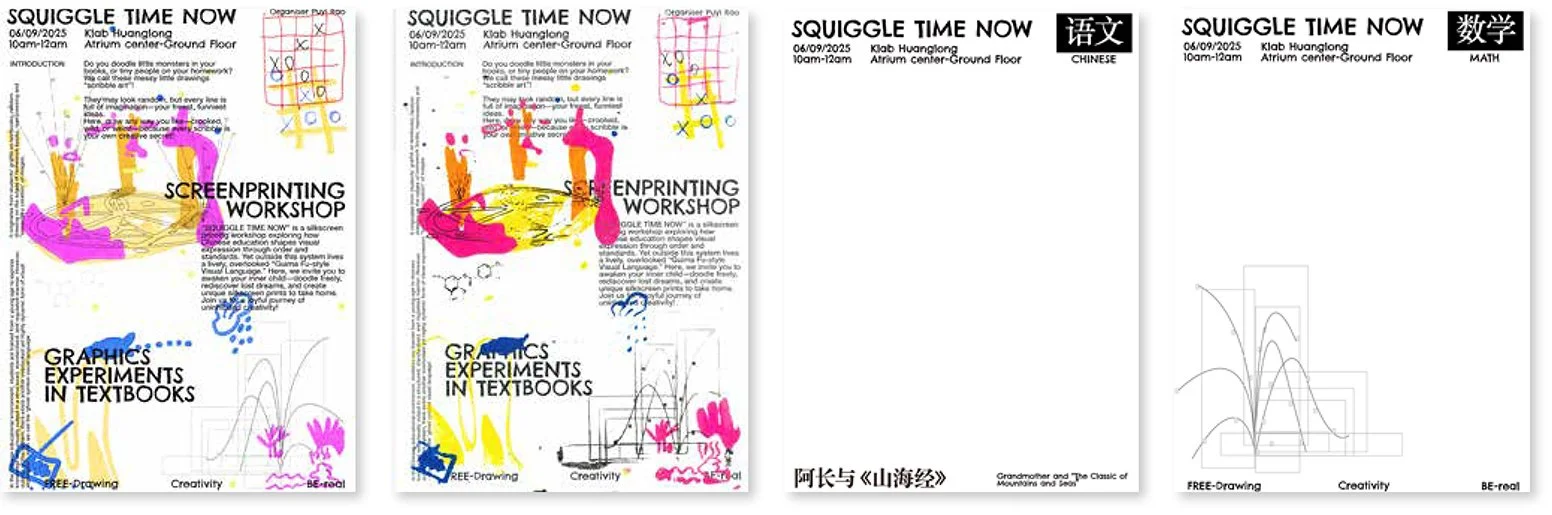
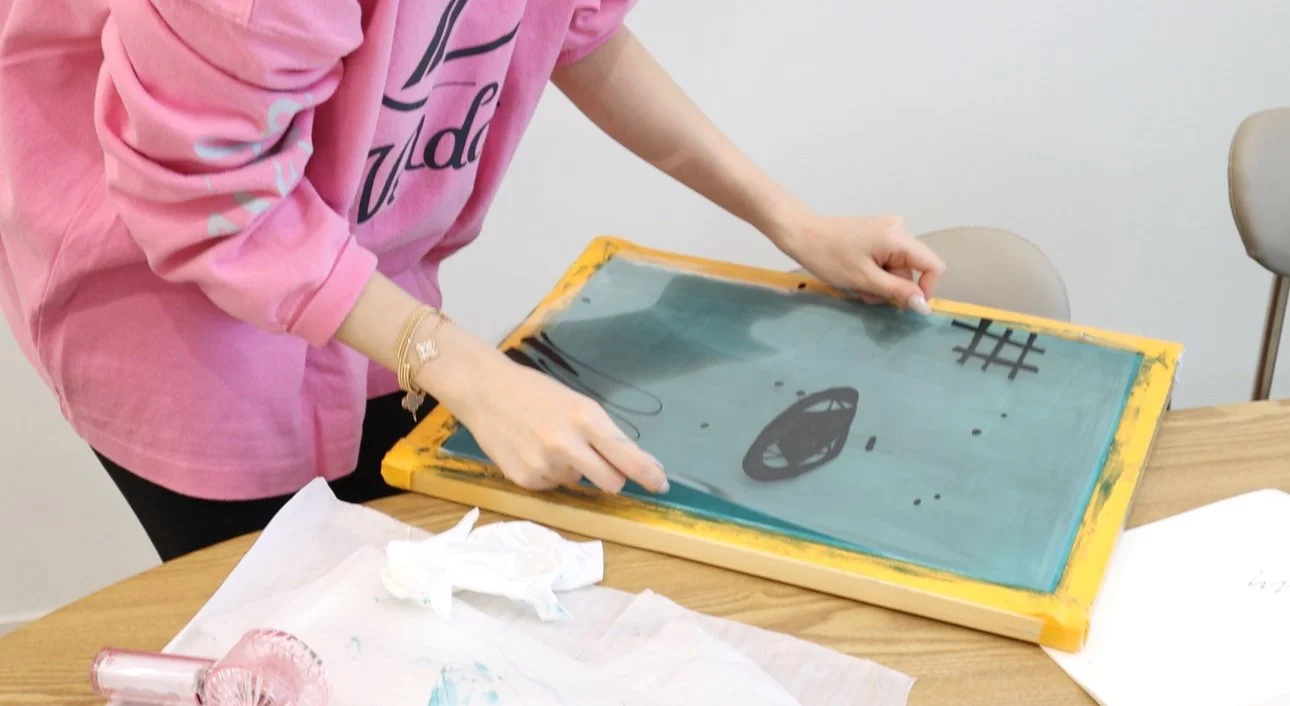
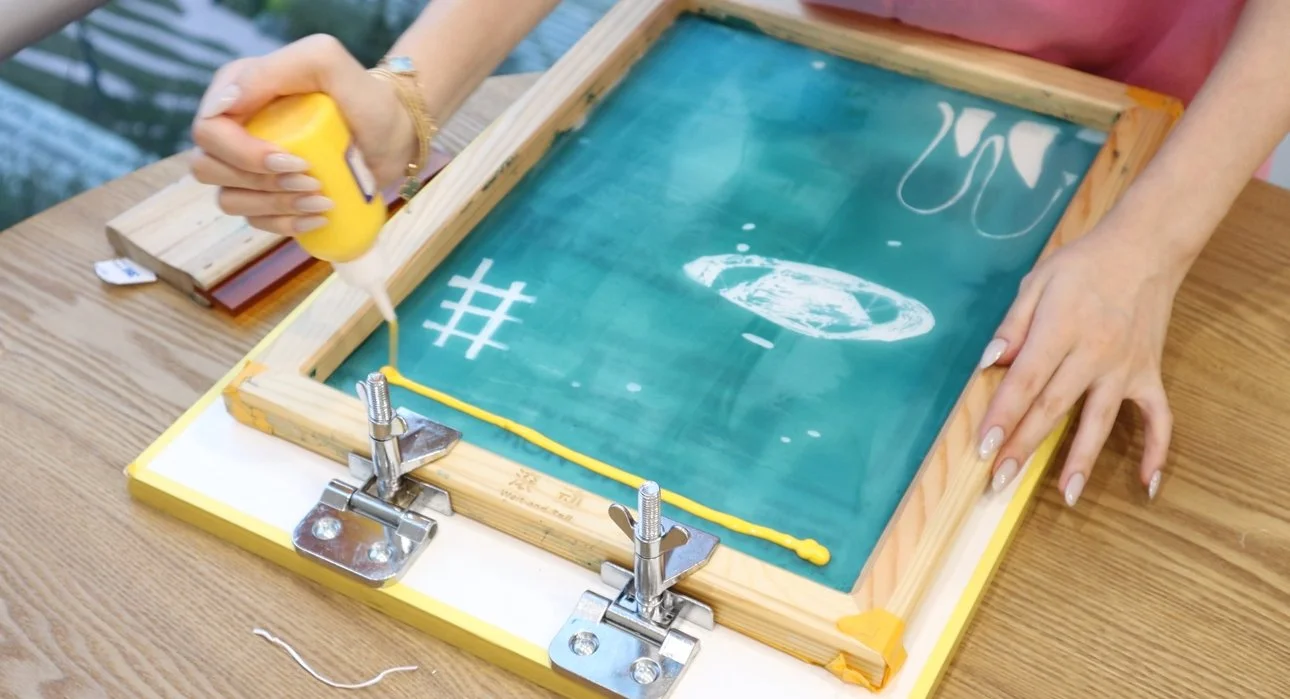
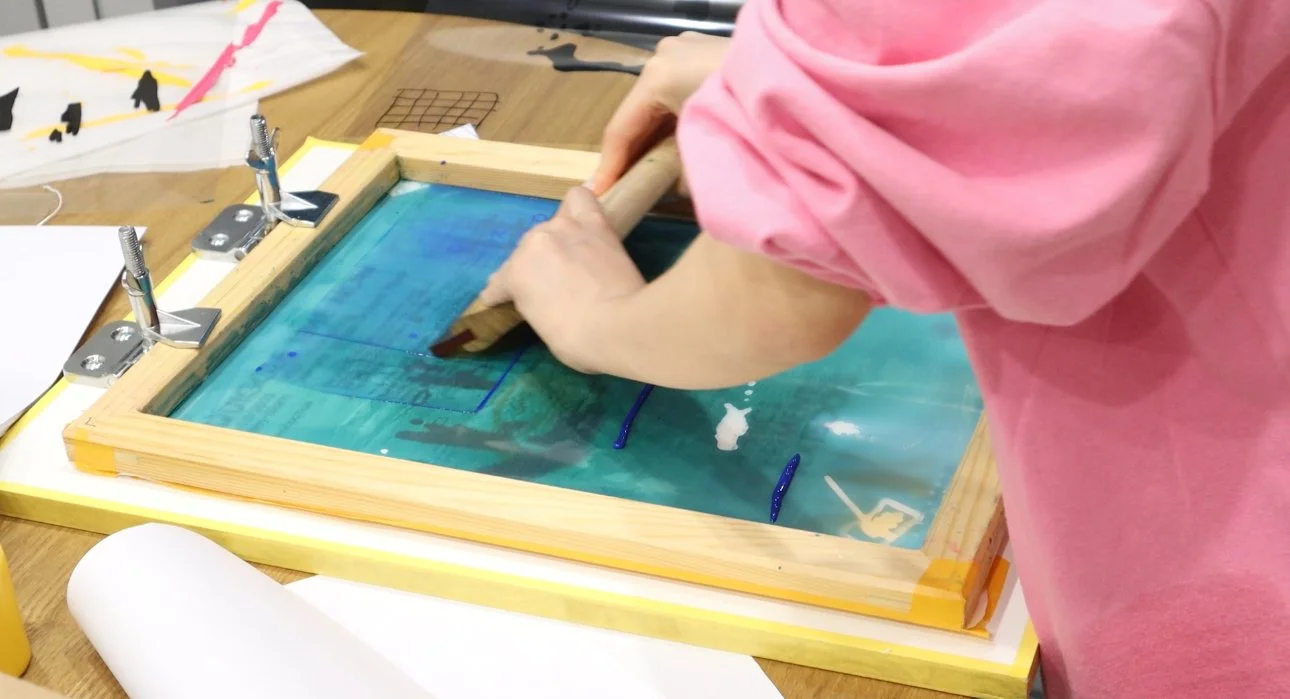
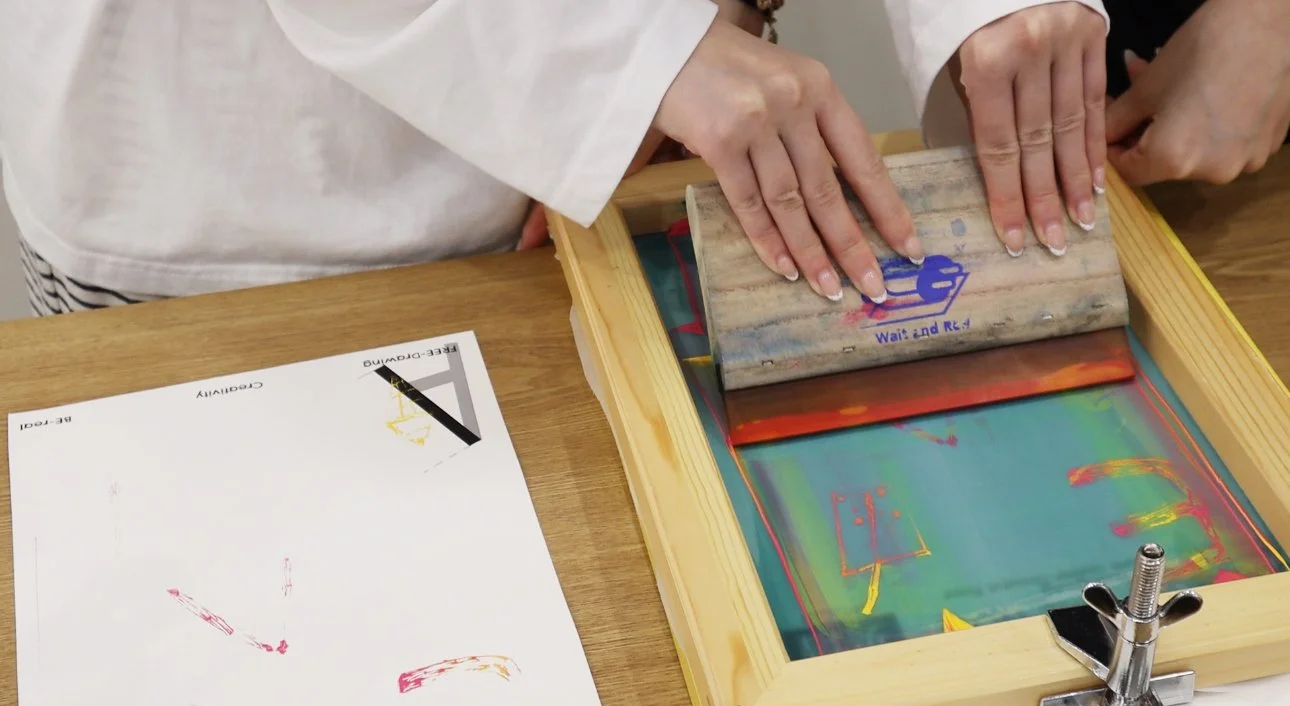
We simulated the entire process in advance before the workshop started and printed main poster.
01.BREIF
'SQUIGGLE TIME NOW' is a workshop that uses silkscreen printing as a medium for creative expression. During the event, I will curate an exhibition centered around spontaneous doodles. Throughout the workshop, I will provide a detailed overview of the creative process, and once the works are completed, they will be presented in an exhibition format, showcasing pure creativity and free expression for everyone to enjoy.
OUTCOME
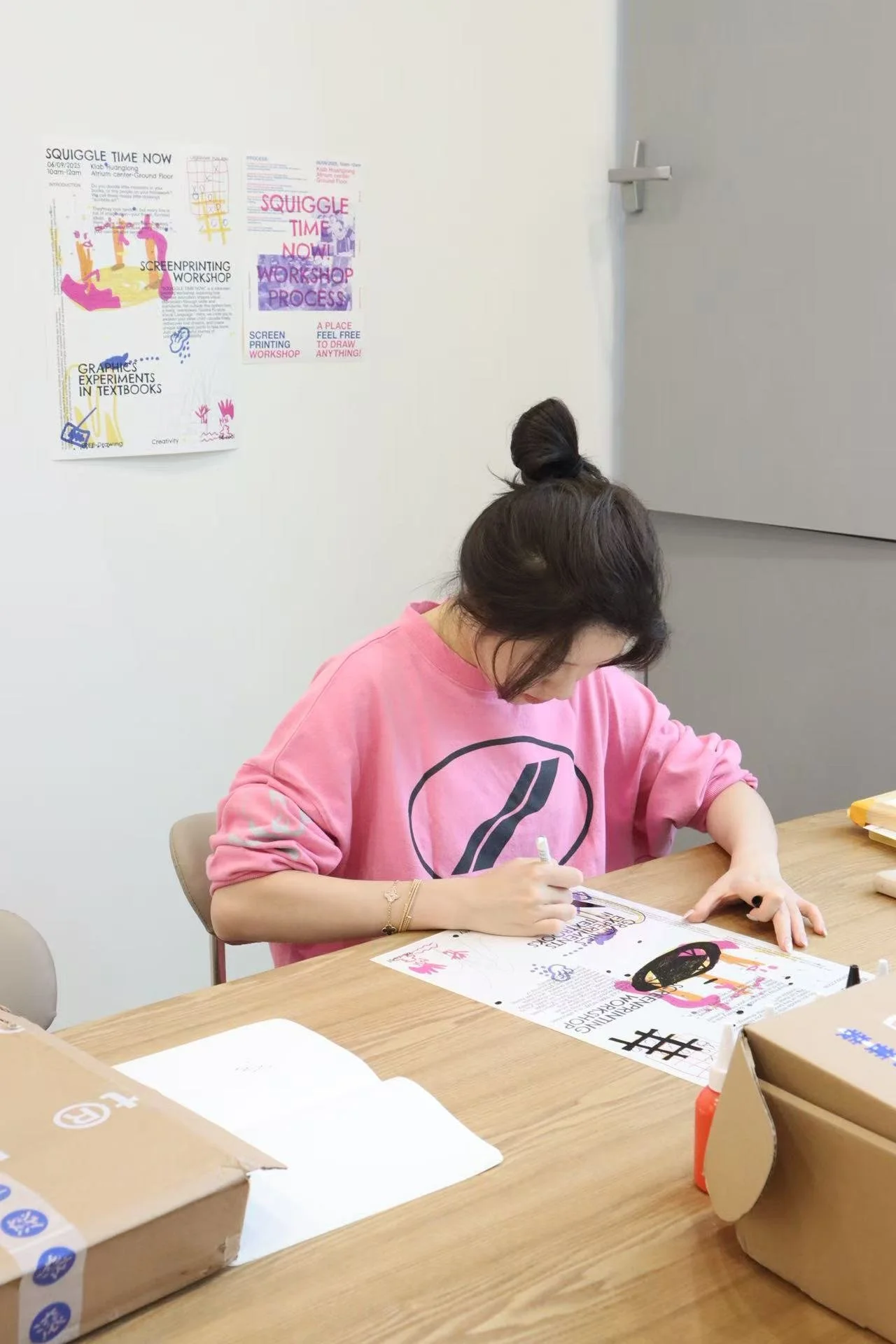
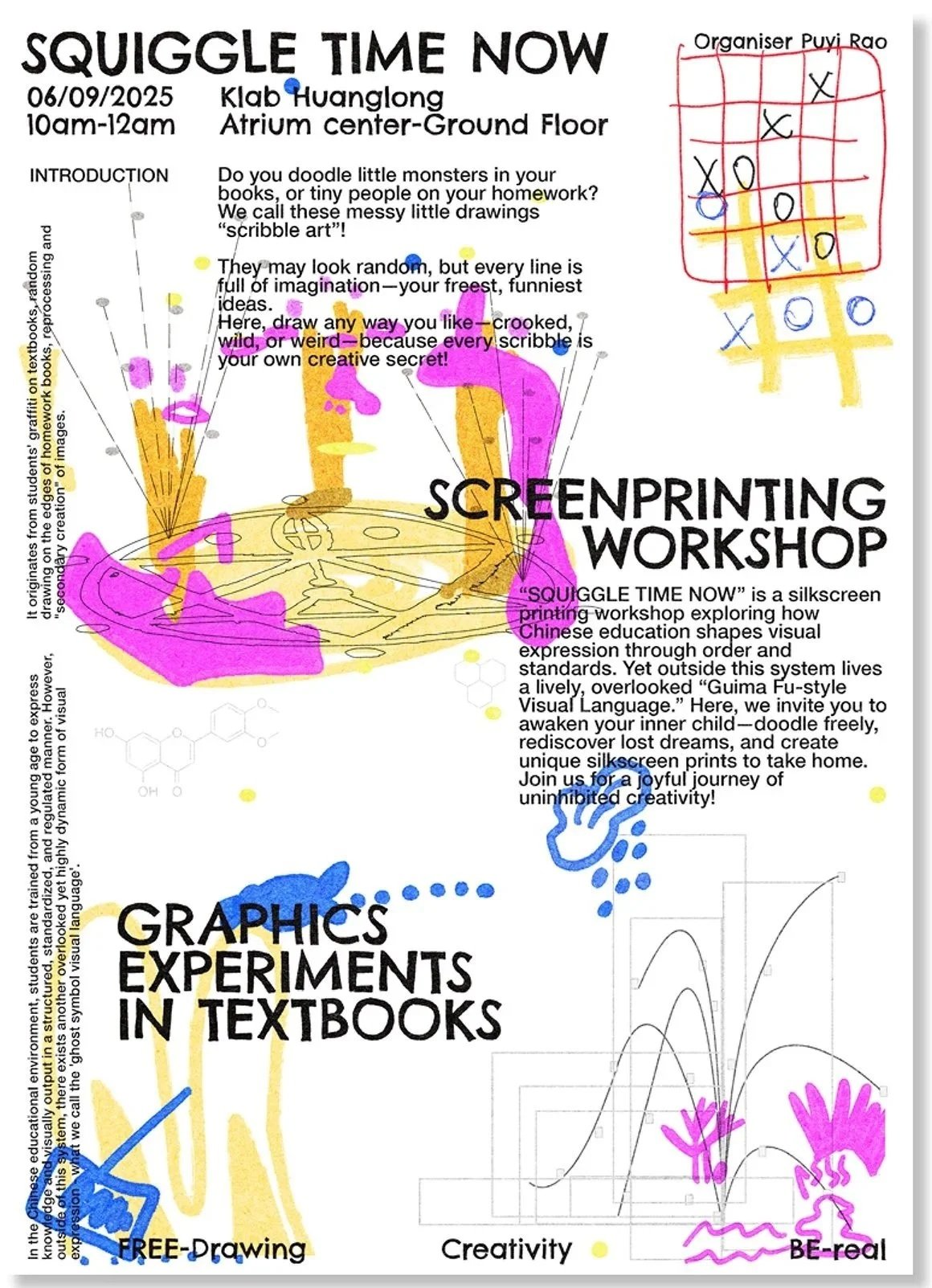
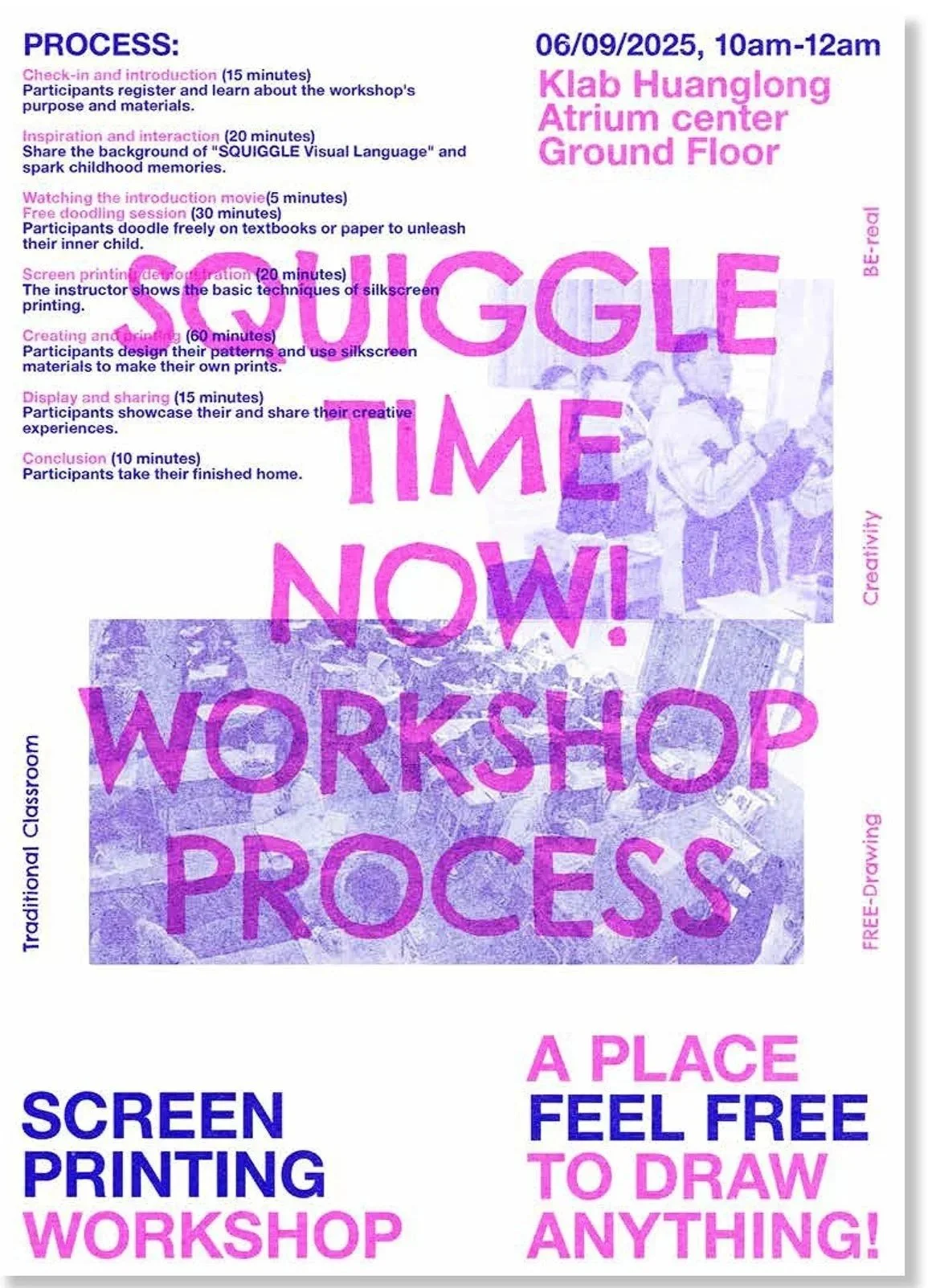
Before the workshop began, I created a simulated poster using screen printing. These are four different effect tests.
WORKSHOP
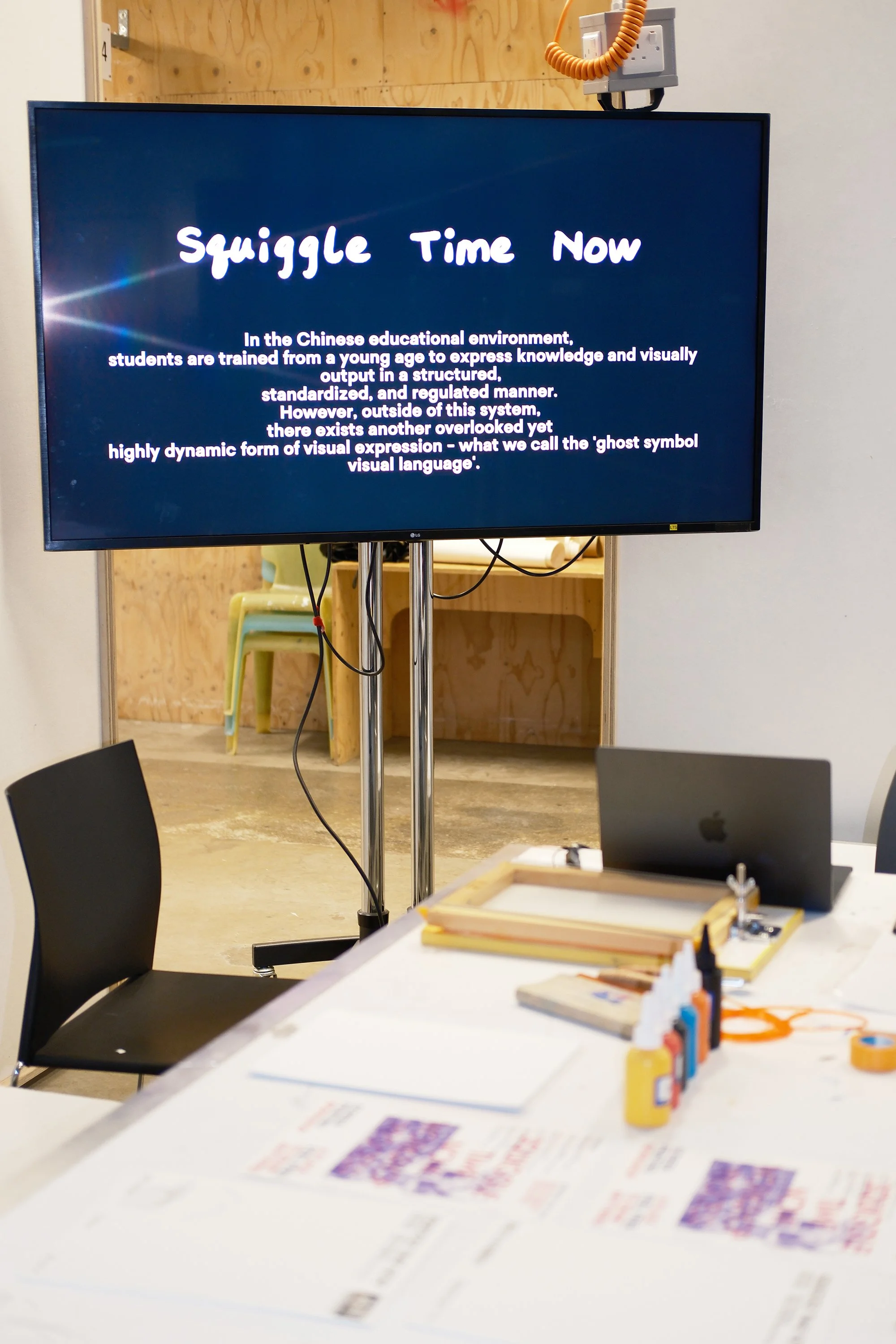
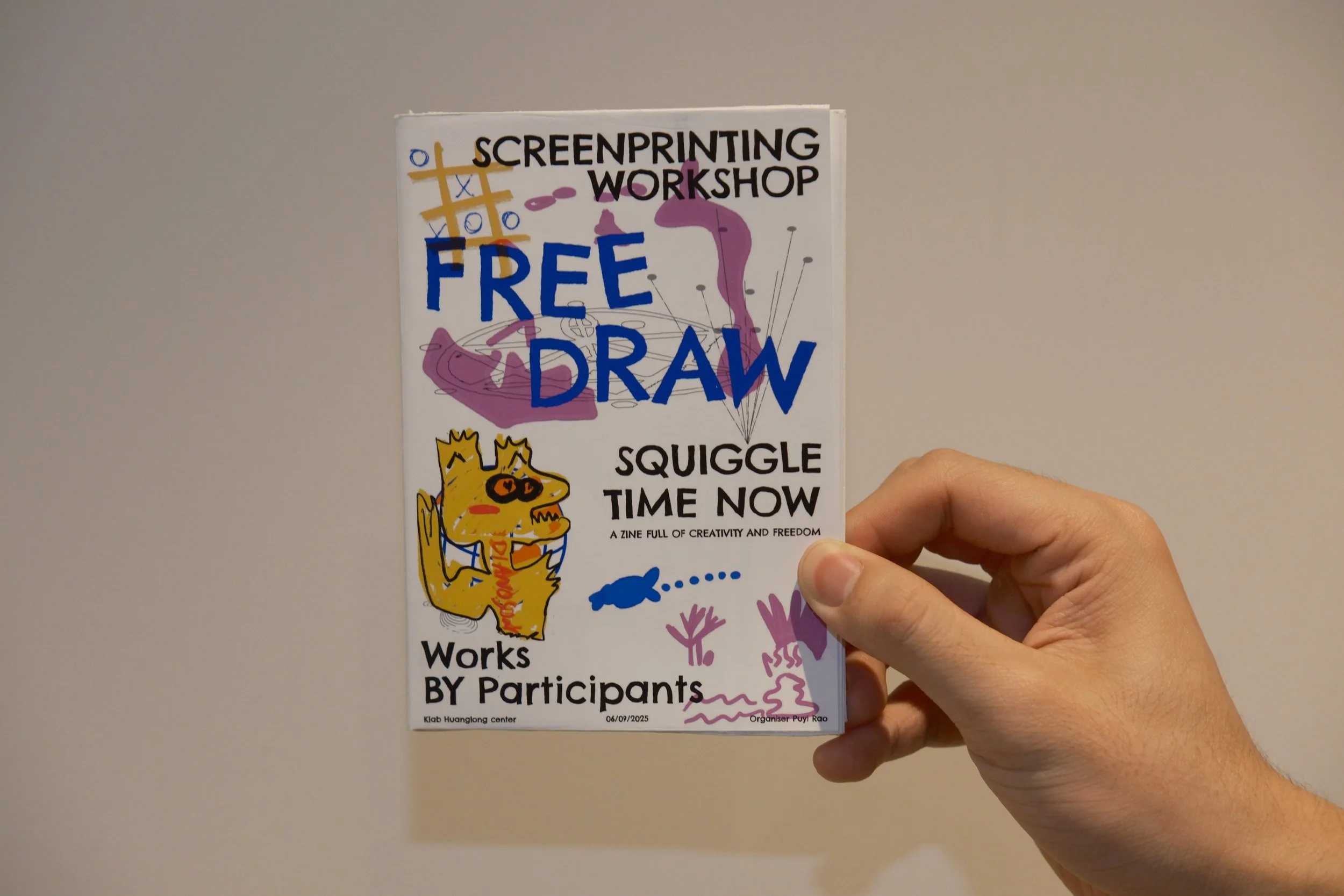
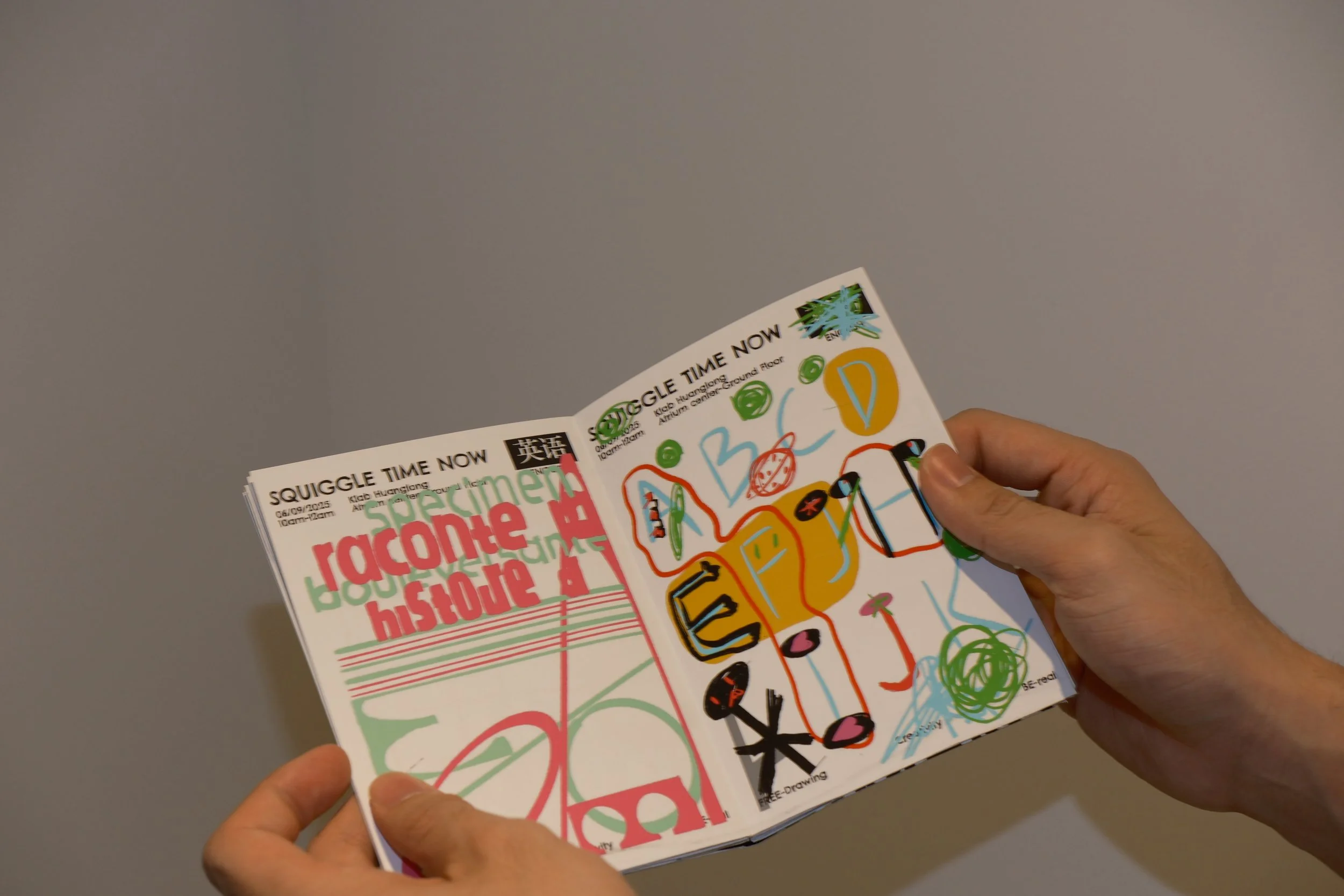
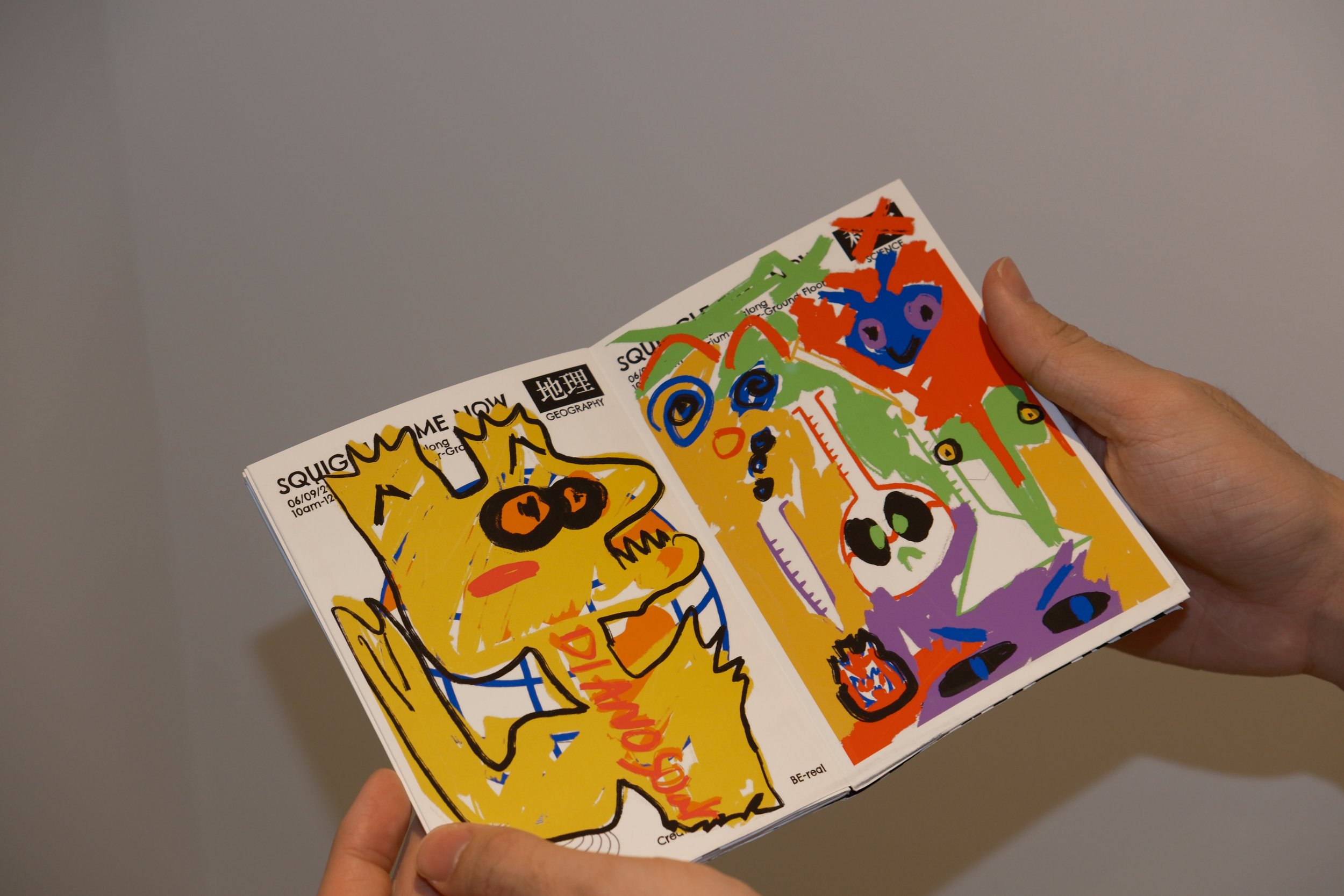
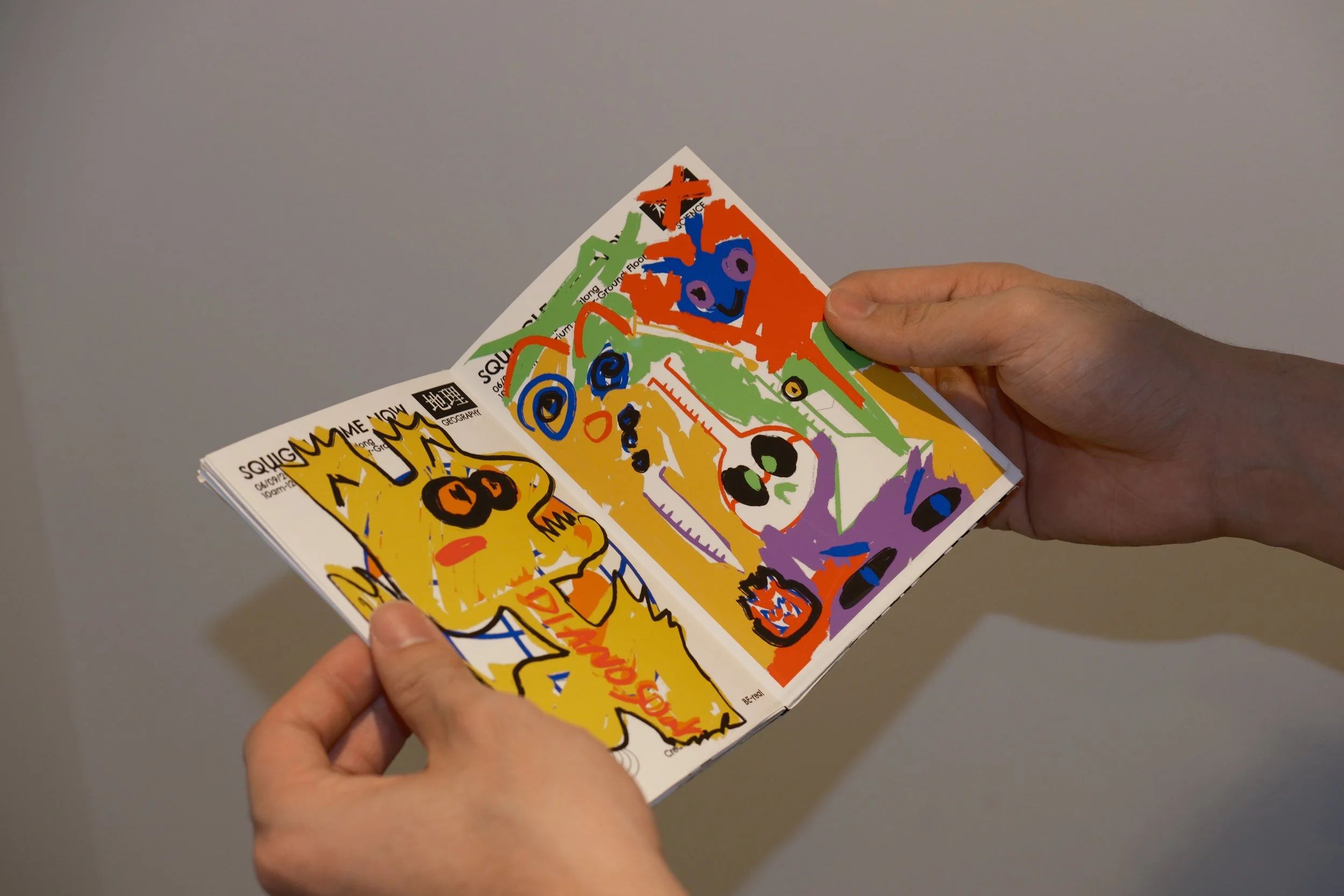
WORKS BY PARTICIPANTS
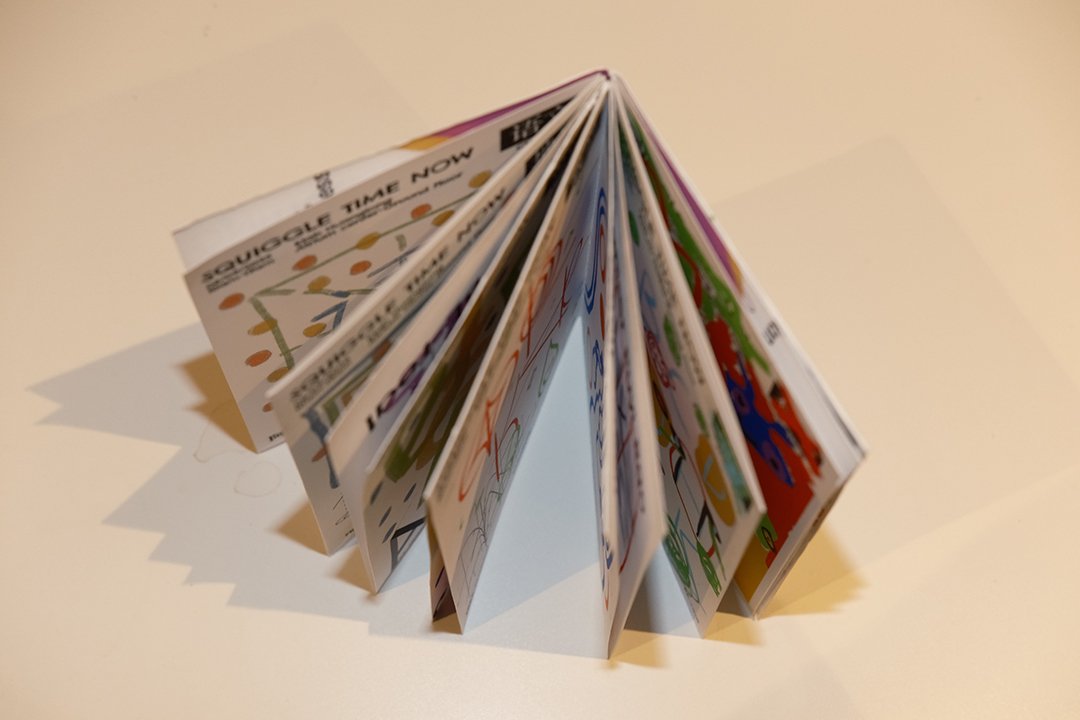
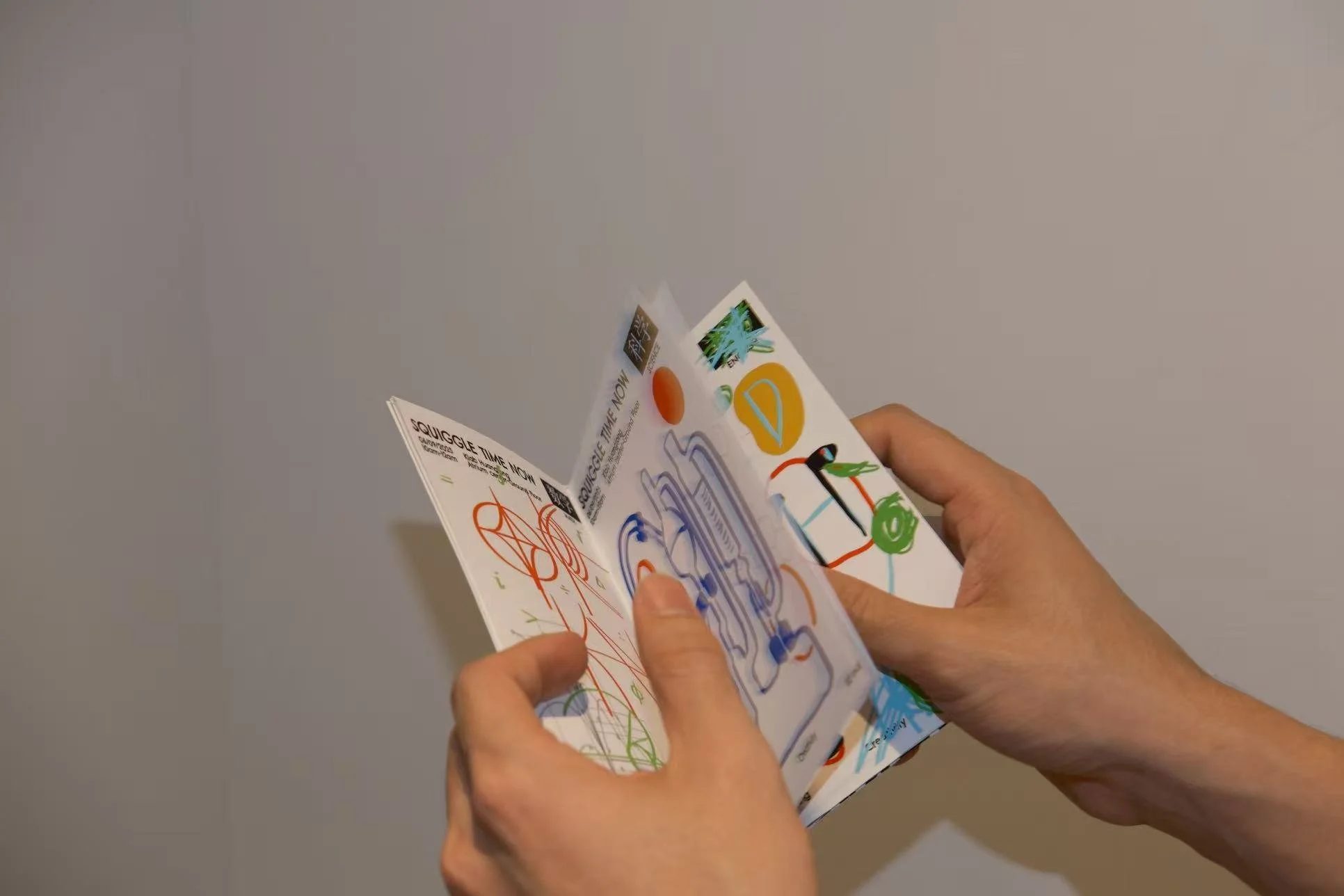
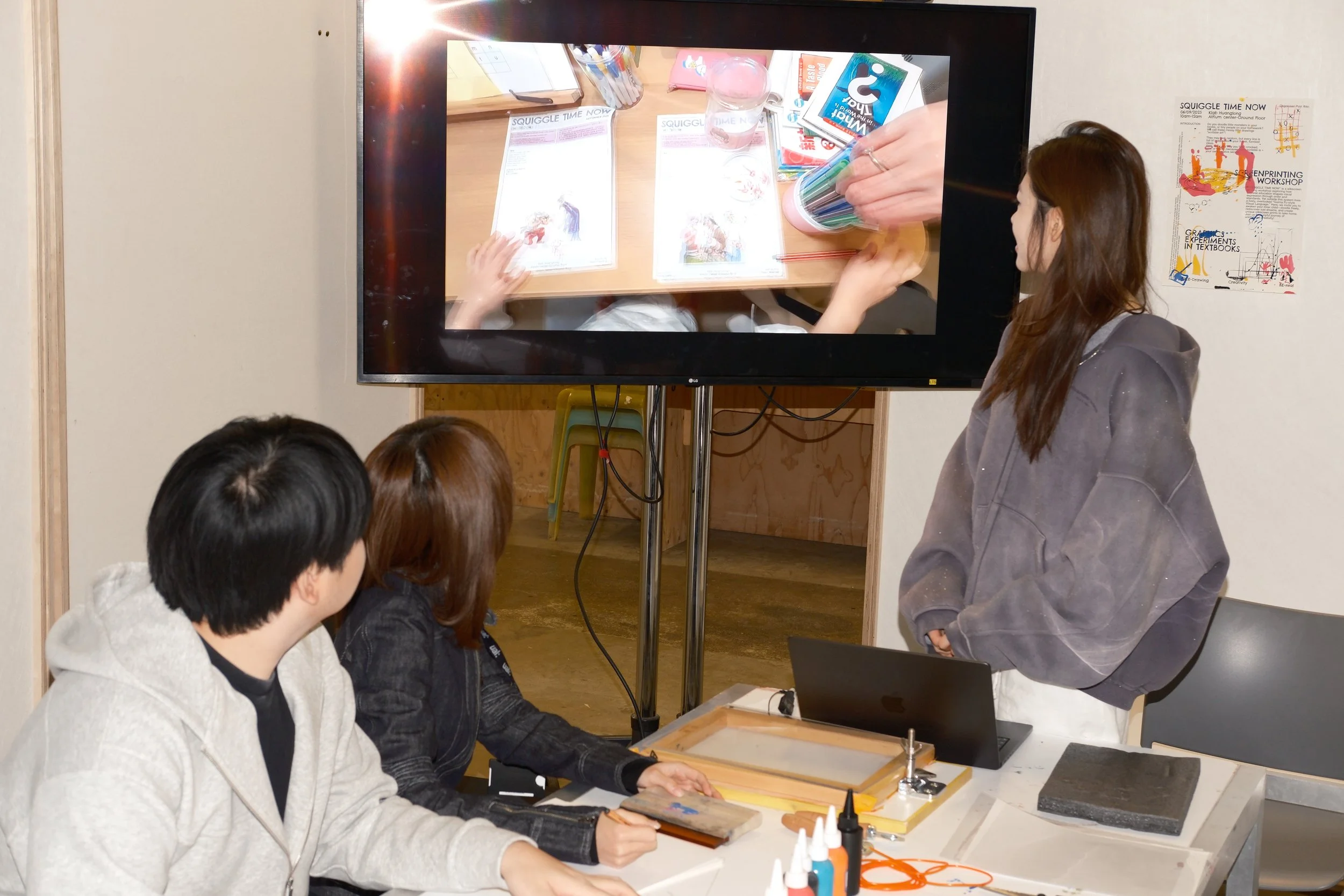
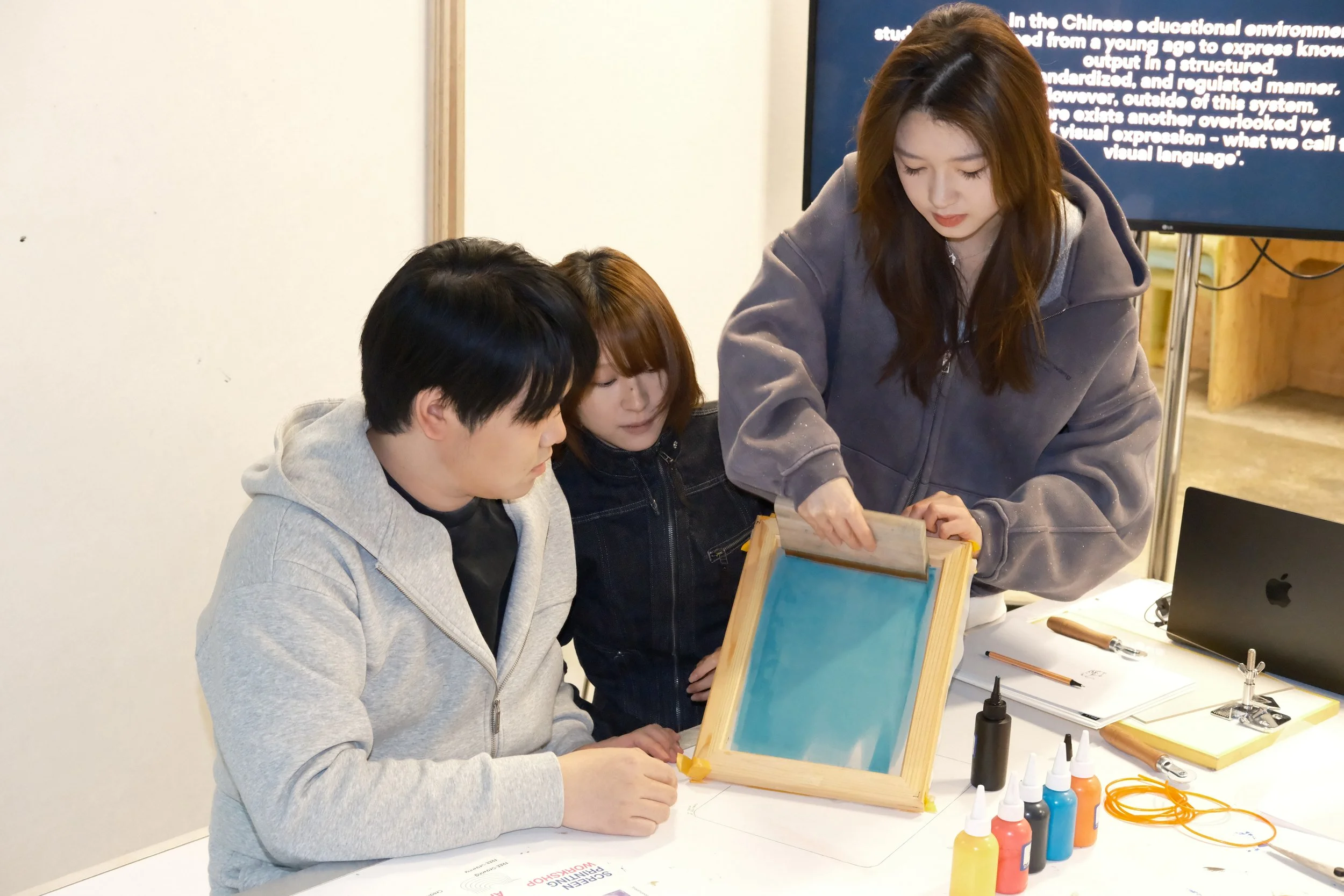
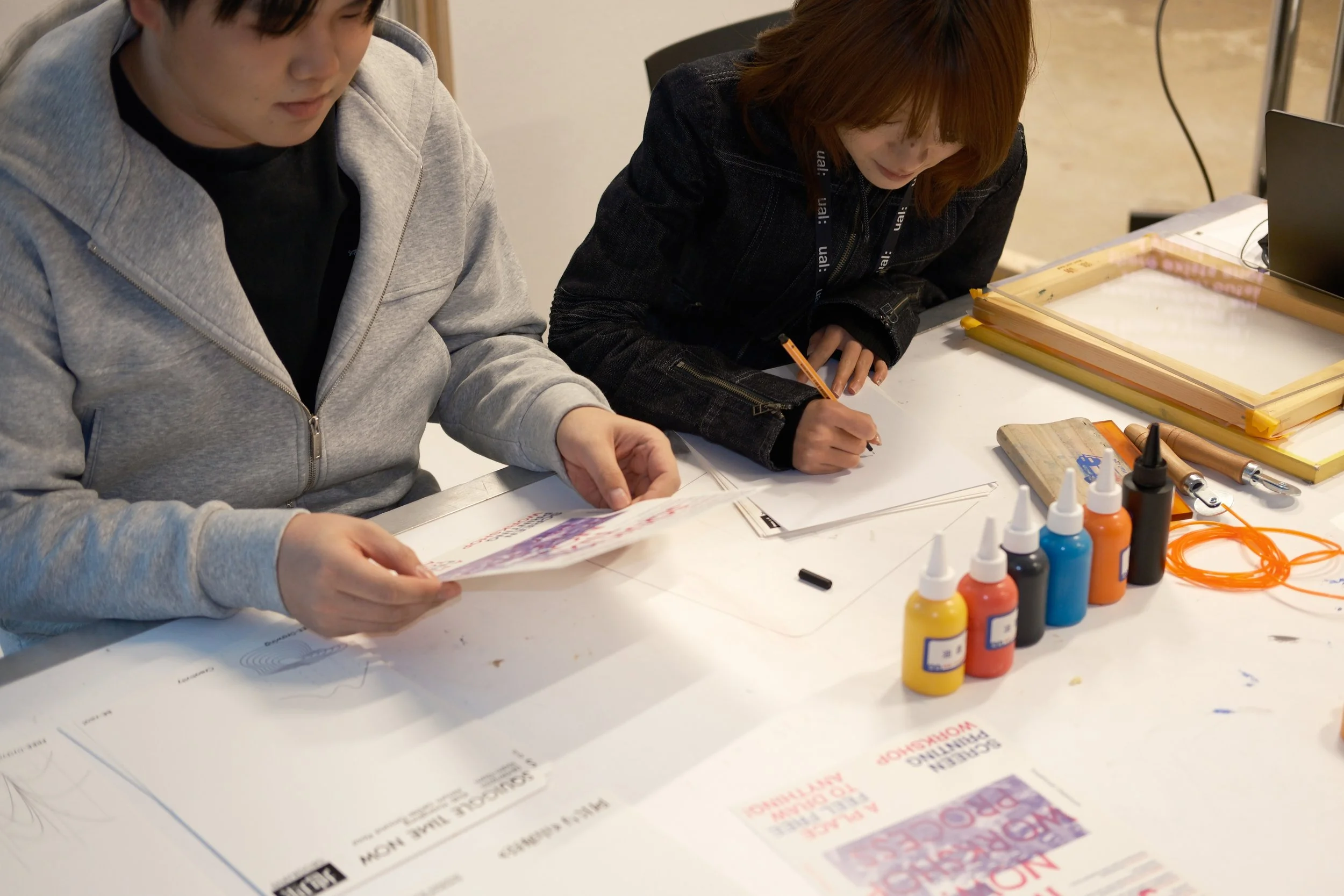
Through the workshop, we carried out a sequence of screen-printing experiments. Participants were guided through tool introduction, a demonstration video, draft sketching, and print making, followed by a final review session. This process made us realize that such visual abilities are rare, and it also allowed us to explore the essence of childlike innocence.
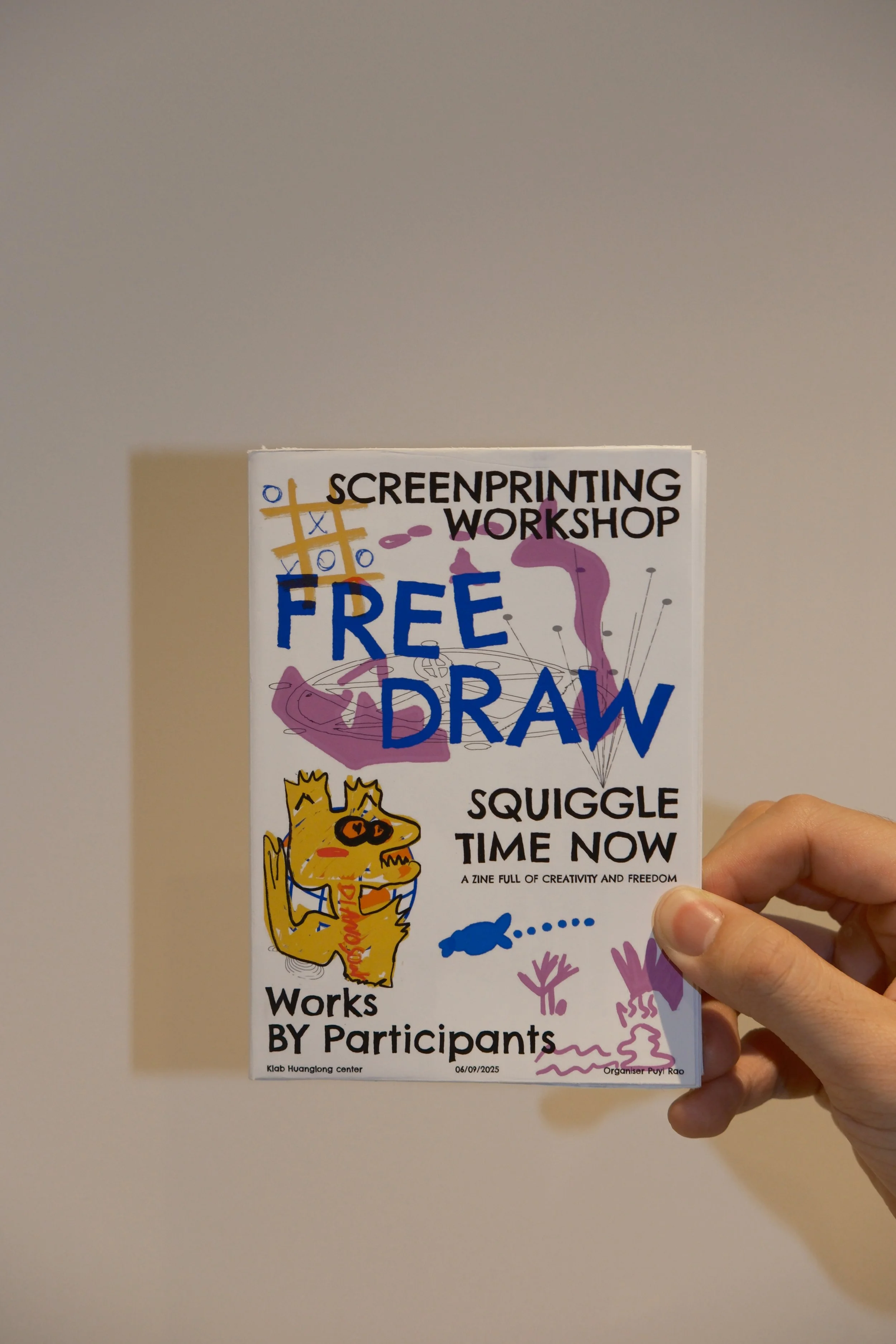
ZINE DESIGN