PROJECT STATEMENT
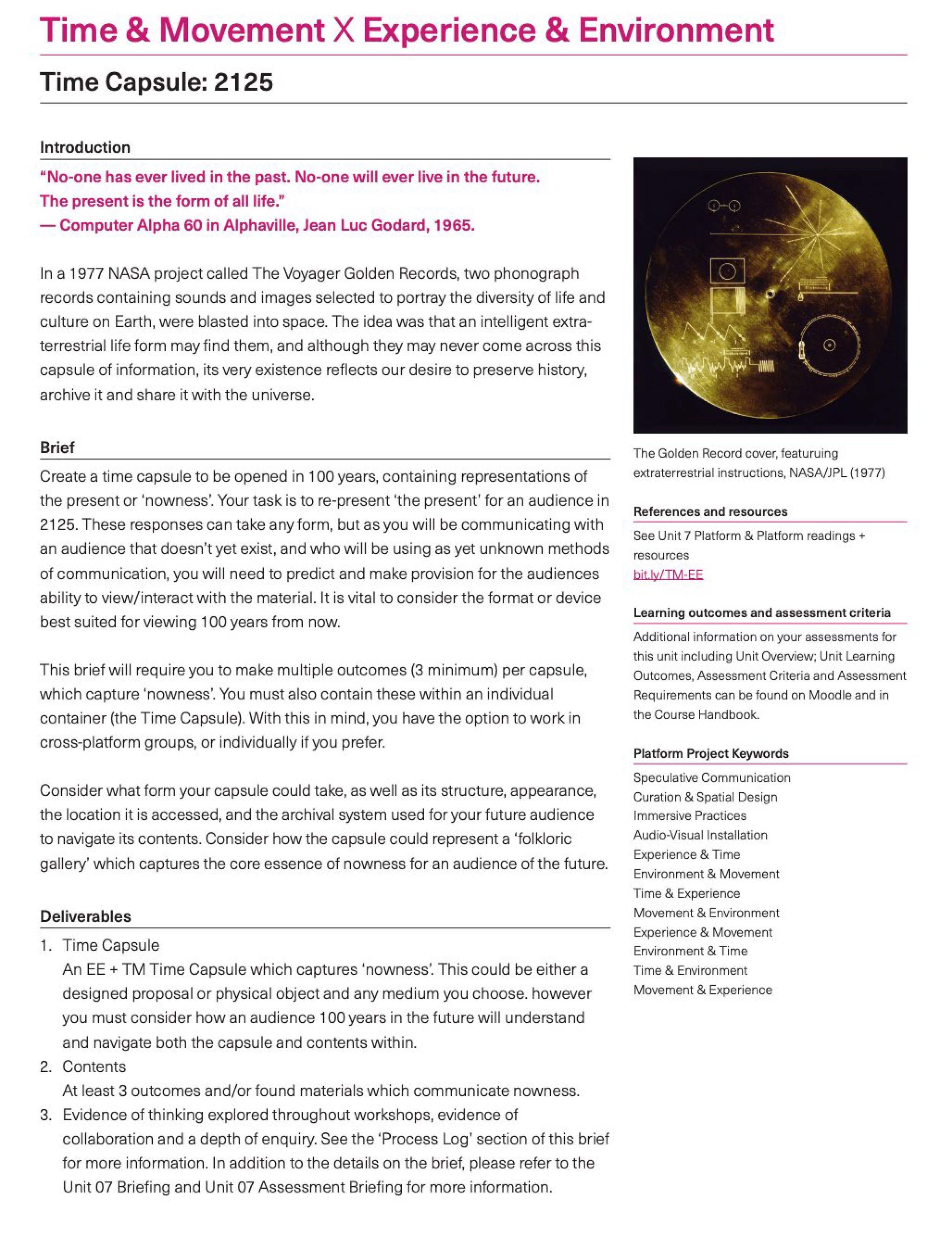
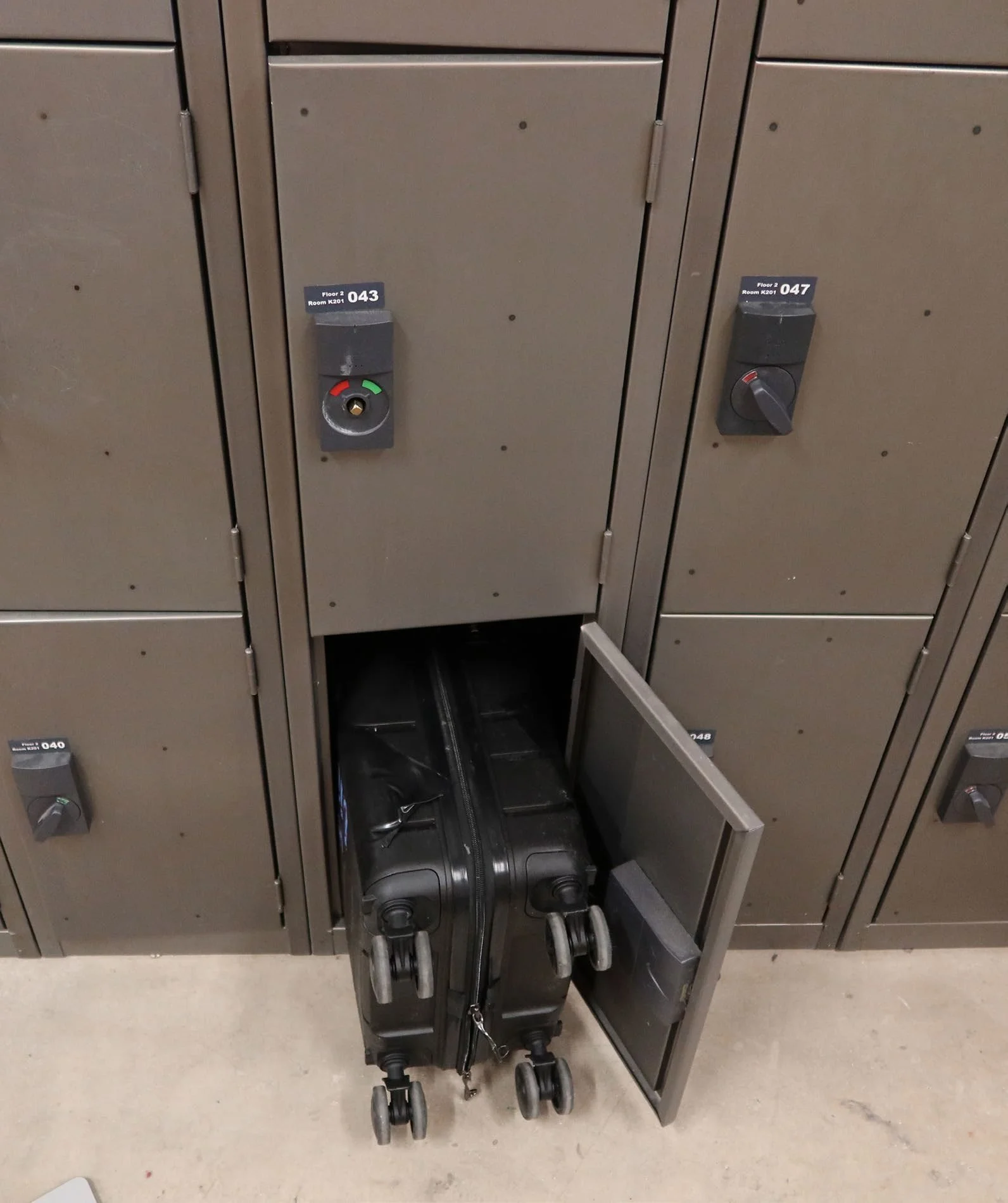
In our T&M project, we stored the clothing, food, shelter, and emotional attachments of 2025 UAL international students in a suitcase placed inside the school locker. In 100 years, a message will be sent via Moodle, and future students can open it to see what life was like at that time.
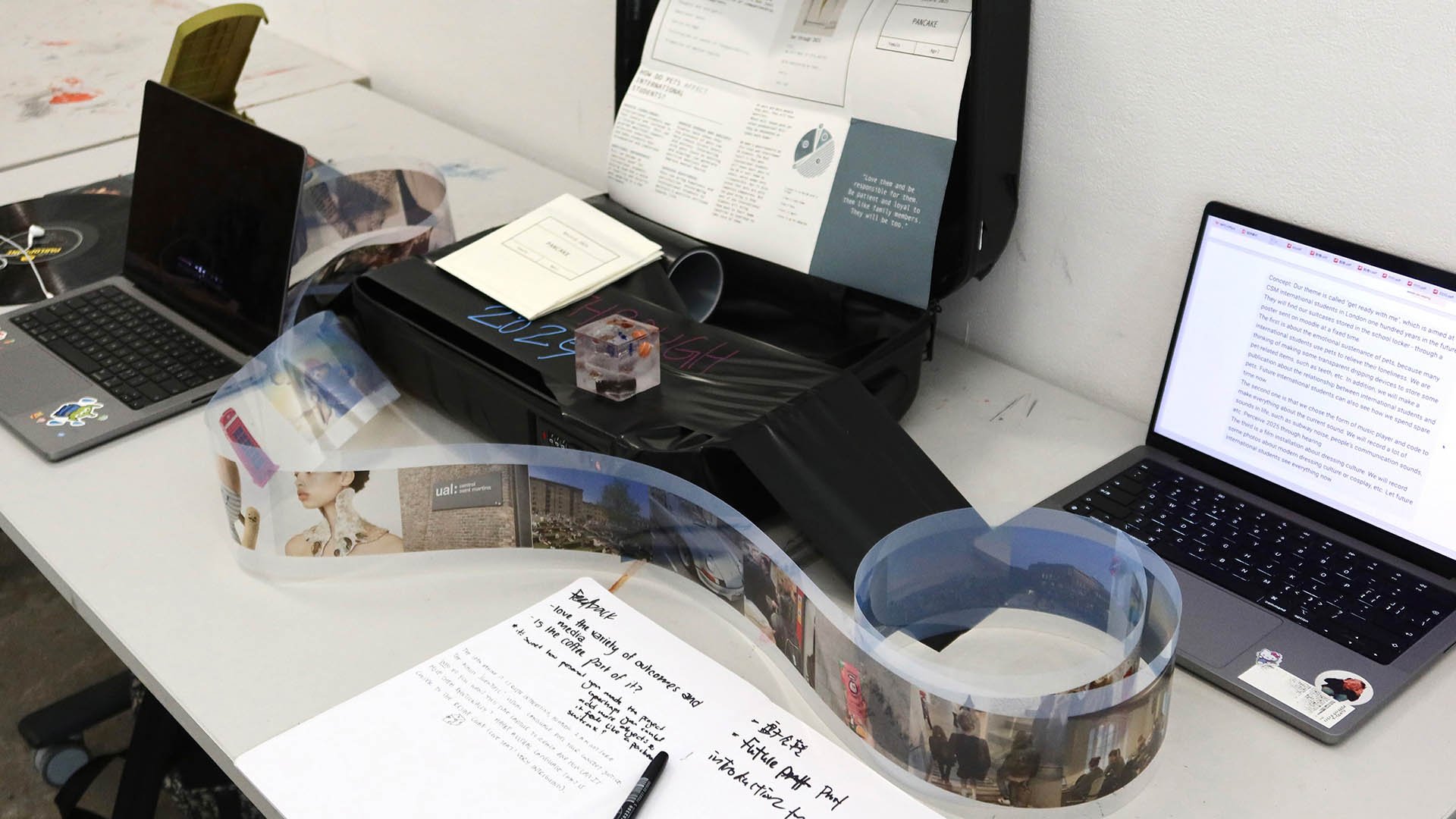
We experimented with various materials to ensure long-term preservation, creating four different outcomes. One includes a transparent resin device that holds pet items, symbolizing the students' emotional bonds. This direct visual approach received positive feedback due to its striking visual impact. We also visualized data by producing a publication and a transparent film with audio that record the trends, campus environment,
and the sounds of 2025, offering future students a comparative perspective. All artifacts are assembled into a complete archive to help future students understand the meaning of the time capsule.
The project's success lies in its multisensory experience and detailed publications that allow viewers to immerse themselves.
Challenges included material durability and storage safety. After testing and optimization, we used sealed plastics and multi-layer protection measures to ensure integrity after a hundred years. This time capsule not only serves as physical storage but also symbolizes cultural and emotional transmission, offering future students insight into contemporary life of2025 and fostering dialogue across time. I believe the project is successful due to its overall completeness and multisensory impact, complemented by various publications explaining each artifact. Moving forward, I aim to continue exploring this approach with more detailed presentation and experimenting with diverse materials and media.
*This project is a group project
PRE TASK:RESEARCH
HOW TO DEFINE NOWNESS?
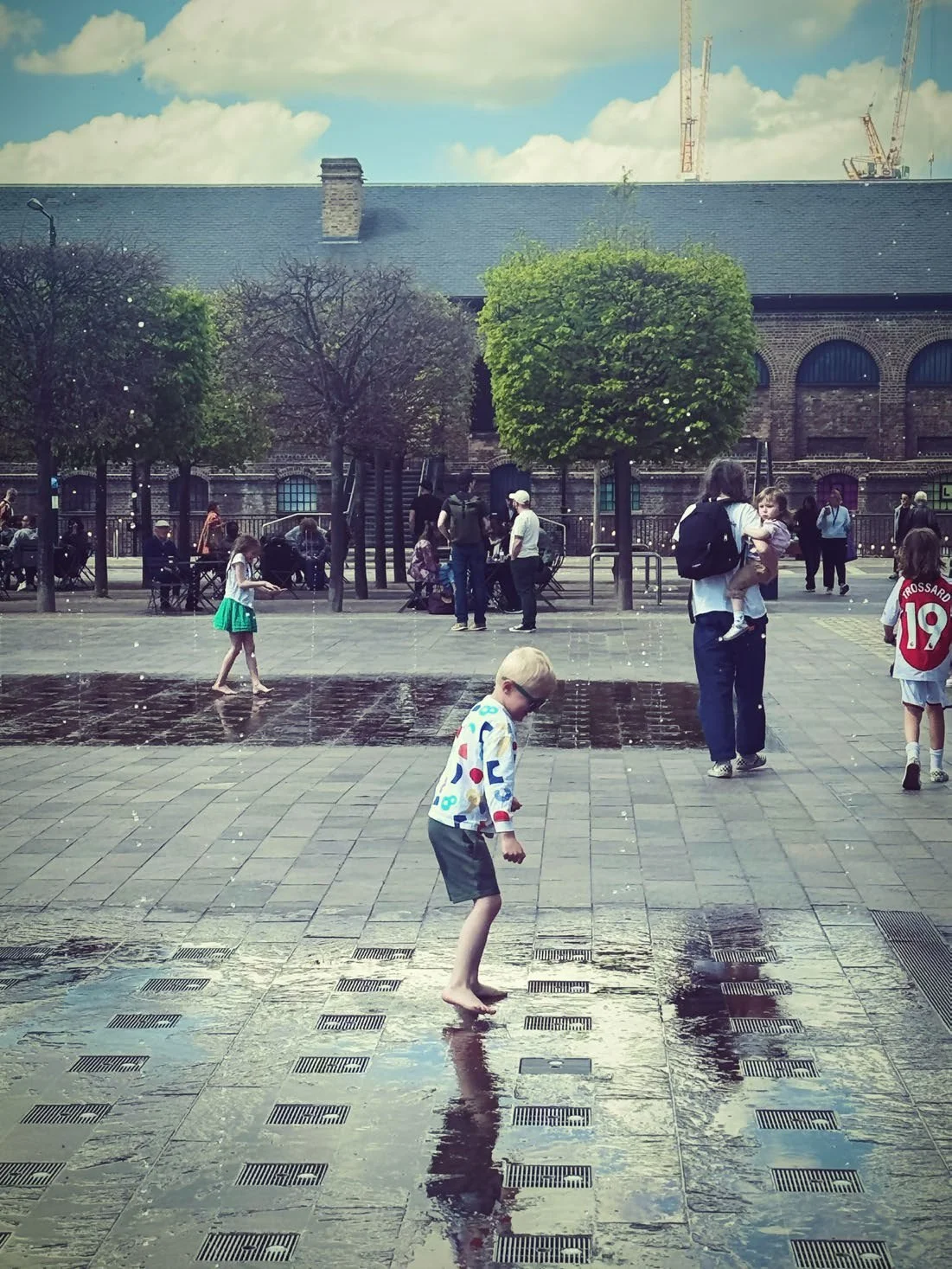
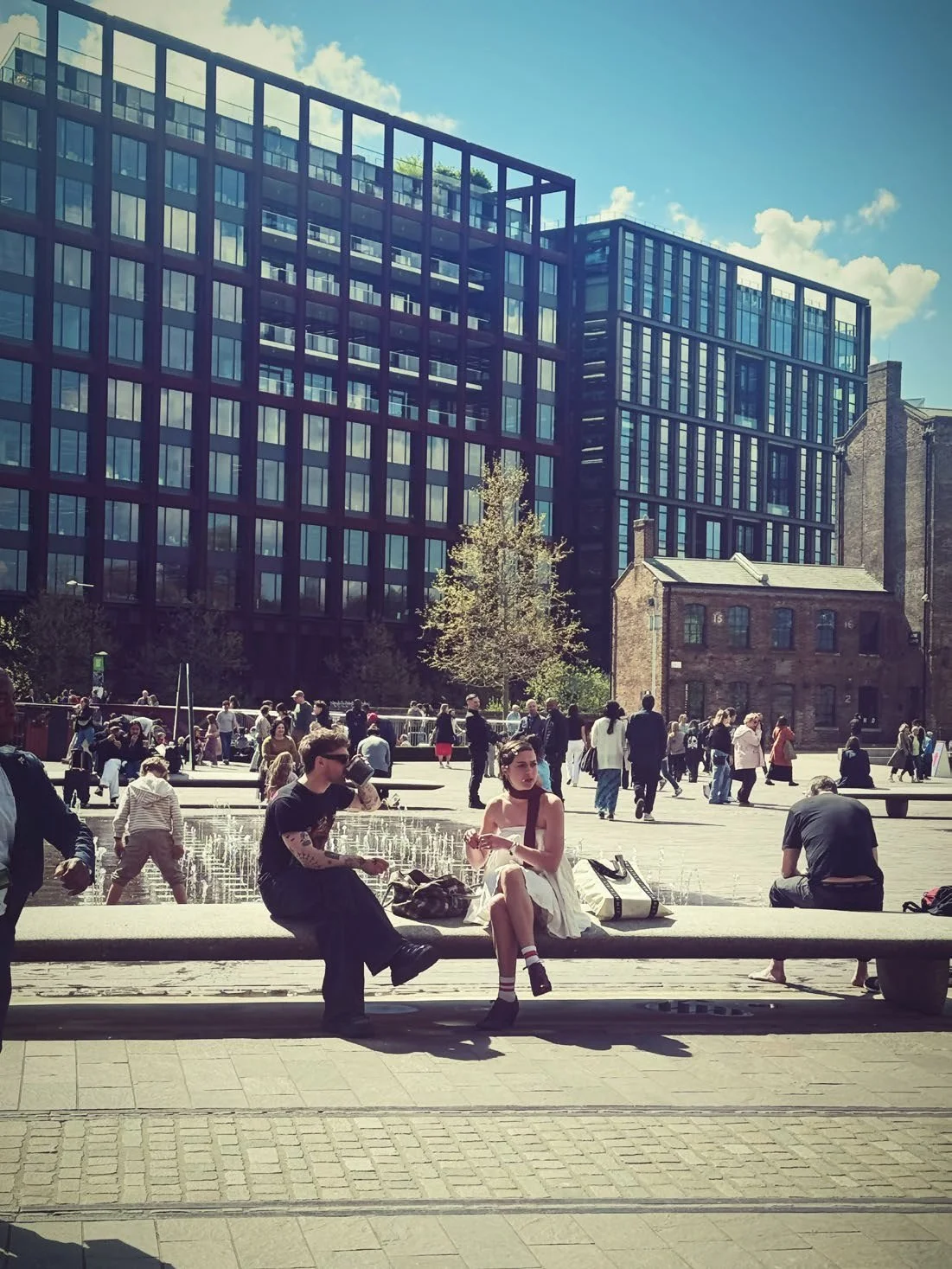
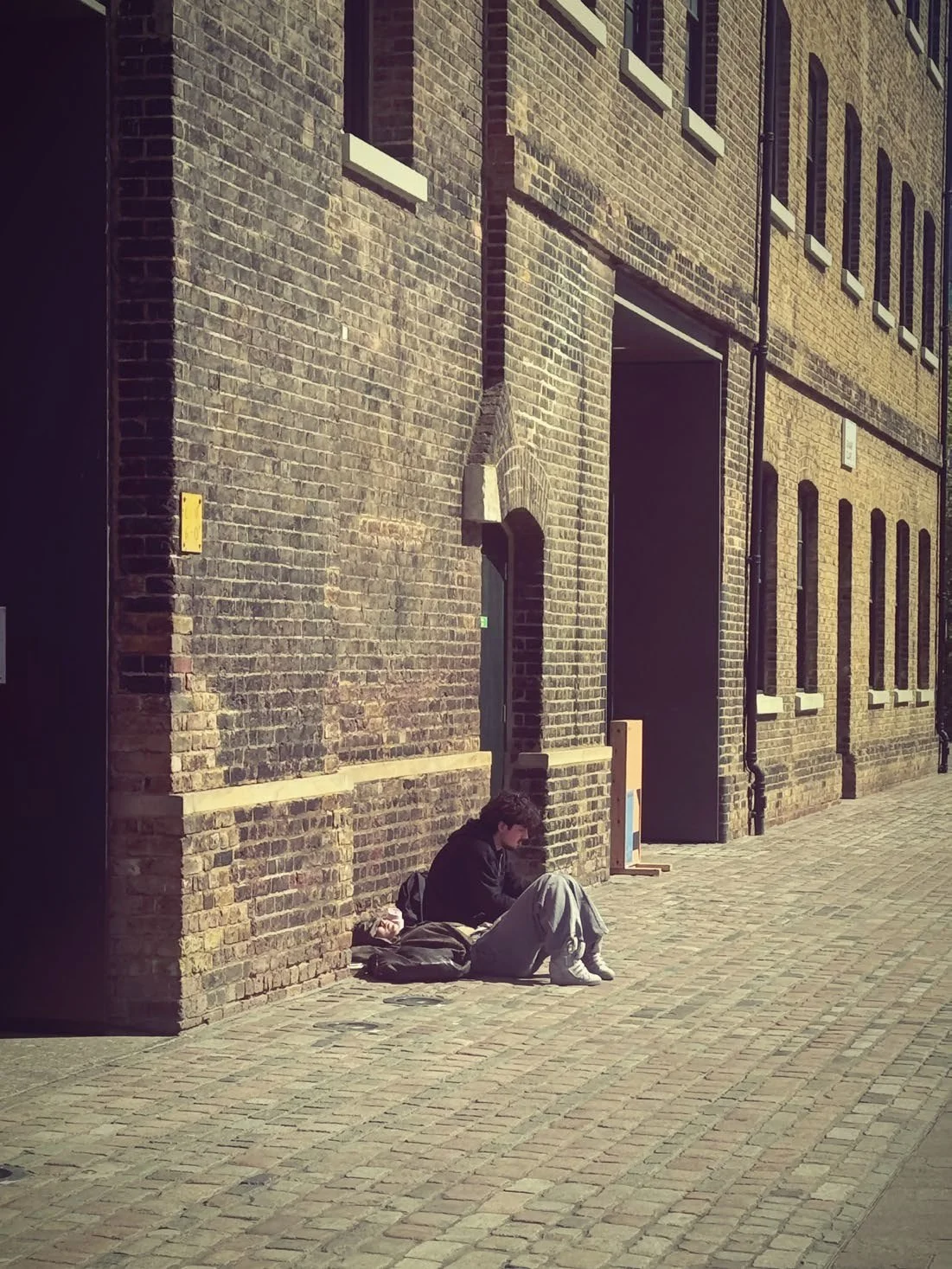
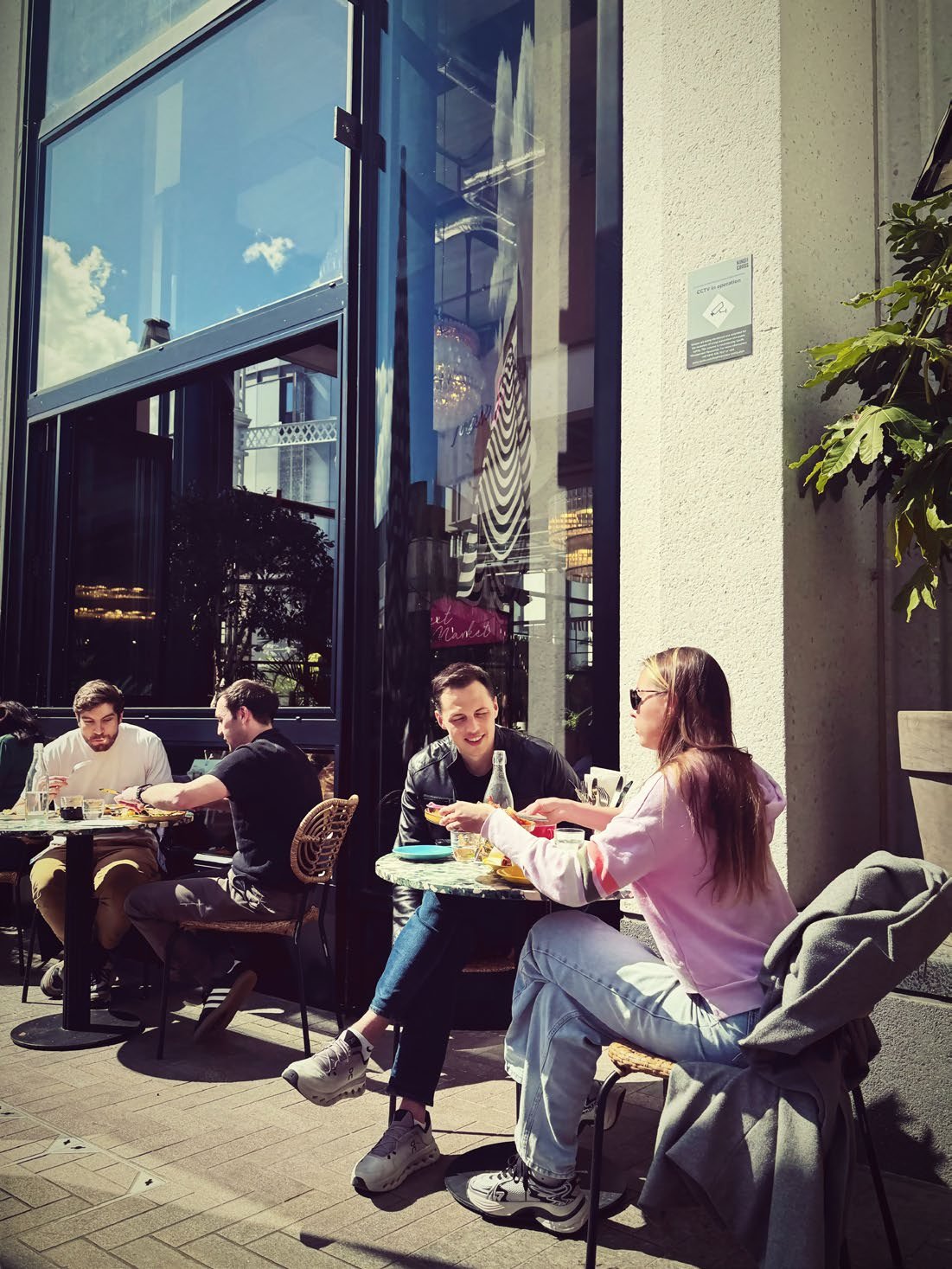
Our photography records
WHAT IS NOWNESS FOR US?
AUDIENCE?
Before the project started, we thought about who the audience was. To record our present, the first thing we thought of was to record the joys, sorrows, anger and happiness we experienced from the perspective of ual students, international students.
ENVIRONMENT?
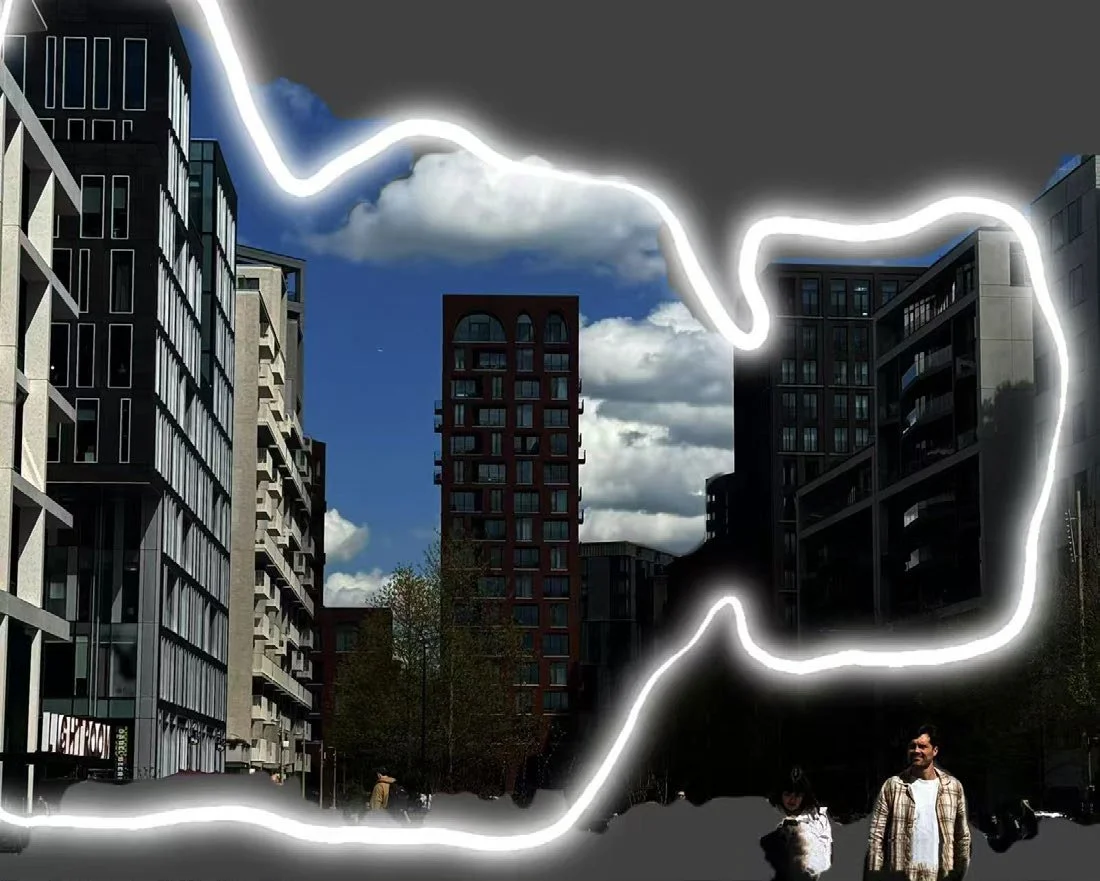
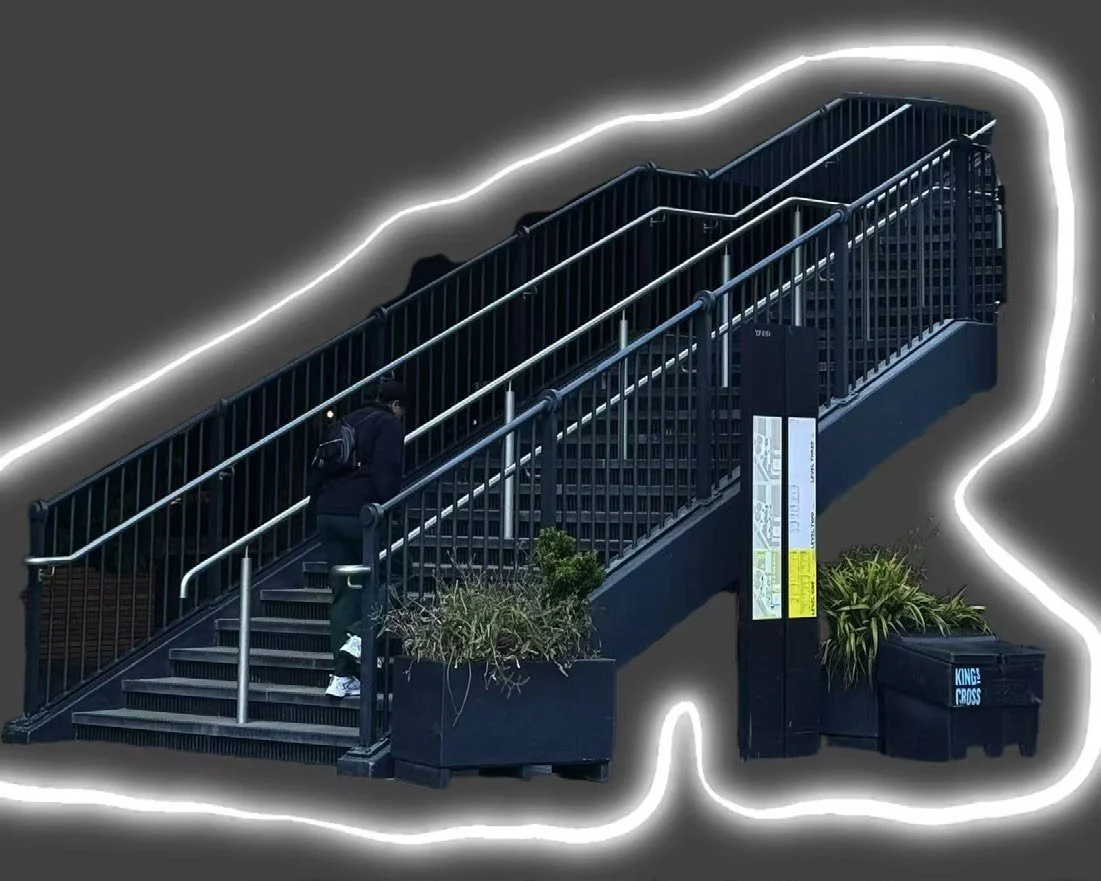
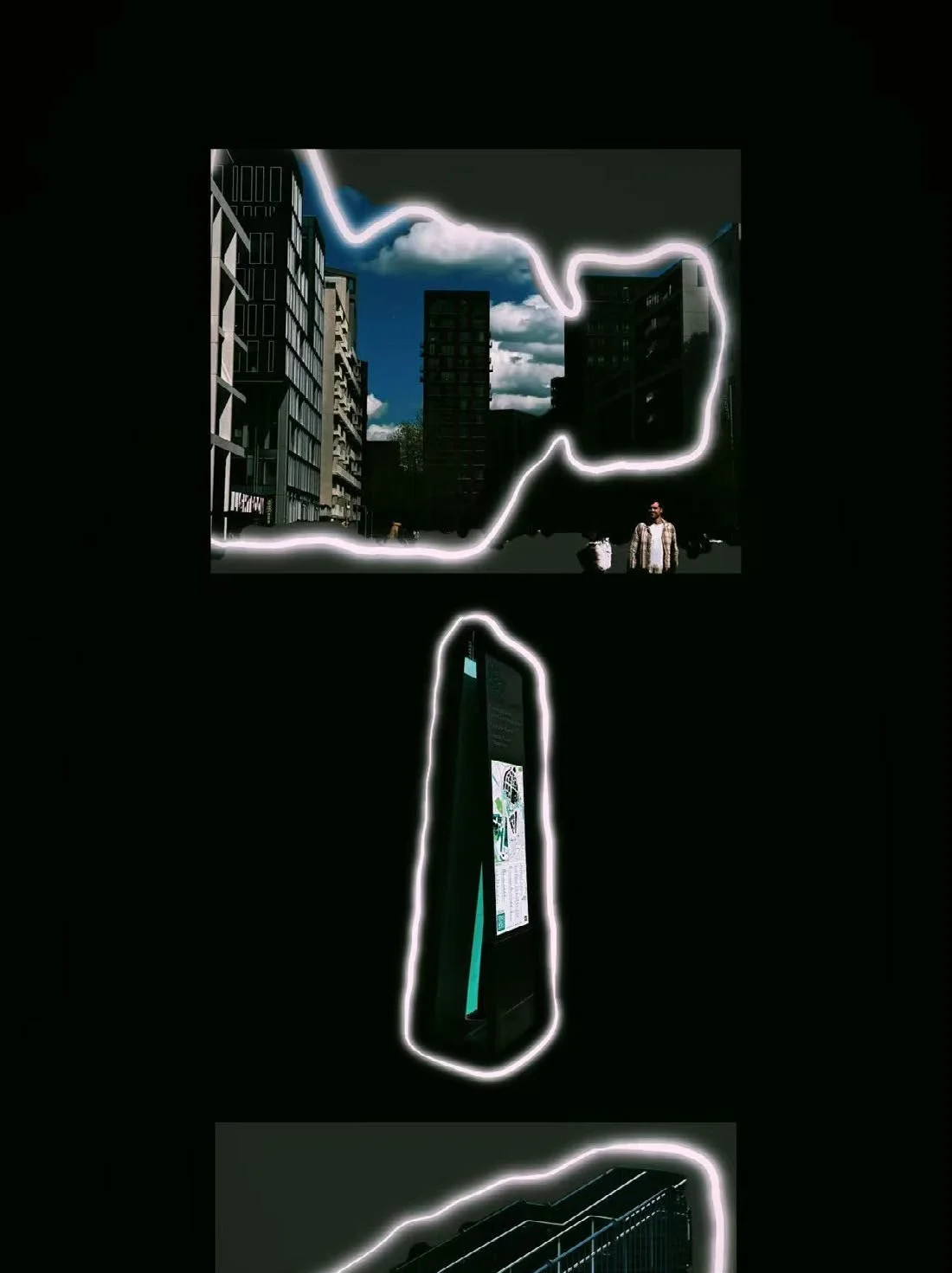
In the first class, we observed the people around us, most of them were international students, some were alone and some were in groups. So we decided that the target group we would convey was international students. We wanted future international students to know what we are going through now when they see our work.
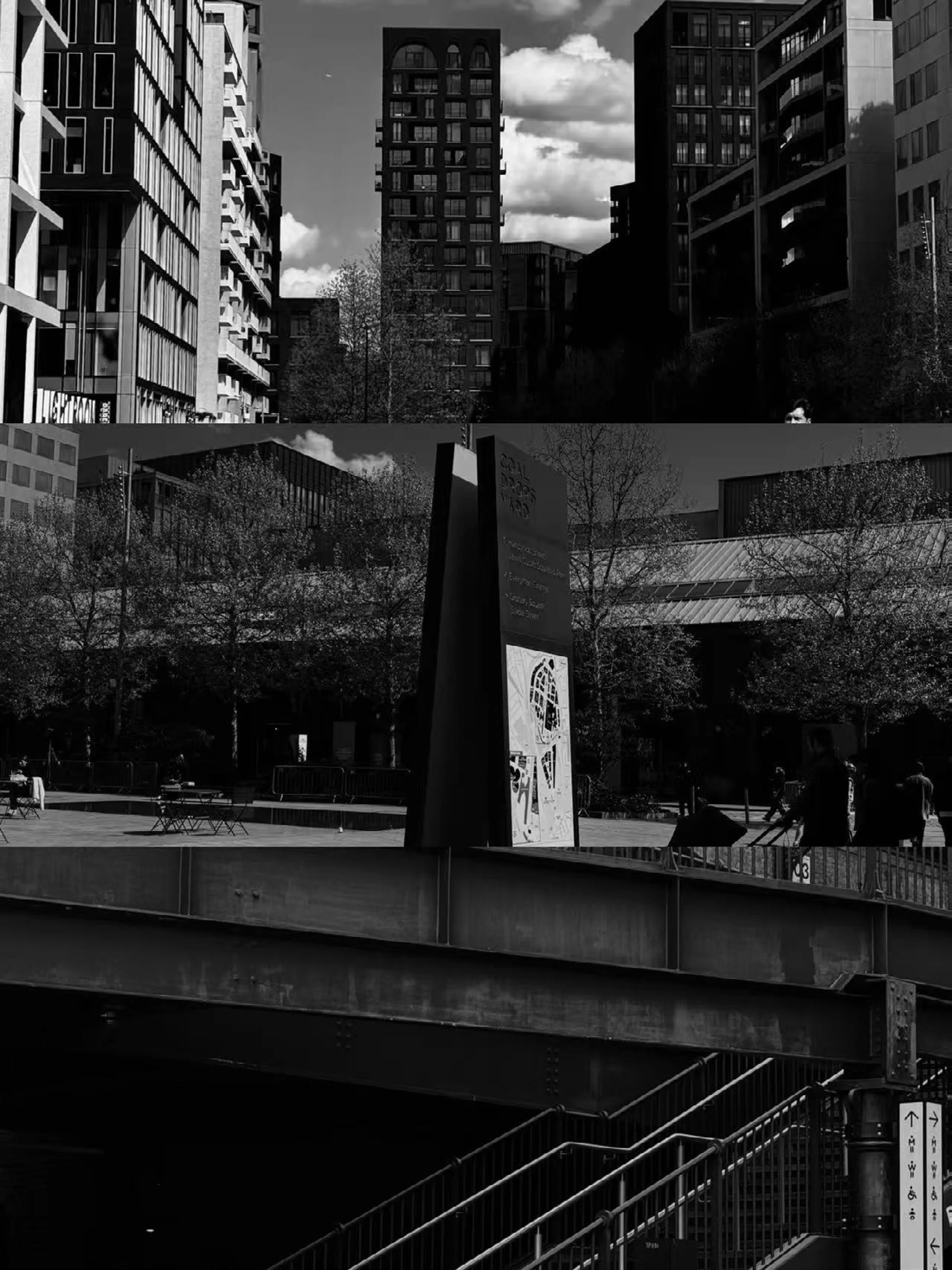
We observed these objects around us: signboards, stairs, etc. These may not appear in the future, because there will be technology to replace them, so we want to record some of the current architecture and humanities, etc., some memories and details about the school or our lives.
IDEA GENERATION
We have compiled a collection of all the objects or phenomena that exist in the present to find the similarities of modern international students.
STARTING POINT
1. live bymyself
2. like study at public place
3. healty daily rountine

1. live with roomate
2. like study at home
3. stay at night and get up at afternoon.
1. Have a pet
2. Take the subway
3. Like simple clothes
4. Study at ual
COLLAGE
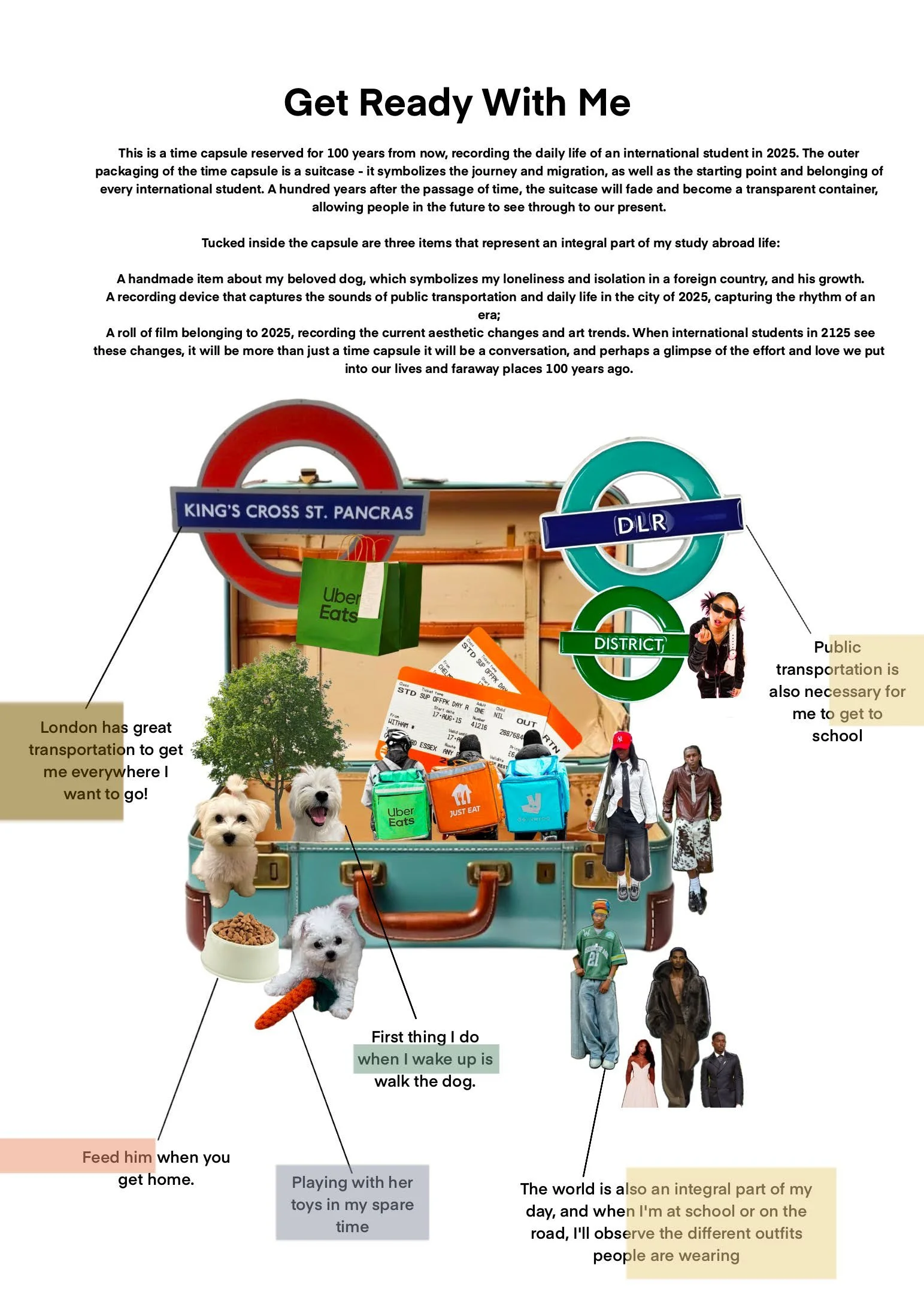
After that we produced a collage poster that clearly documented our ideas on how to make this time capsule.
CONCEPT
AUDIENCE:
We mainly focus on the international students of Central Saint Martins in the next 100 years. When they open the app, they will intuitively see what our life as international students is like now.
Content:
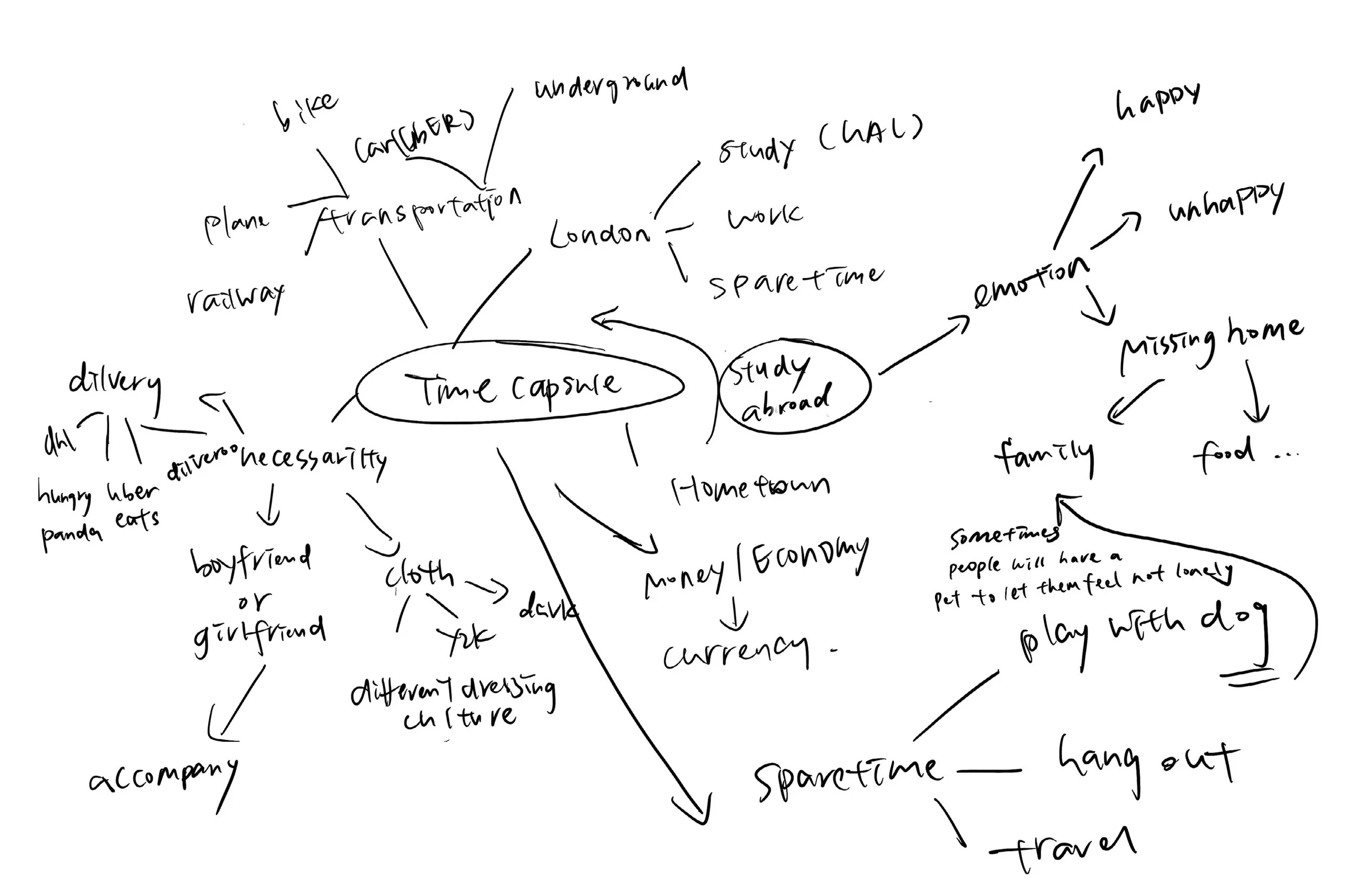
We will record the daily life of international students through three different ideas: First, pets are used as companions during leisure time, and pets are usually used as emotional sustenance. Second, what kind of transportation do we use to travel? Will you use these travel methods in the future or will you come up with new methods? Third, it is the current clothing culture and fashion trends. We will use a series of photos to prove the current study abroad life and clothing culture.
MINDMAP
RESEARCH:WHY IS SUITCASE?
ABOUT THE TIME CAPSULE
EXPERIMENTAL TEST
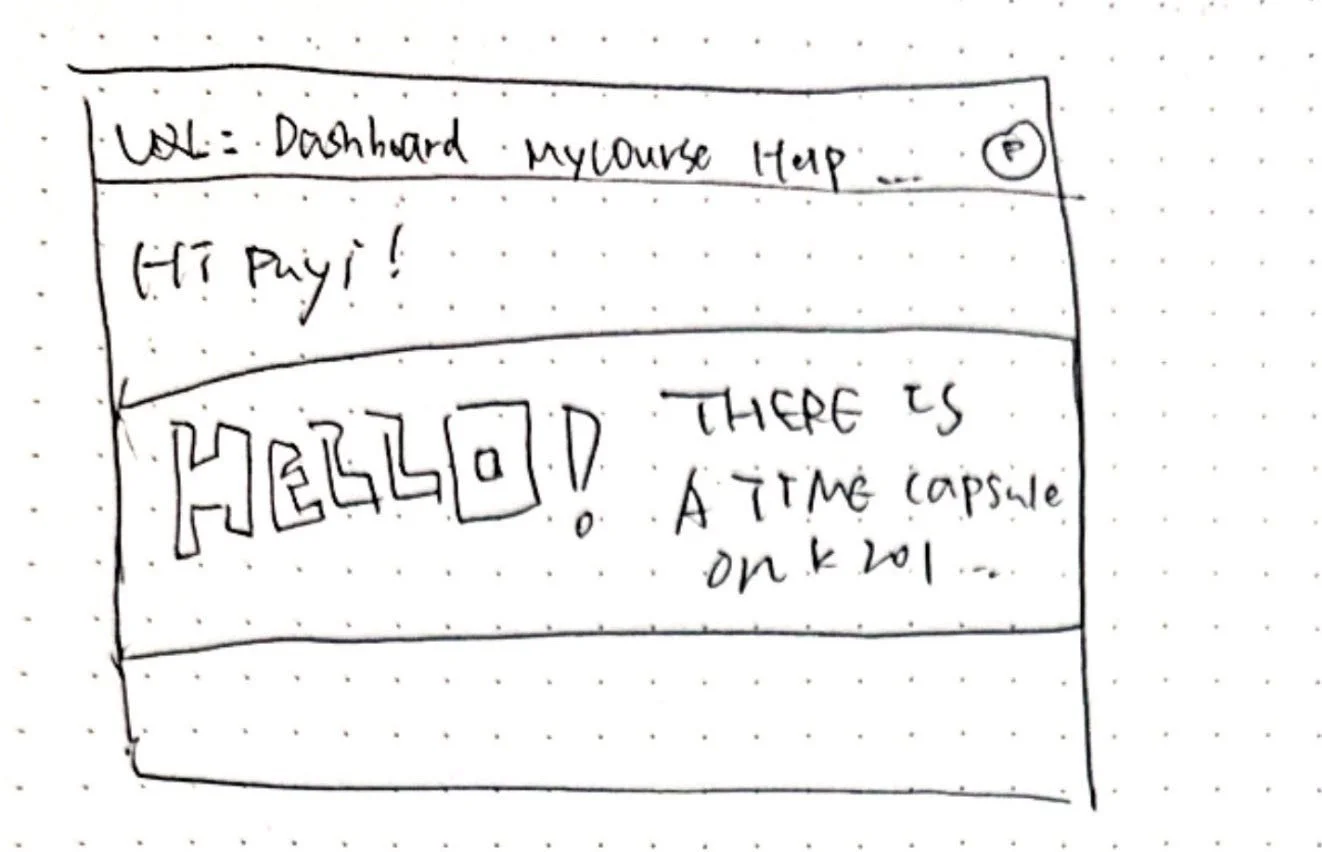
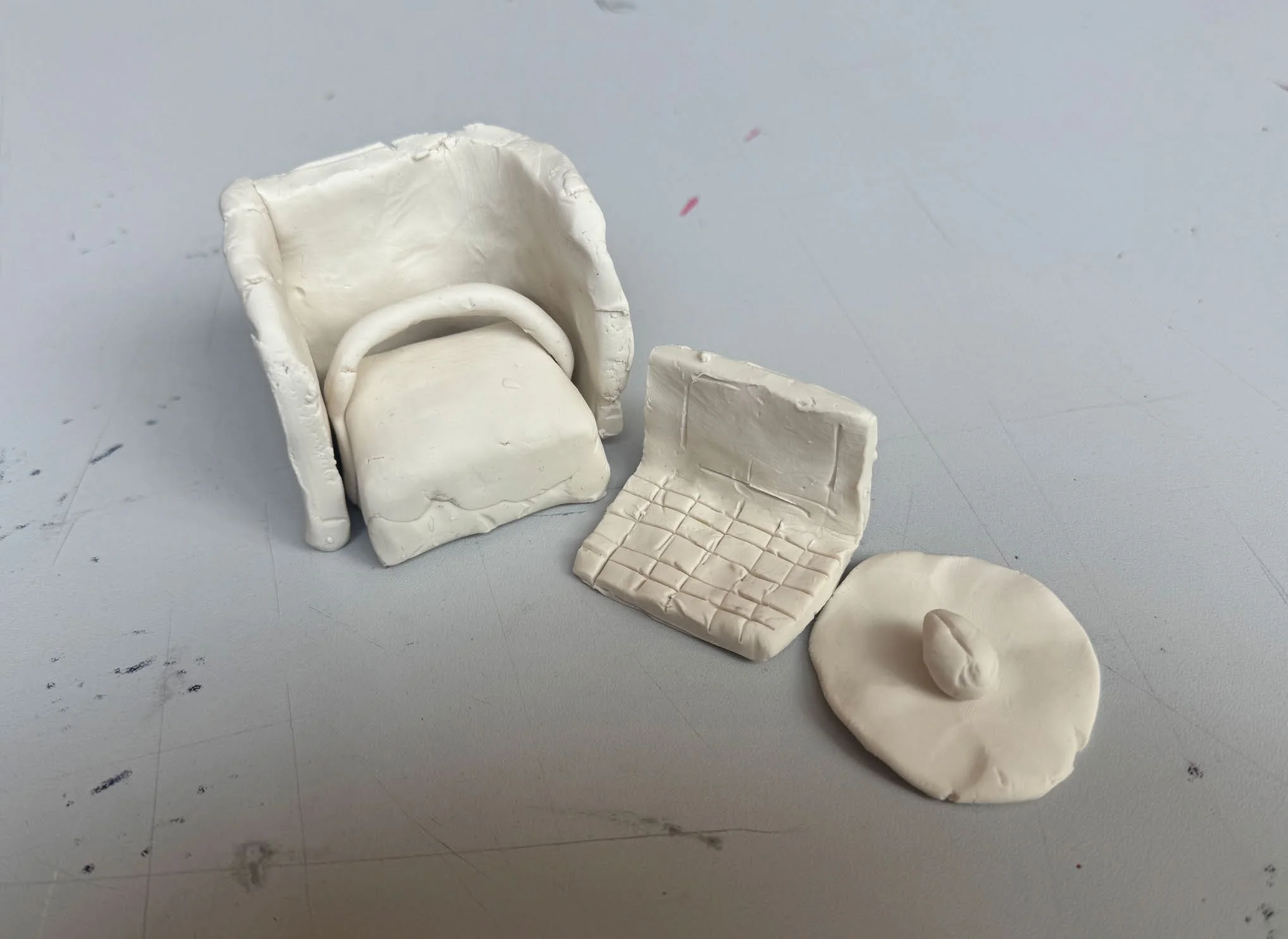
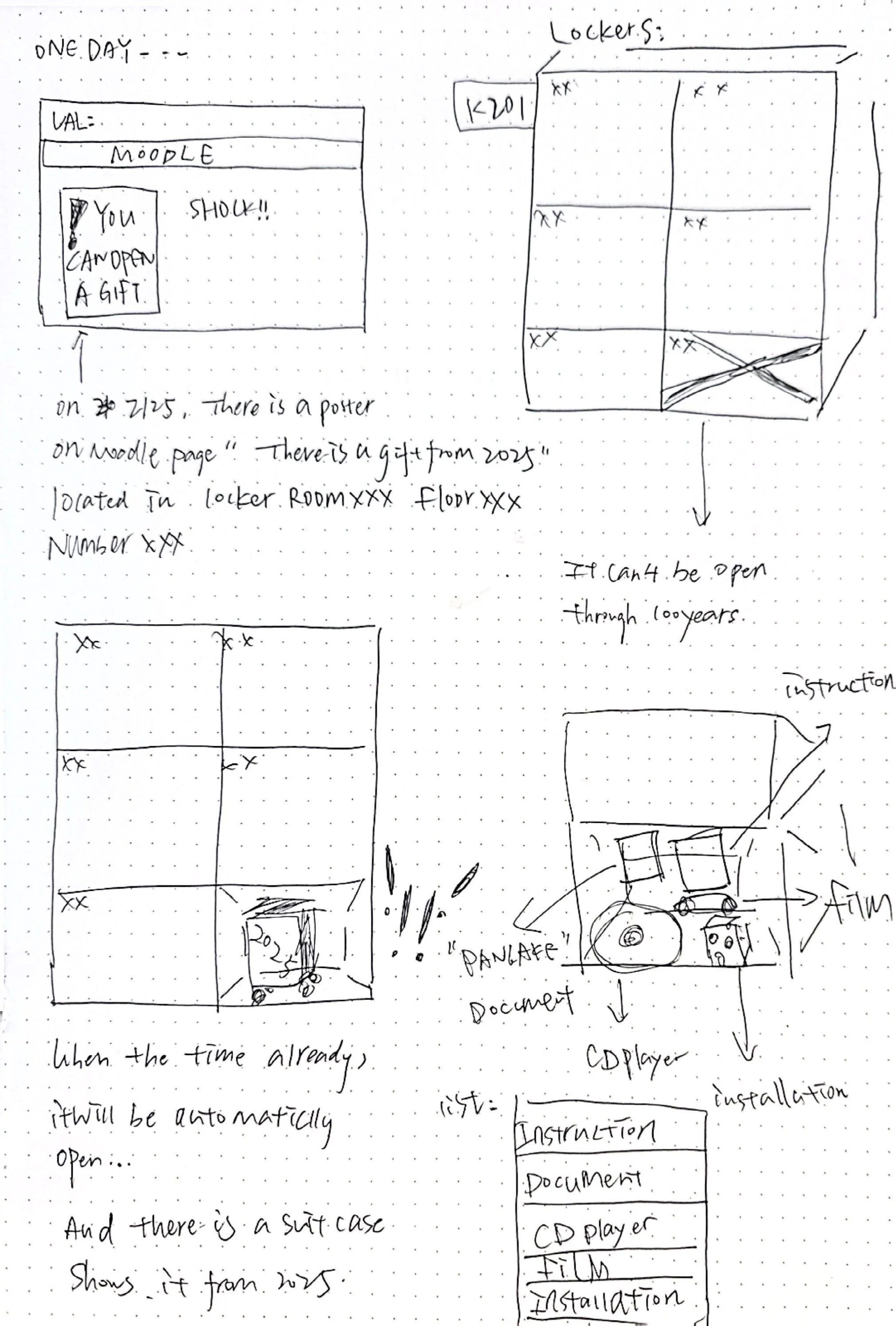
We created a scene with clay in class. Our time capsule is a timed poster sent through the school moodle email. So there is a computer and a locker in this scene. According to the set time, a poster will be sent to inform CSM students that there will be a time capsule from a hundred years ago on a certain floor.
RESEARCH:WHY IS SUITCASE?
SKETCH OF WEBSITE
LOCATION RESEARCH
SKETCH
HOW WAS IT EXCAVATED?
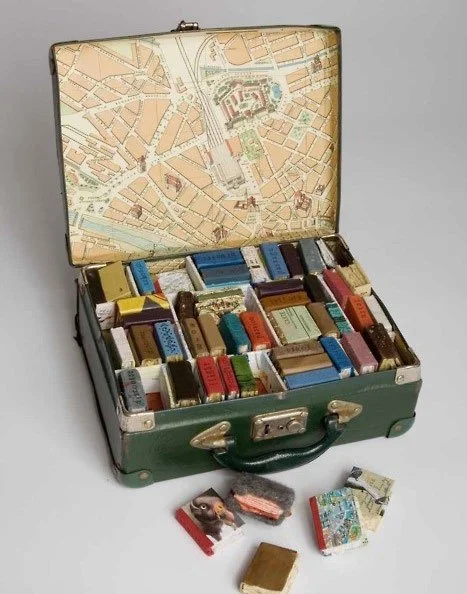
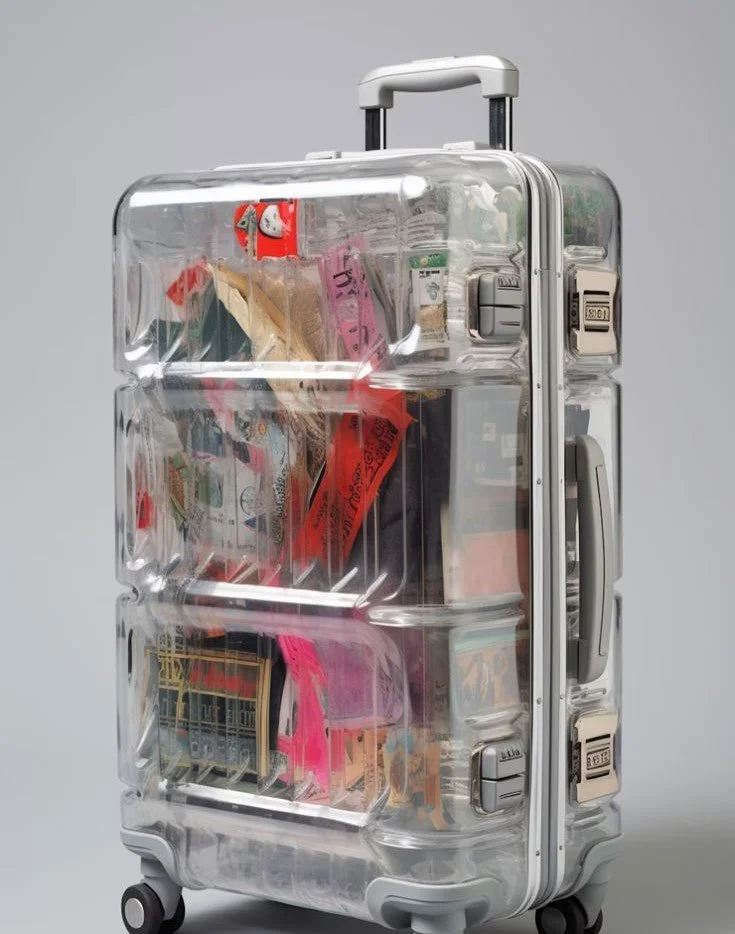
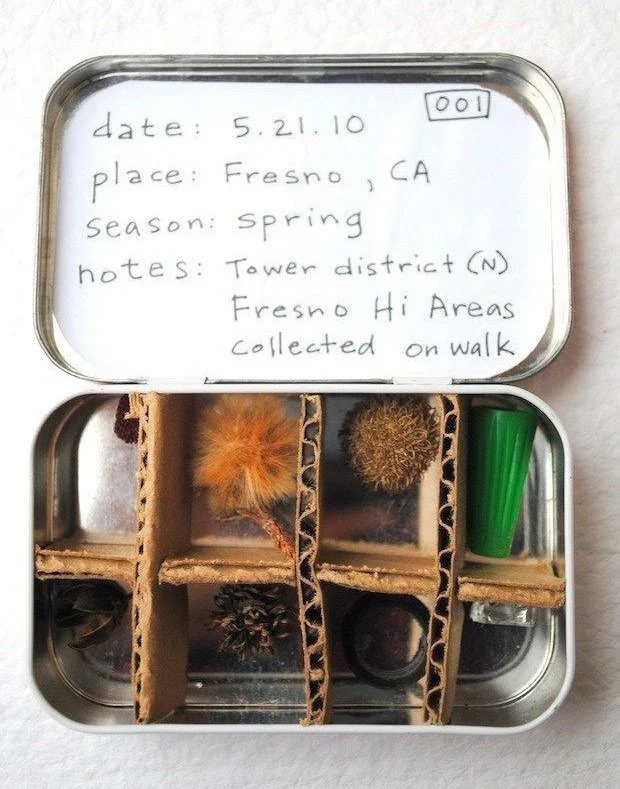
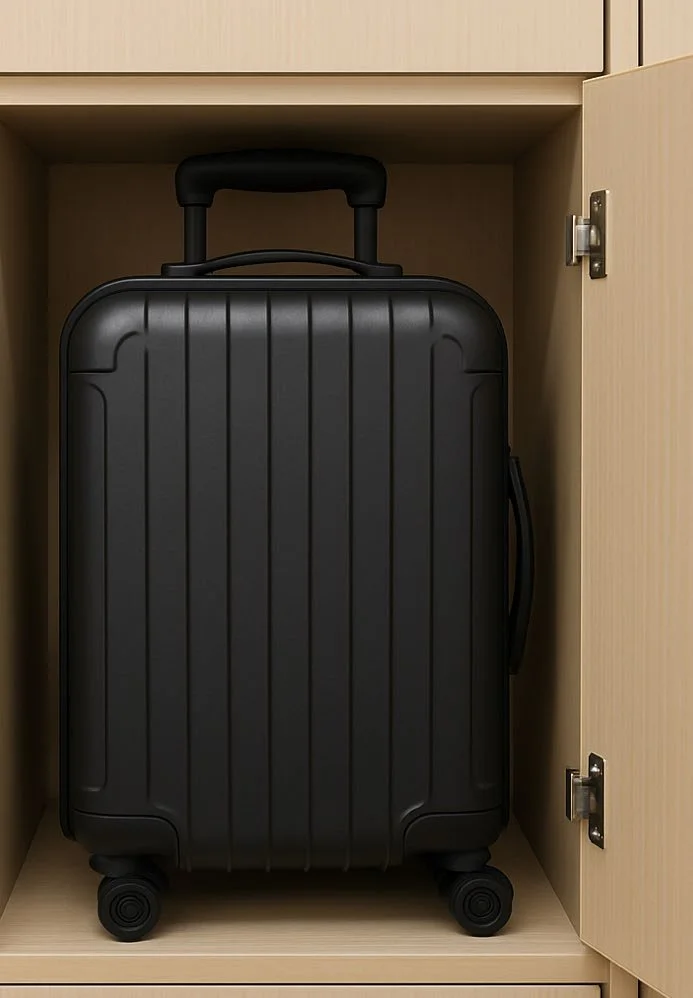
We traced back to the things that stored memories a long time ago. Many "time capsules" were packed in boxes, but this was too simple for us. We thought about whether to use boxes to present our ideas. But in the end, there was no ideal result. From the perspective of international students, the only thing that can carry our things is a suitcase, so I used a suitcase to present the concept of "time capsule". For international students, this is a carrier that can carry thoughts and the past to the future.
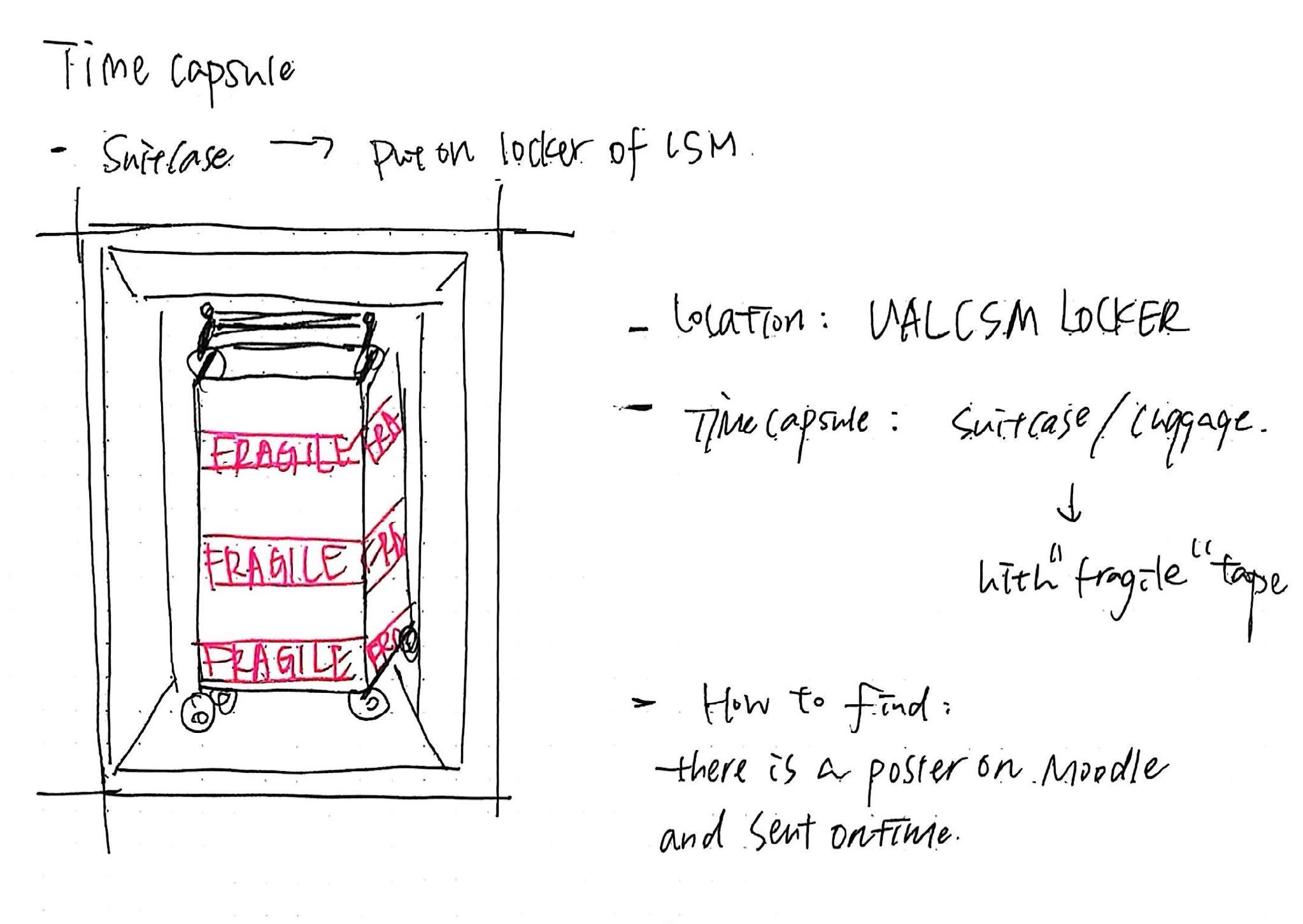
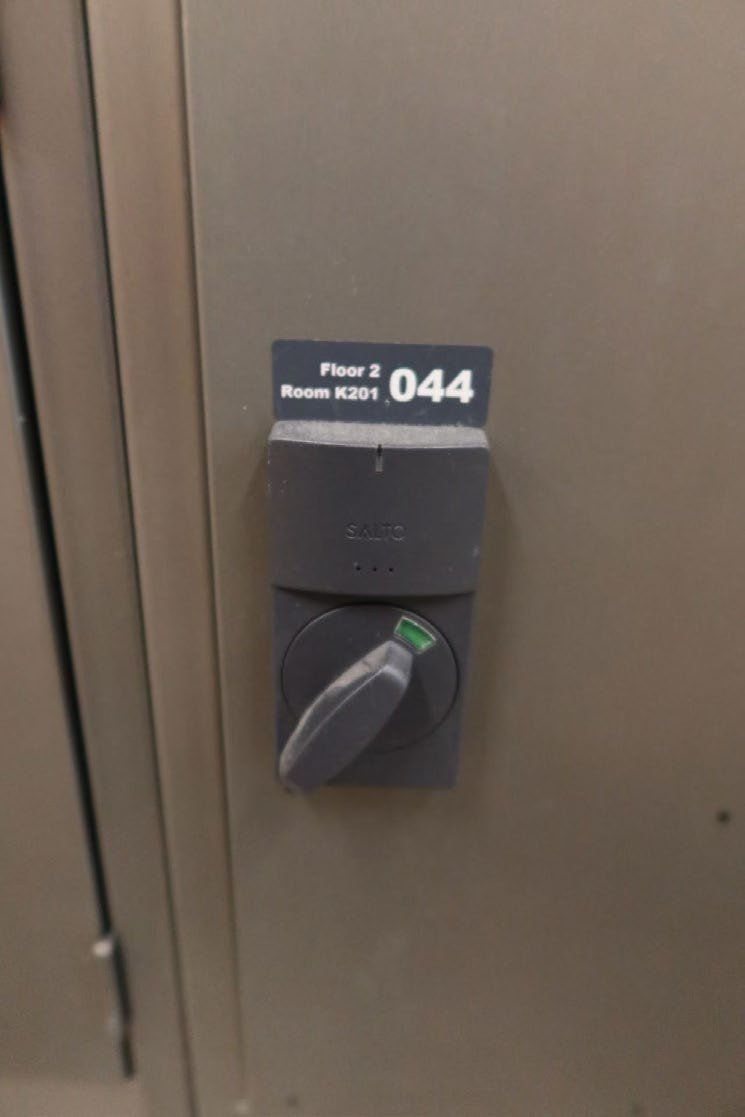
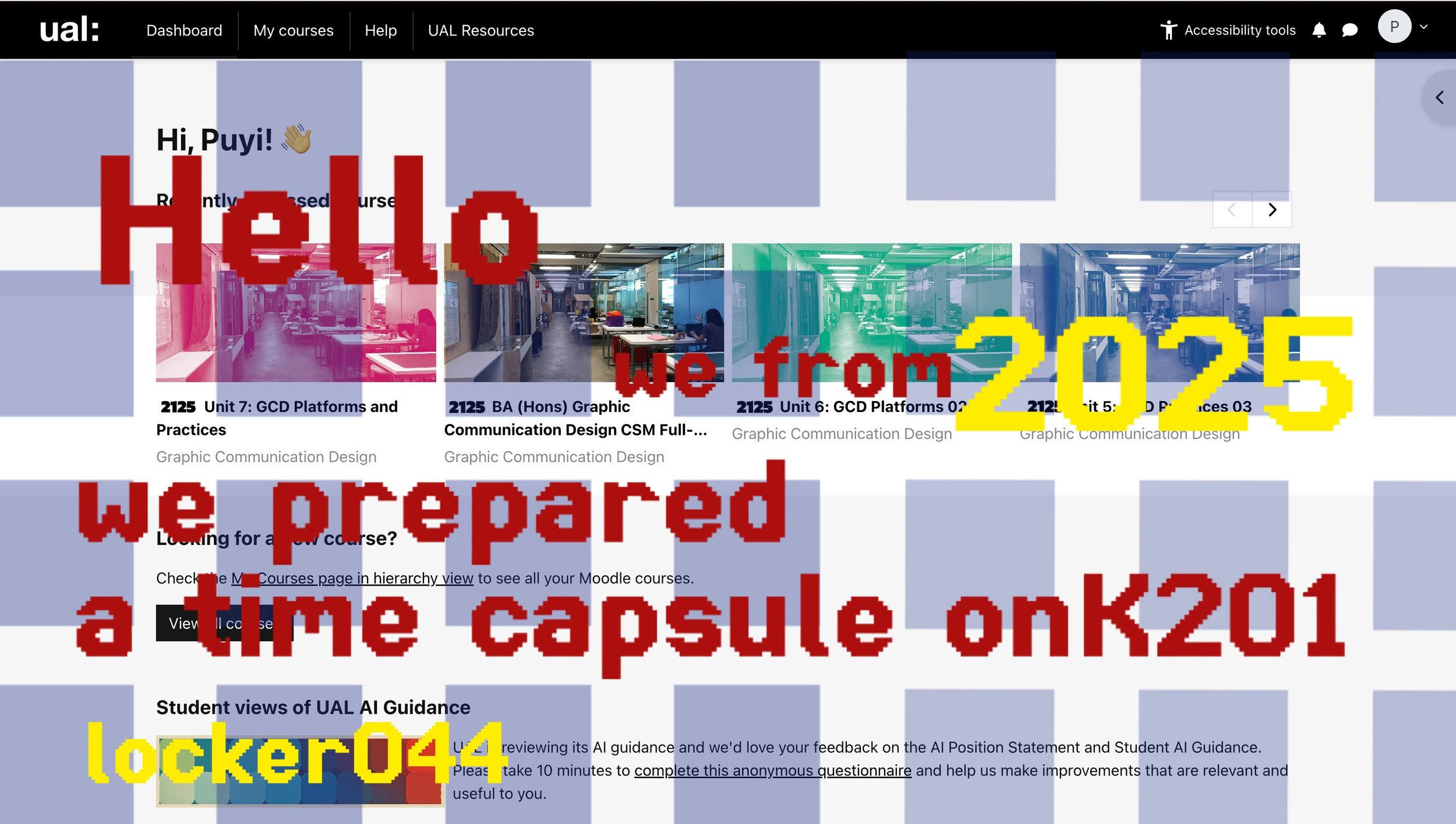
Our initial idea was to wait until the designated time came, and the locker would automatically unlock. Then all students would receive a poster on moodle - informing them that there was a time capsule about 2025 at the door of a classroom.
SIMULATING TIME CAPSULE-PROTOTYPE
WHERE/HOW IT WILL BE STORED?
WILL YOUR CAPSULE HAVE A PHYSICAL OR VIRTUAL PRESENCE, WHAT IT WILL BE MADE OF?
DRAFT OF HOW BE FOUNDED
DRAFT OF HOW BE FOUNDED
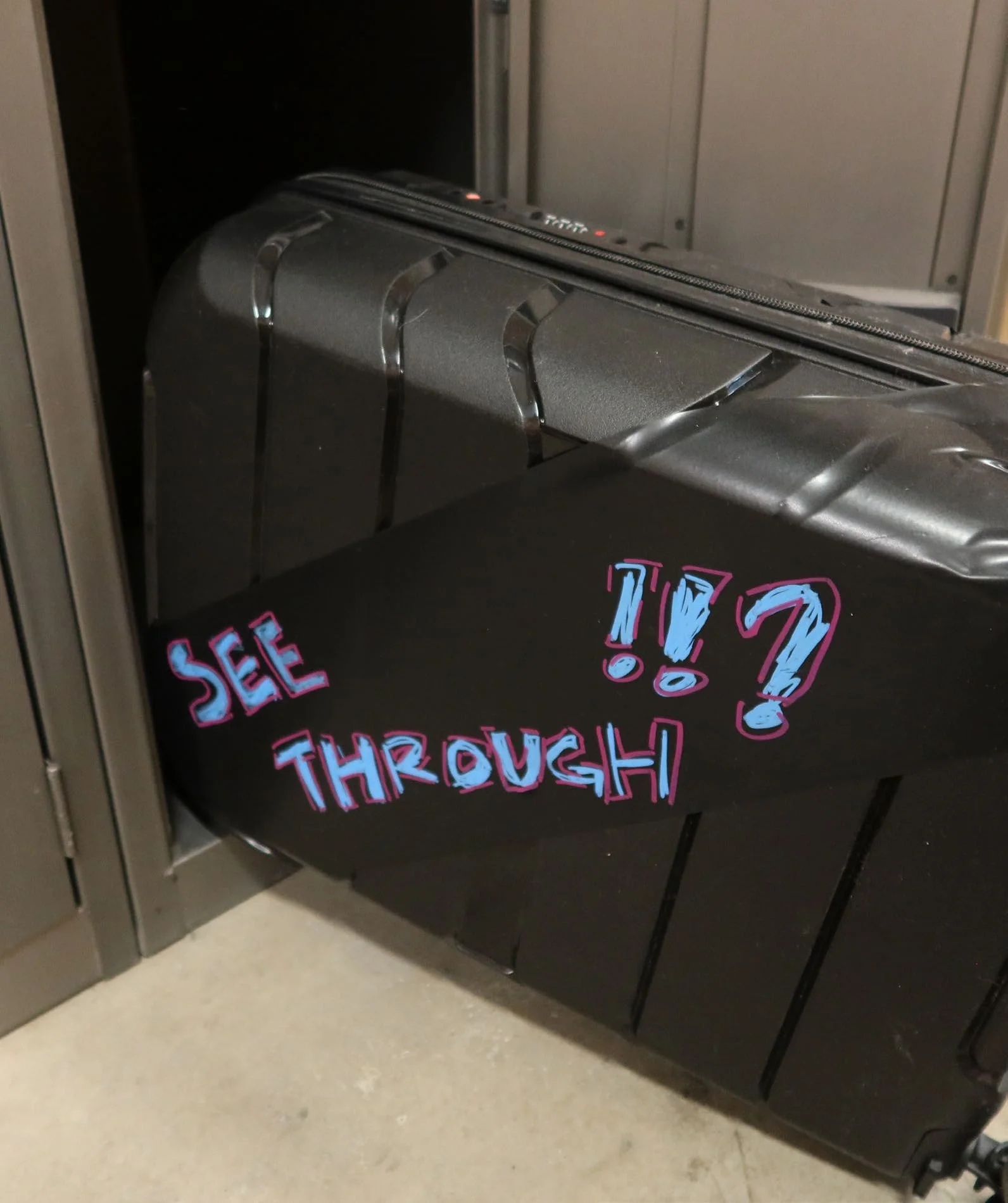
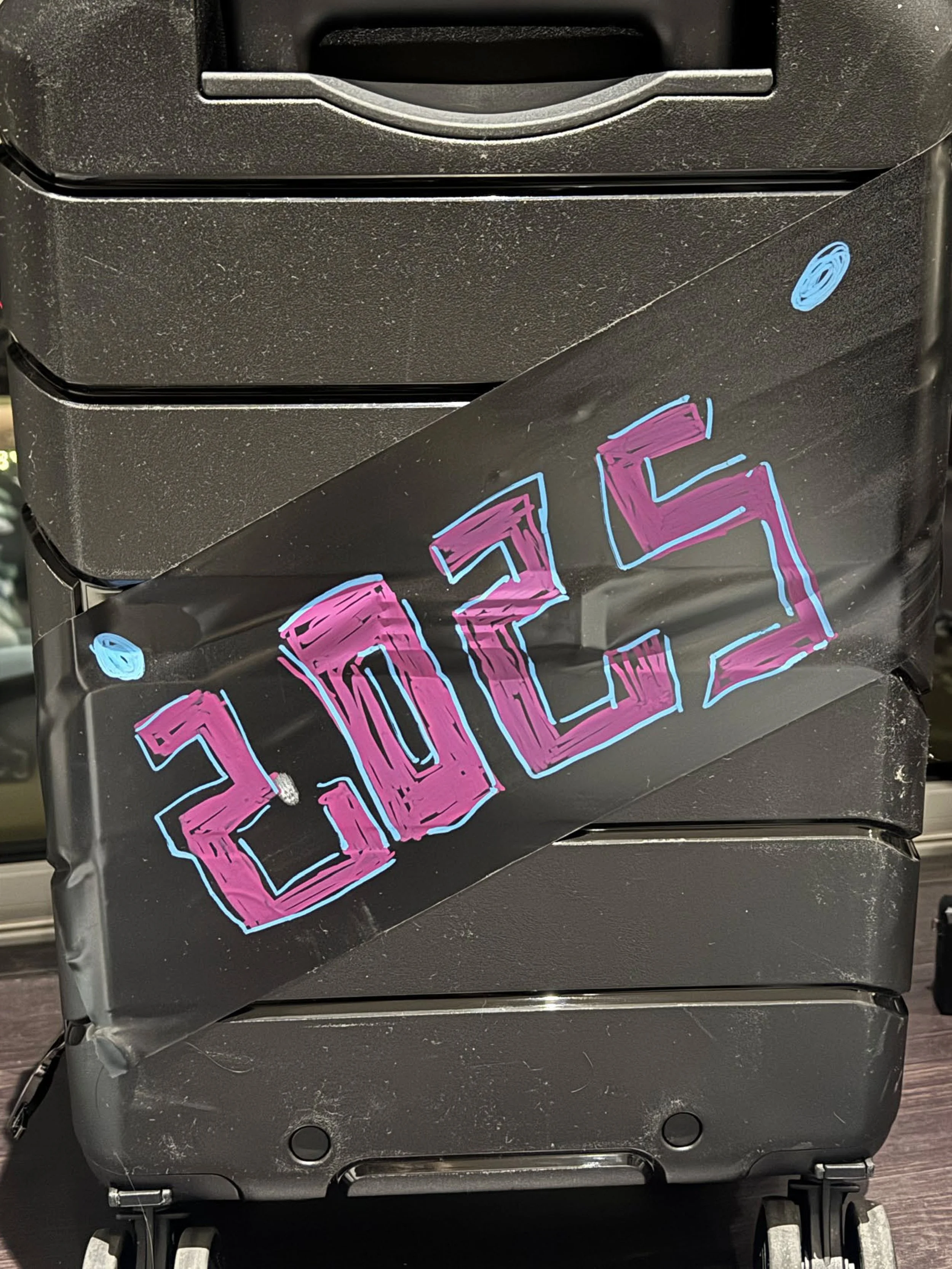
We wrapped tape around the outside of the box and wrote "see through 2025" with a marker. When you open it, you can see all the items.
IDEA GENERATION-PUBLICATIONS
RESEARCH(LAYOUT
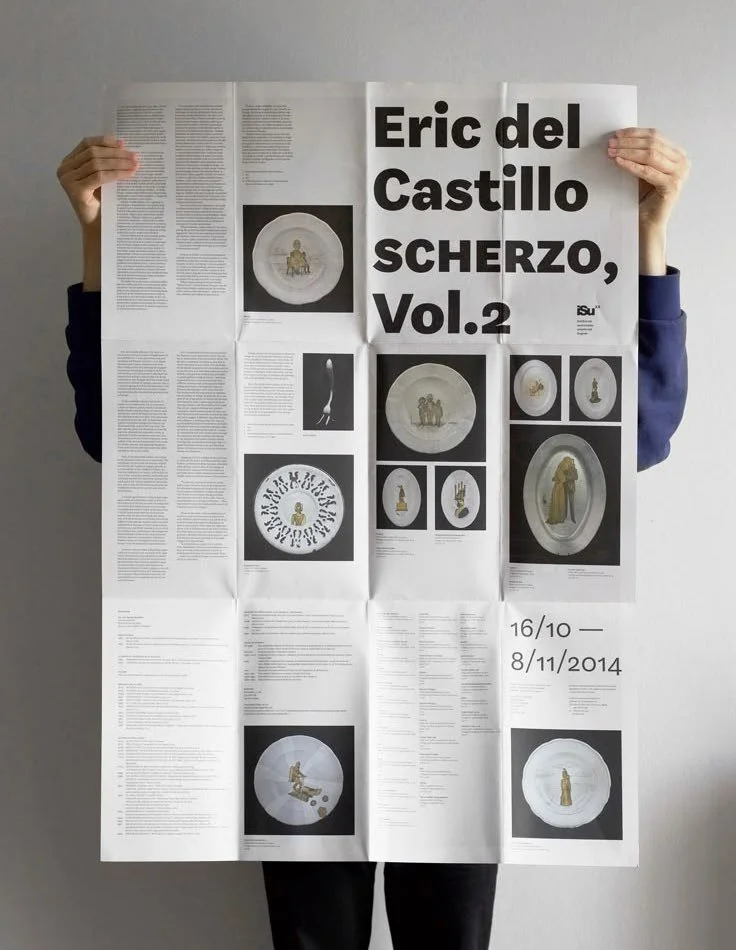
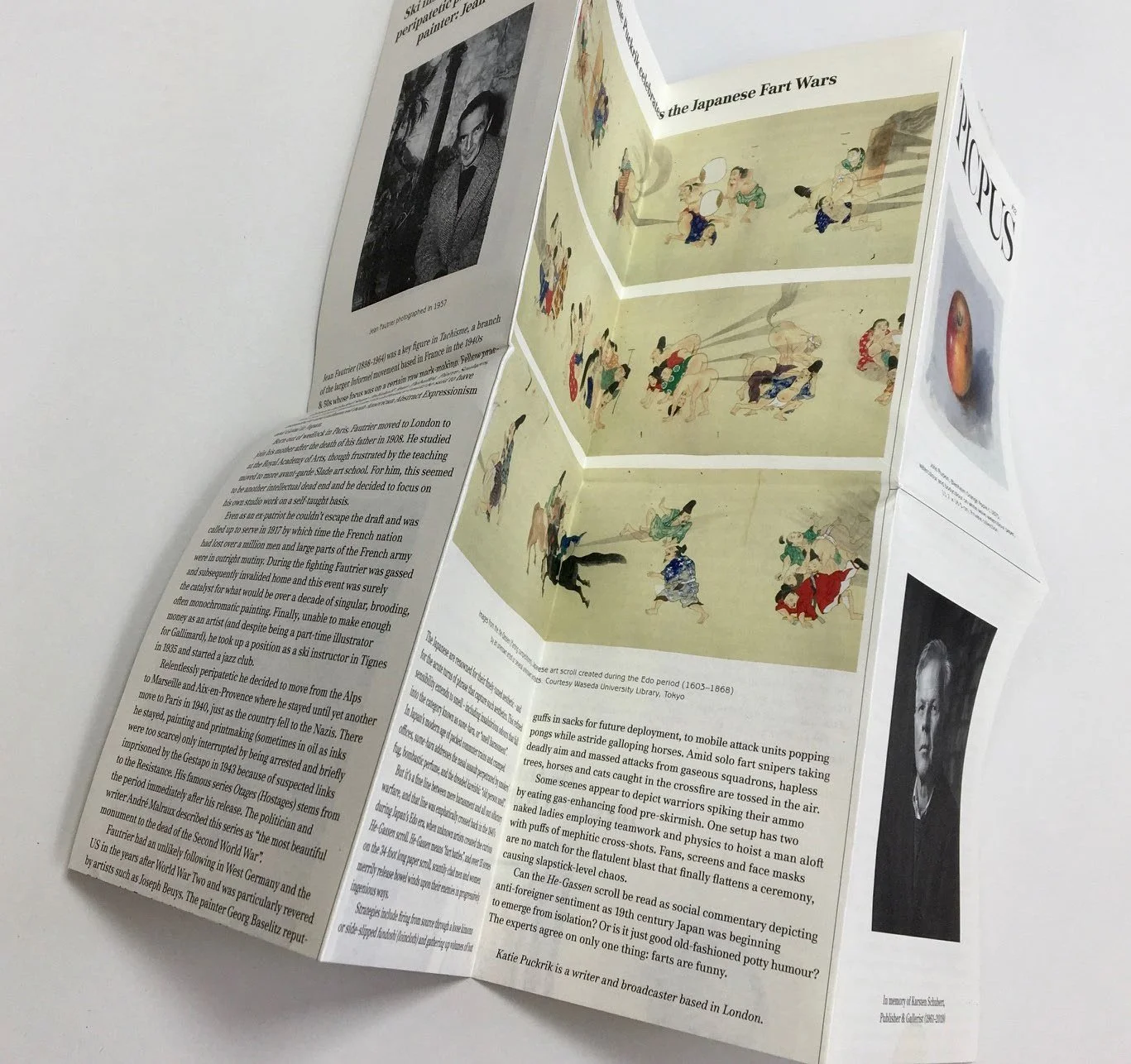
Before the project started, we thought about who the audienceWe want to explain why we made this installation through a publication. usInitially, we planned to e Felt handmade book as the output to show the growth process of the
pet. But the bad thing is that it is not clear enough, it can only gie a vague description. Sov we plan to make a paper publication. was. To record our present, the first thing we thought of was to record the joys, sorrows, anger and happiness we experienced from the perspective of ual students, international students.
QUESTIONNAIRE
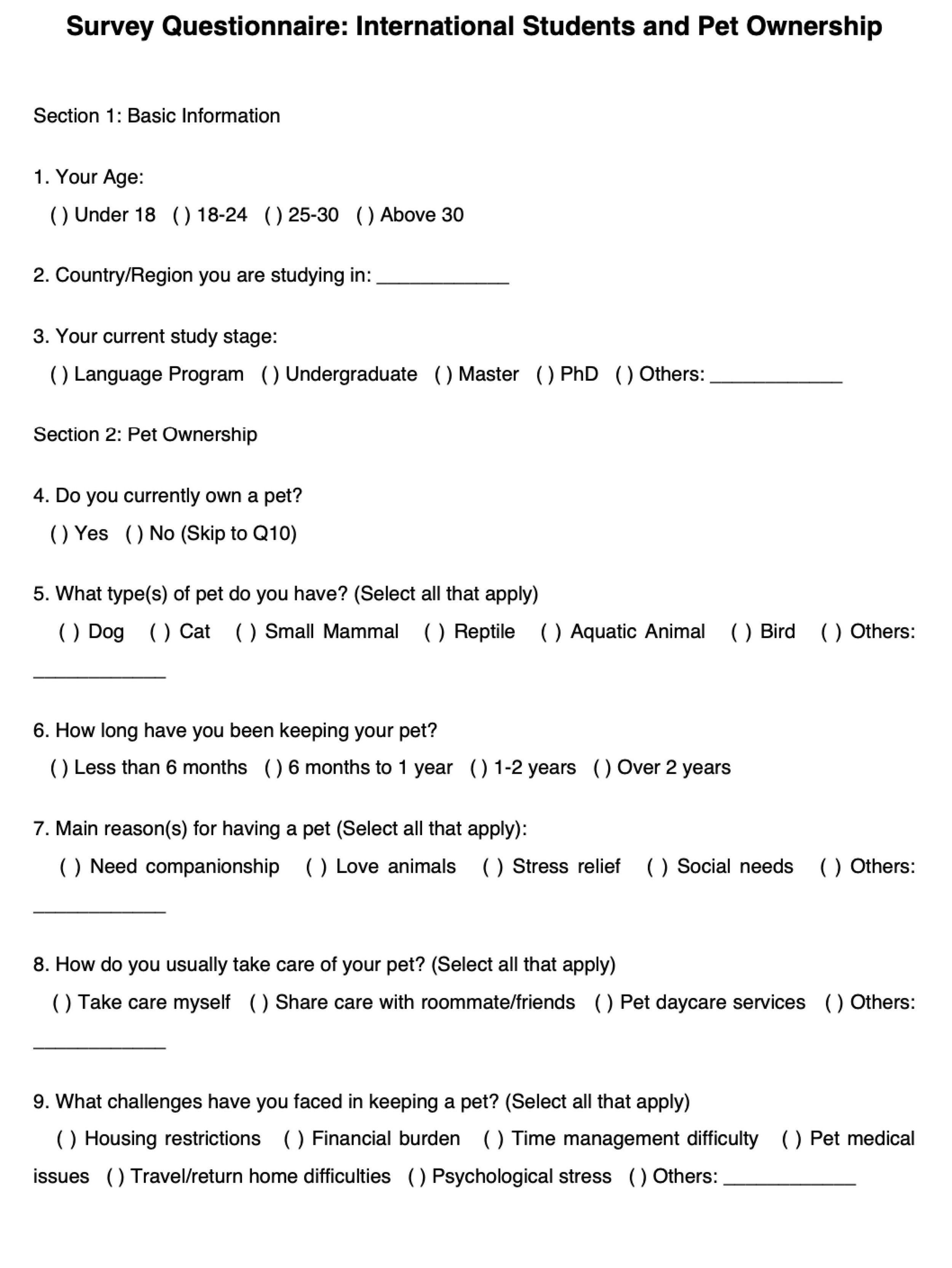
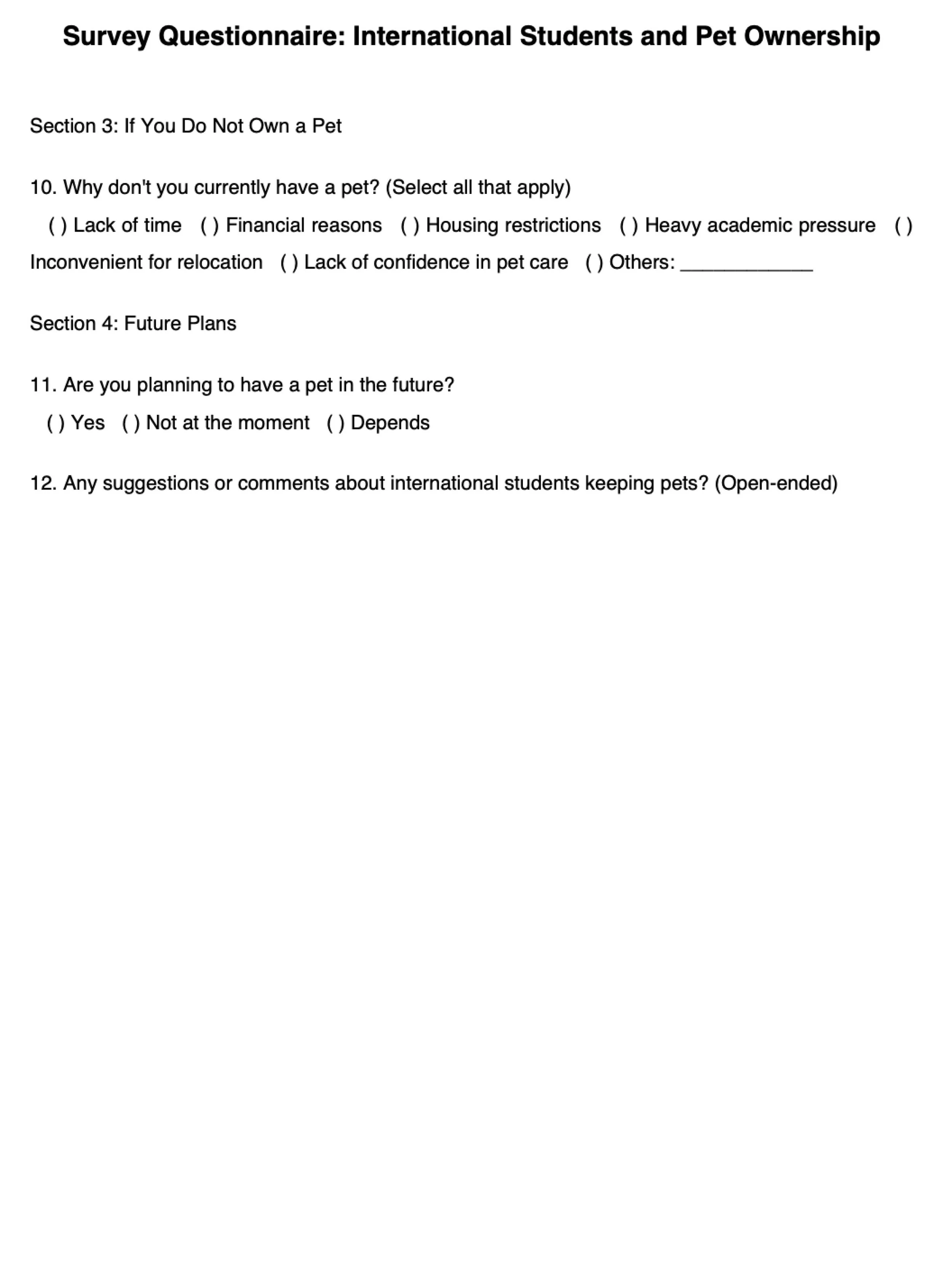
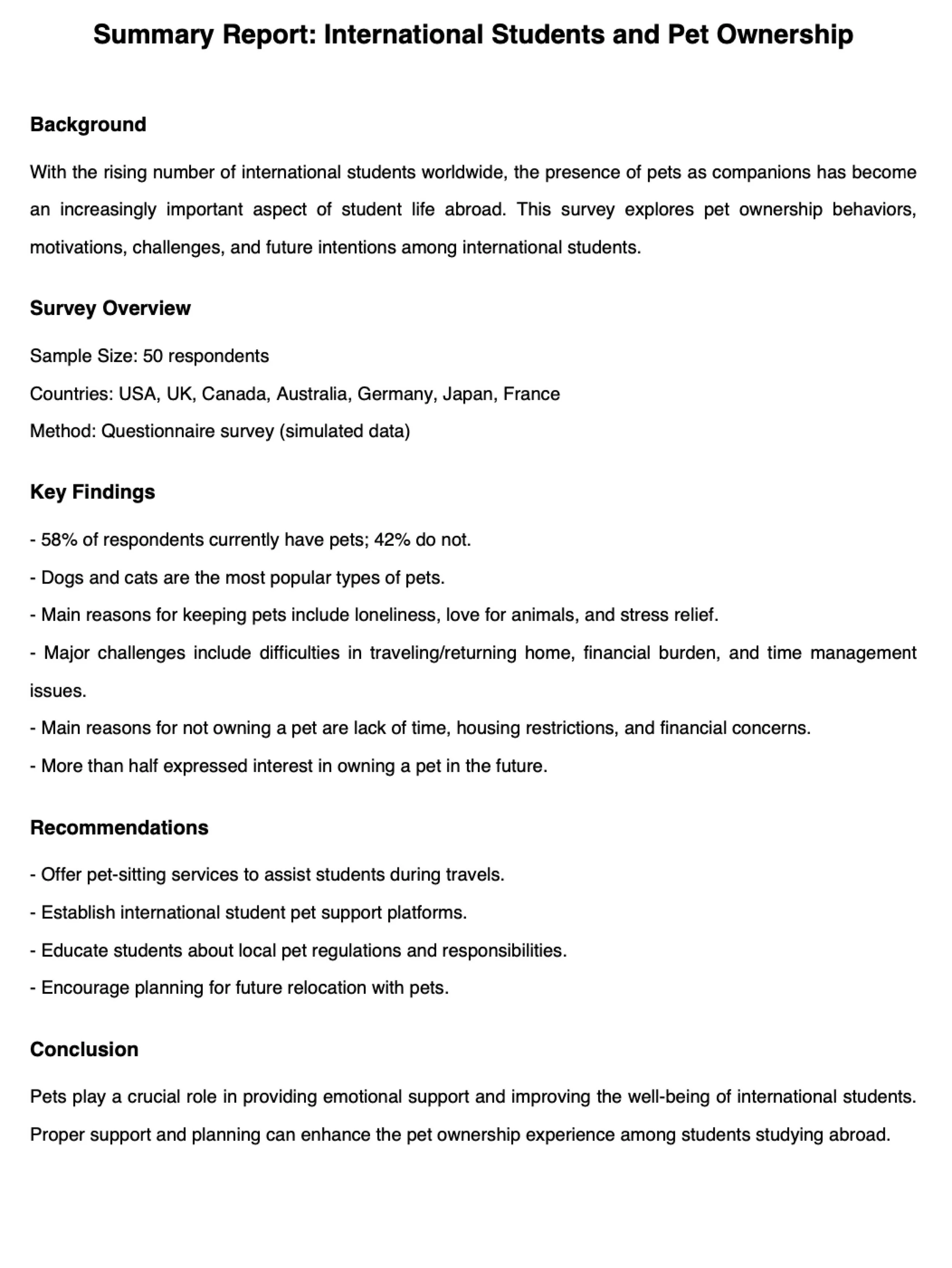
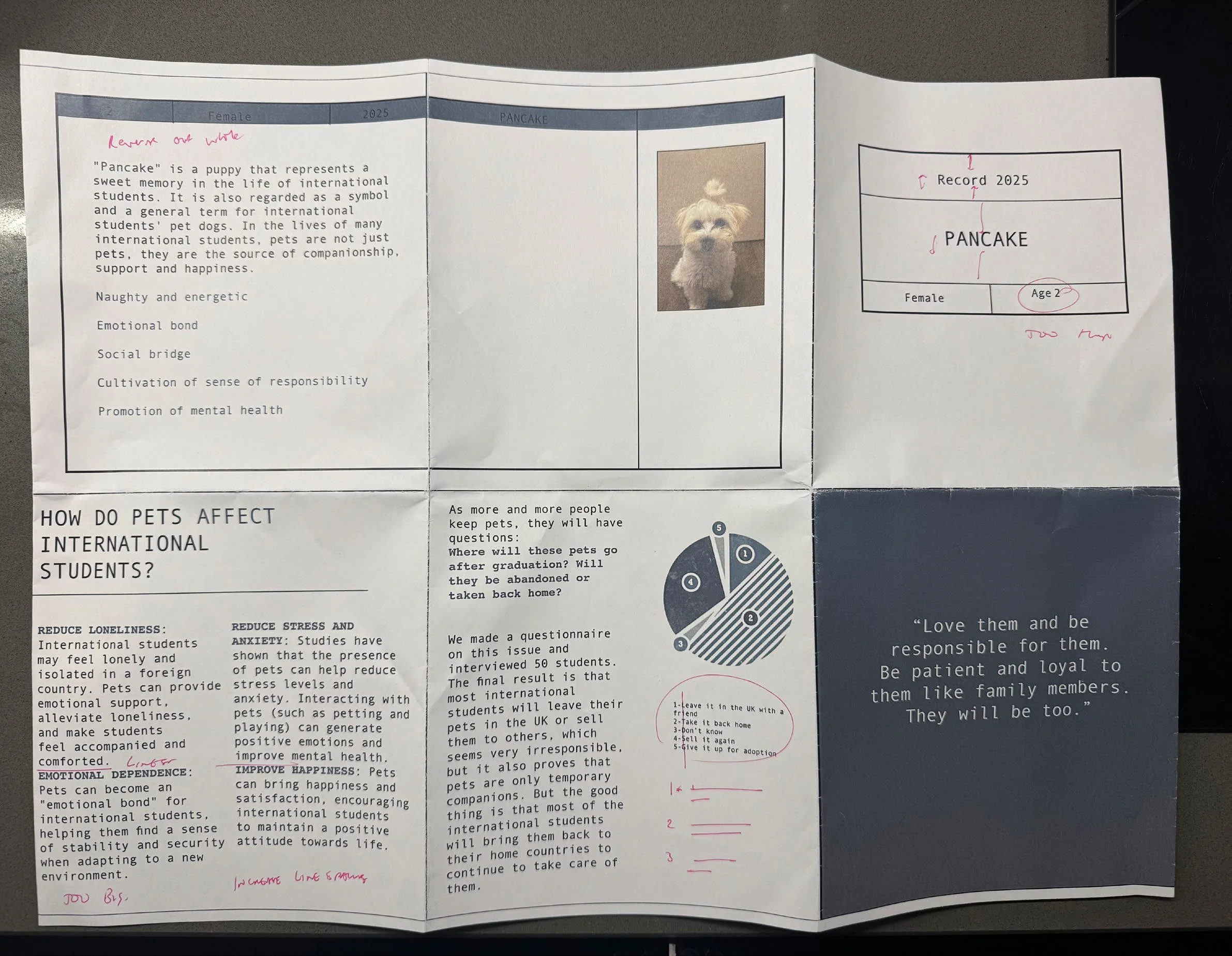
The theme of our publication is about the relationship between international students and pets. So before we started, we prepared a questionnaire to investigate the percentage of international students who have pets and their future plans for pets after graduation.
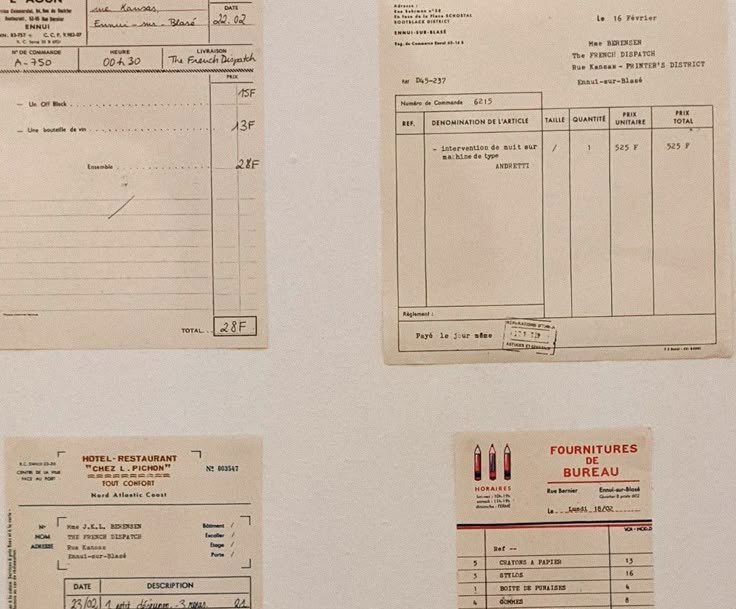
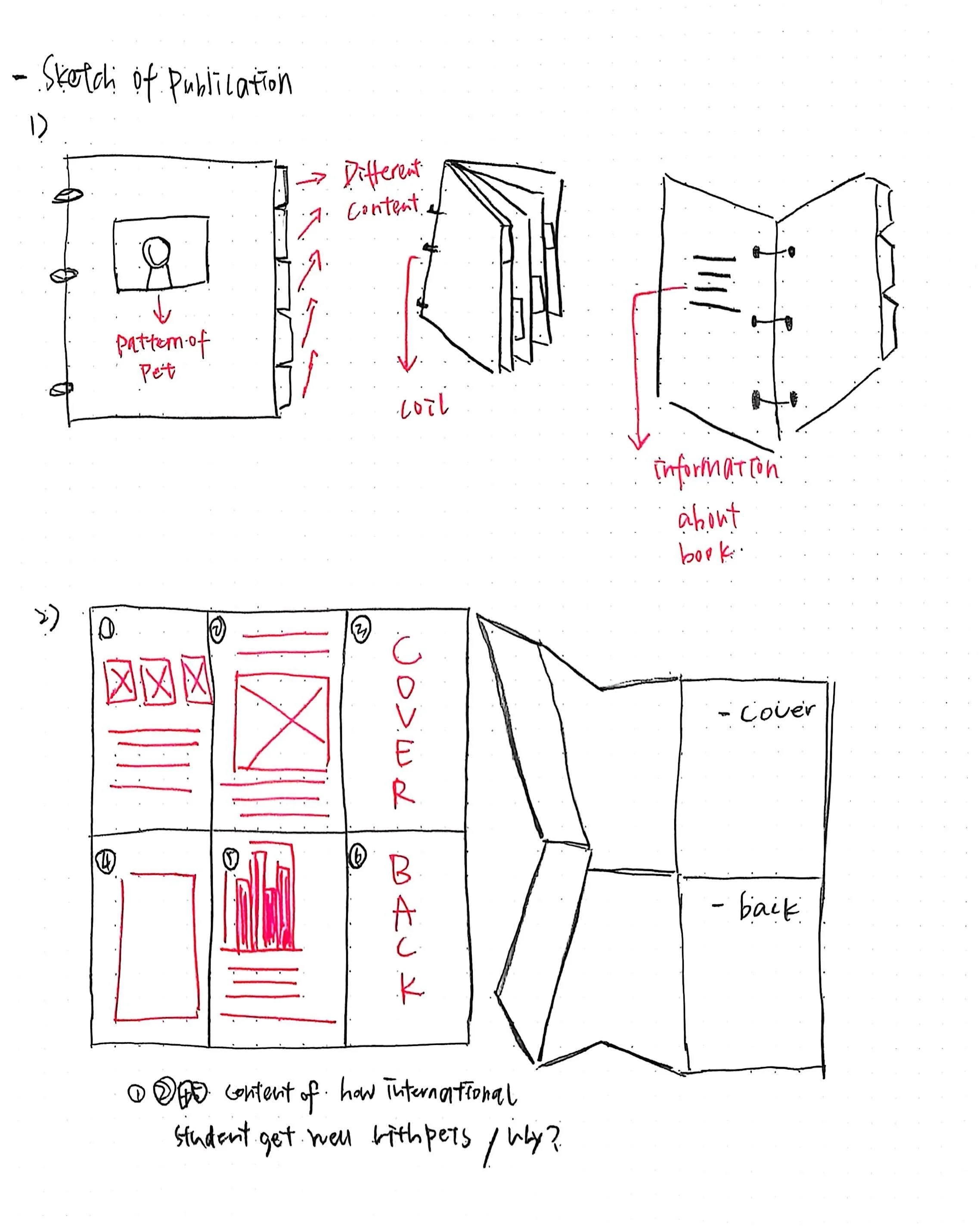
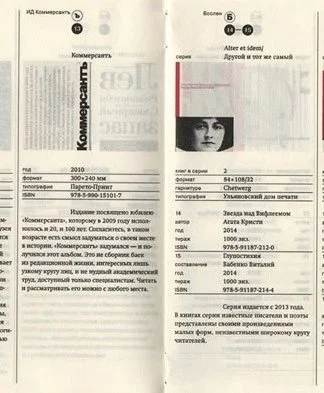
Regarding the layout, I want to make a foldable publication. This will make it more flexible and interesting, and I want to use a more retro design (such as archives) for the inner pages.
1.PUBLICATION-LAYOUT
FINAL LAYOUT
LAYOUT TESTING
SKETCH
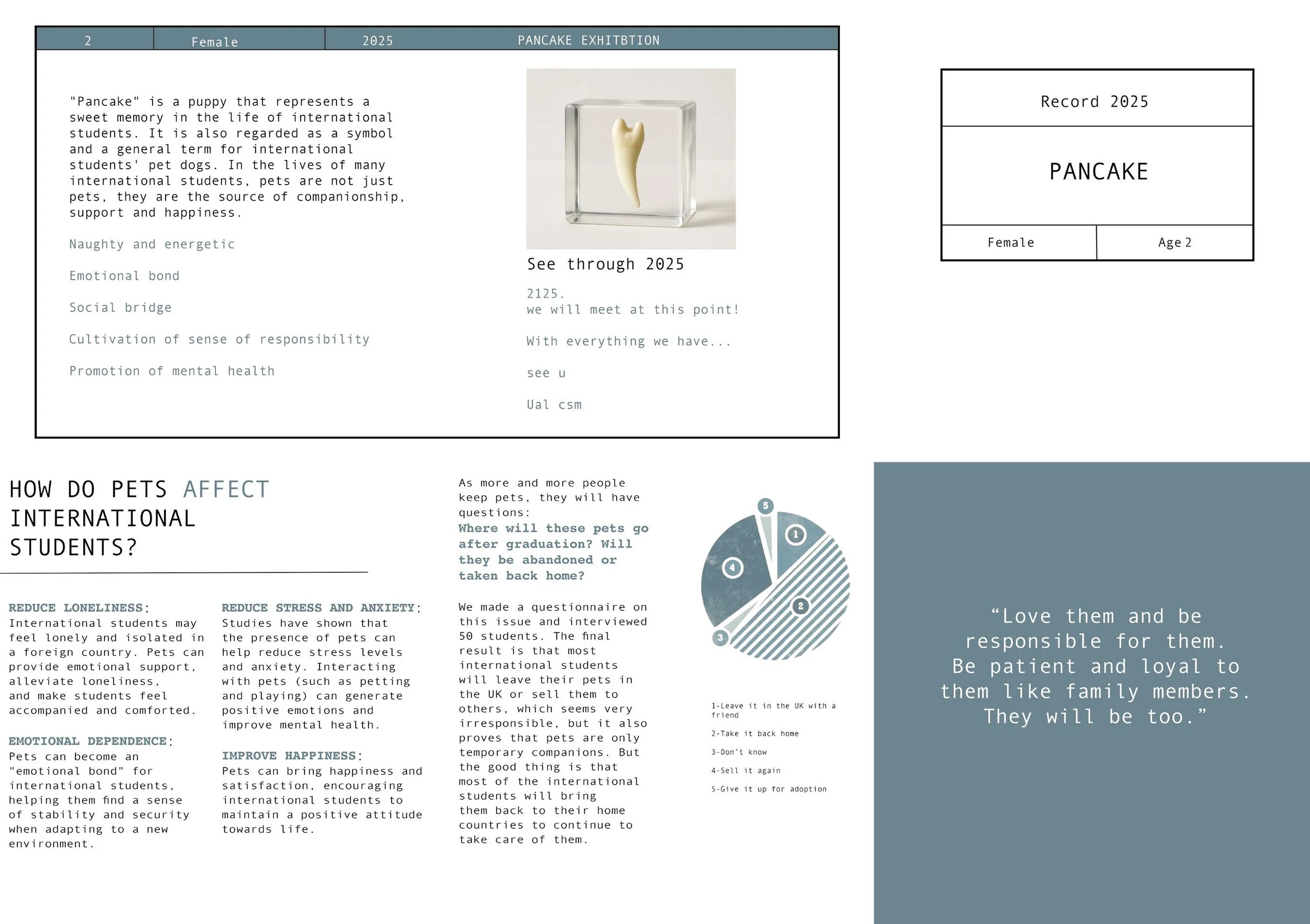
1. Font spacing, font size (the first version had a too large visual effect)
2. Ensure uniform spacing and vertical alignment
3. Remove the black box in the middle when printing.
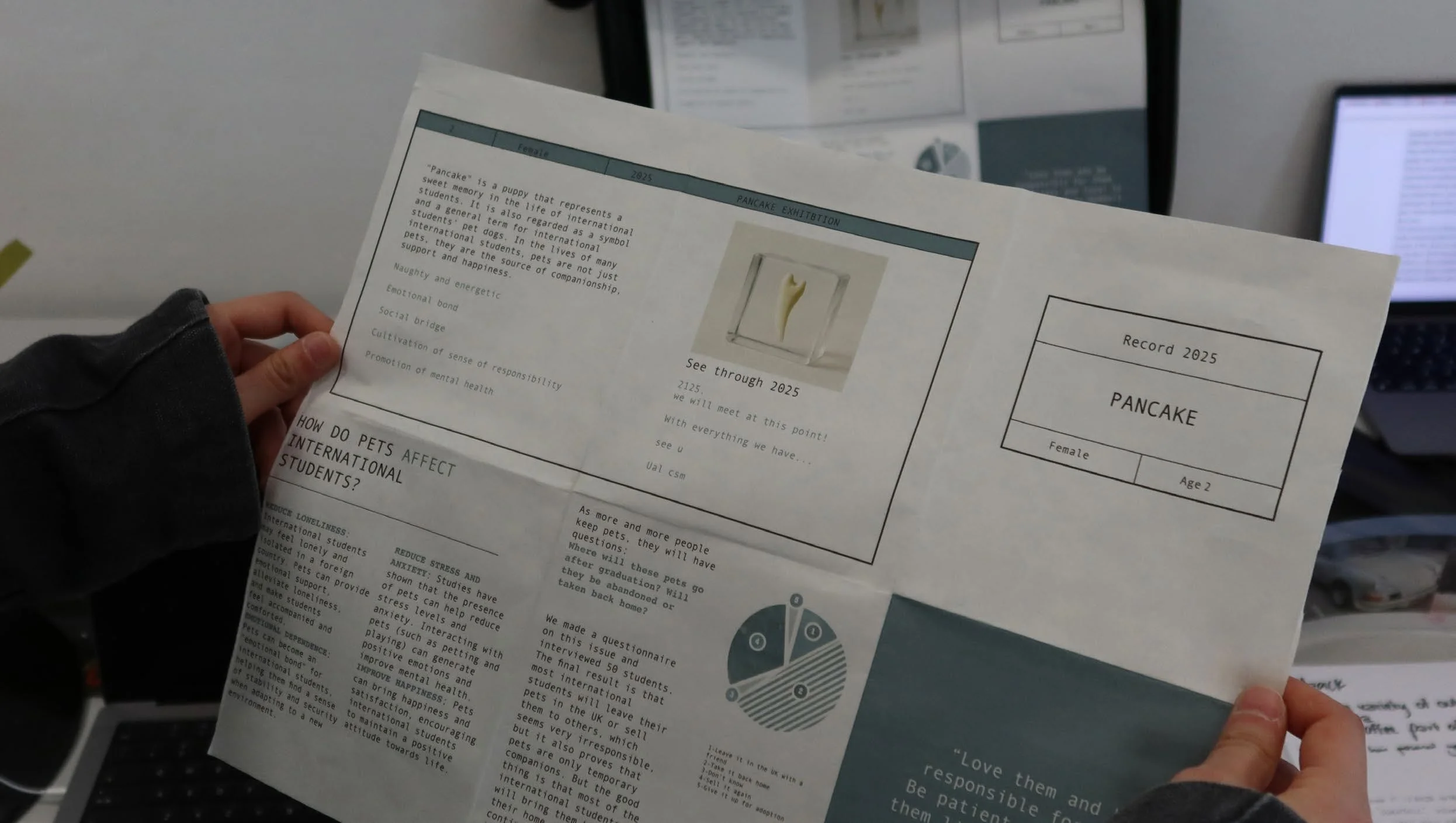
We first tried the archival layout, visualizing the collected data into charts. Then we put the information given by the audience into the archive. "Pancake" is the name of the team member's dog, and we used it as the name of the archive to replace the pets of all international students.
TESTING MATERIAL
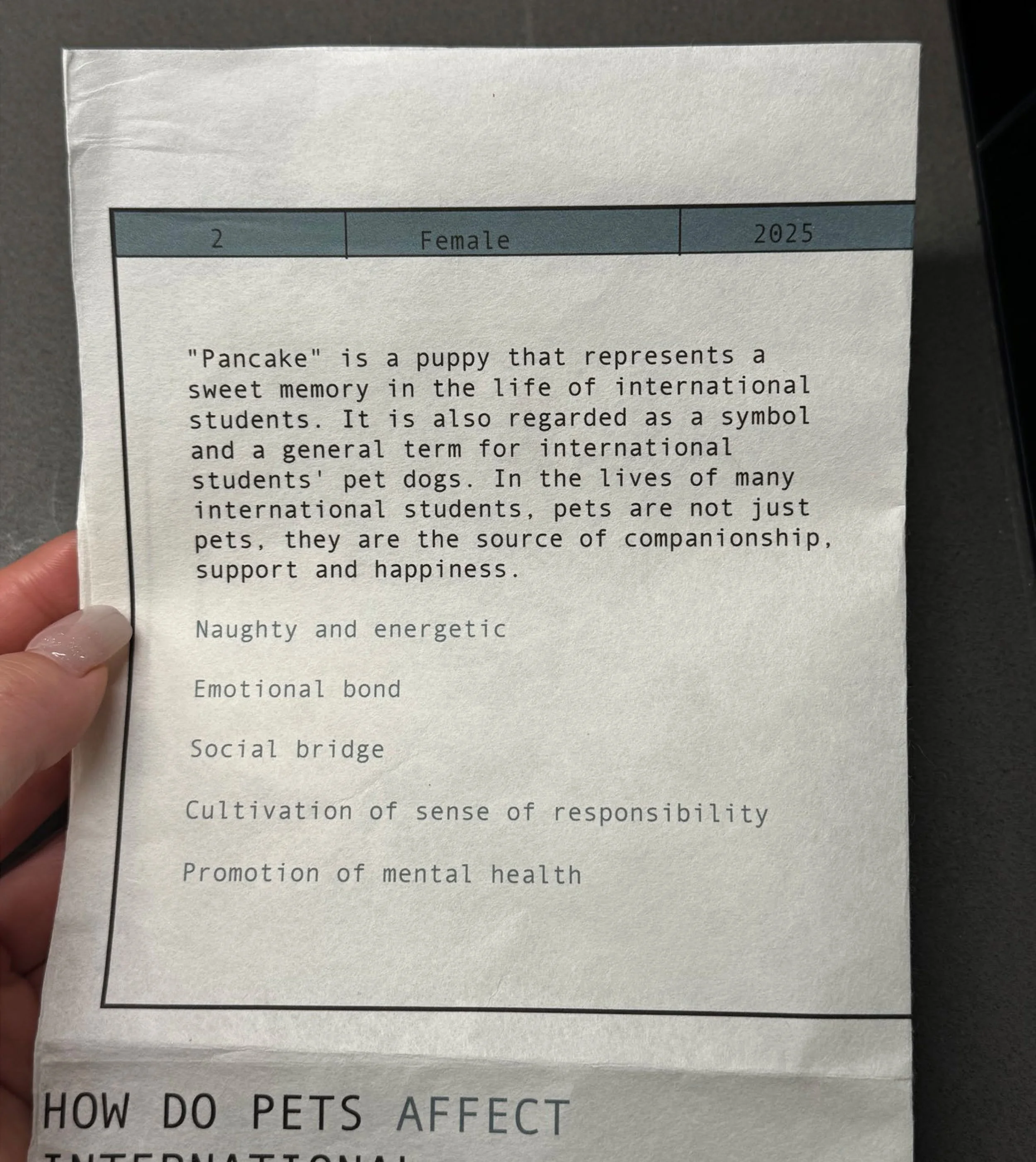
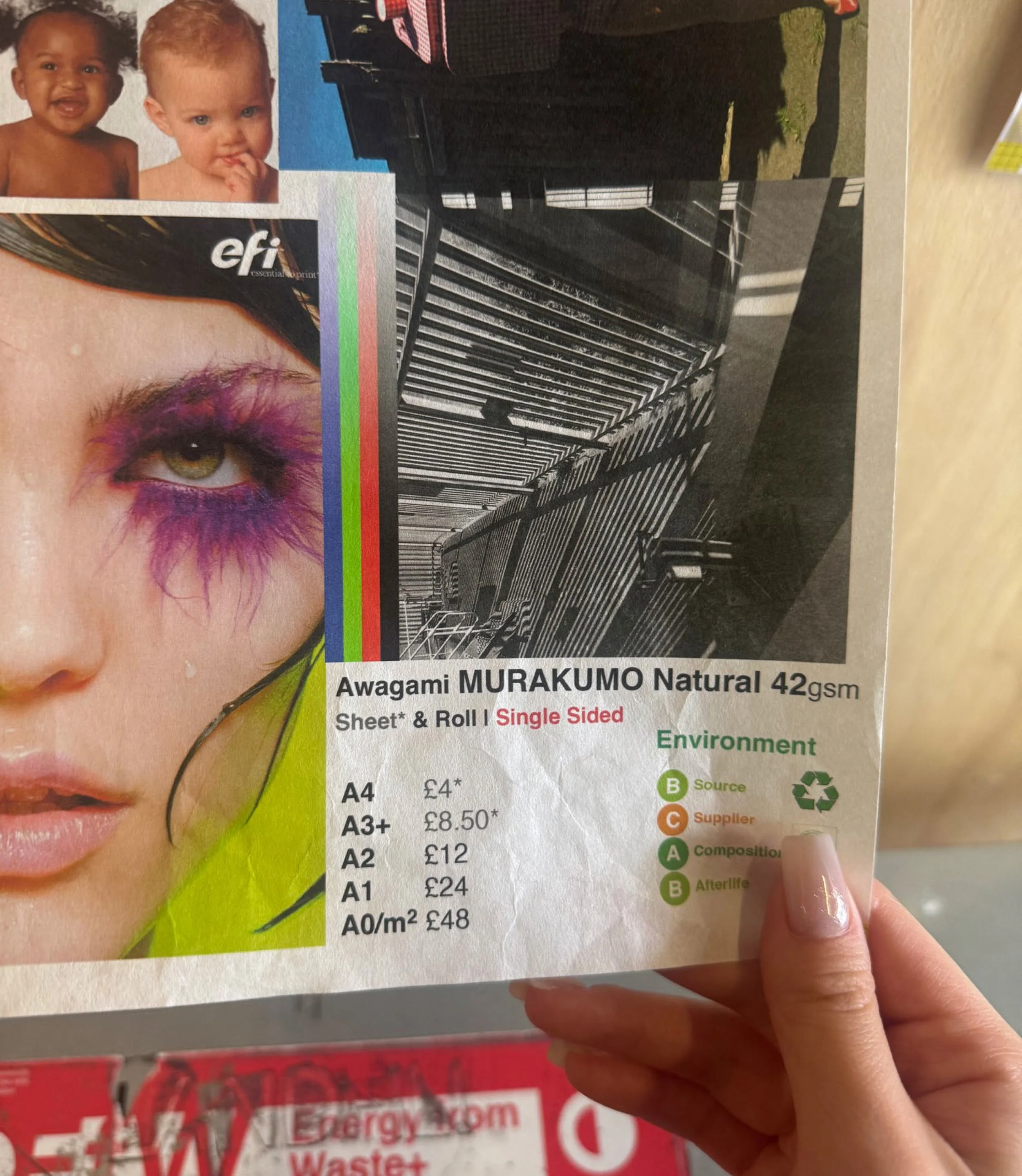
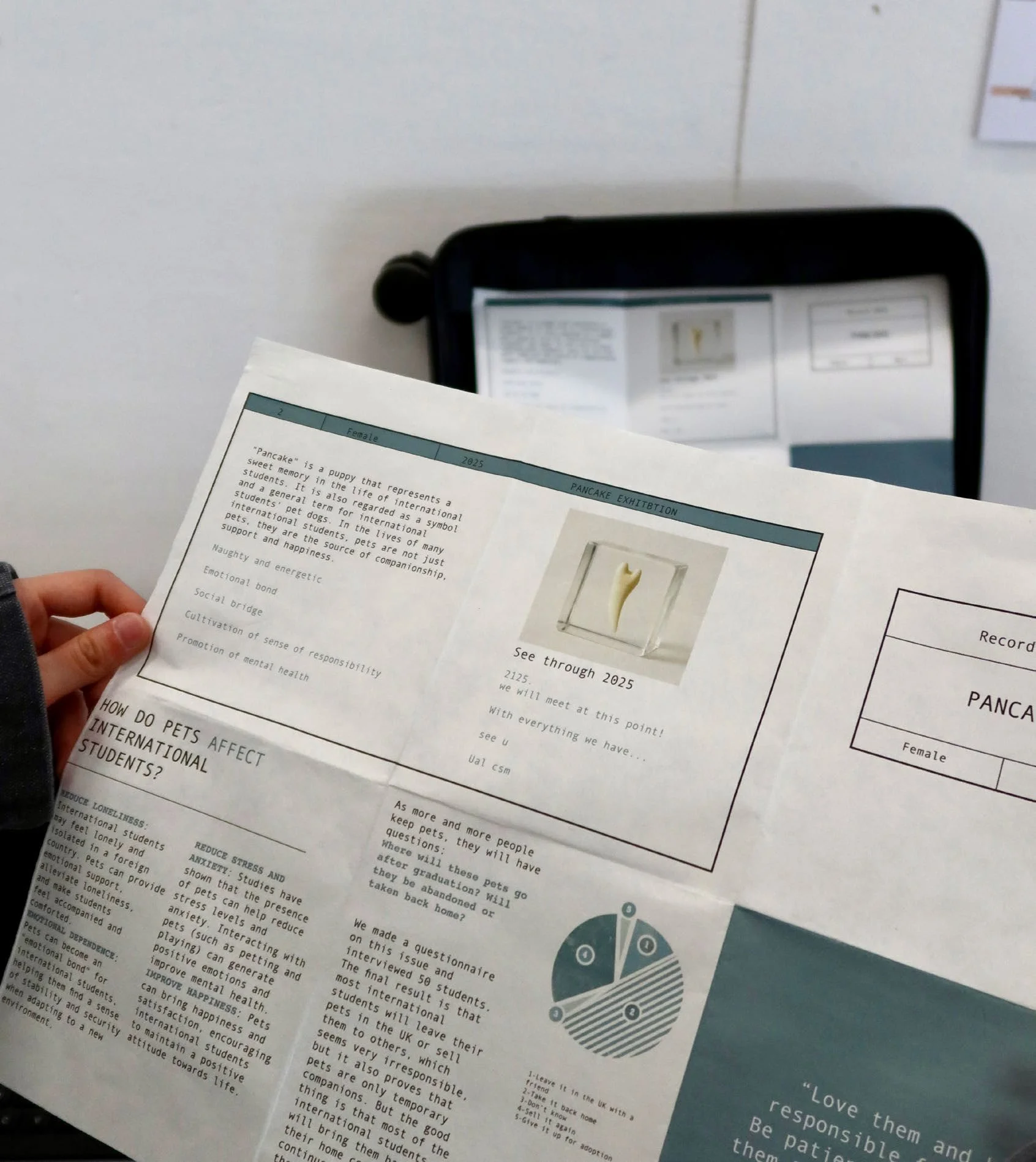
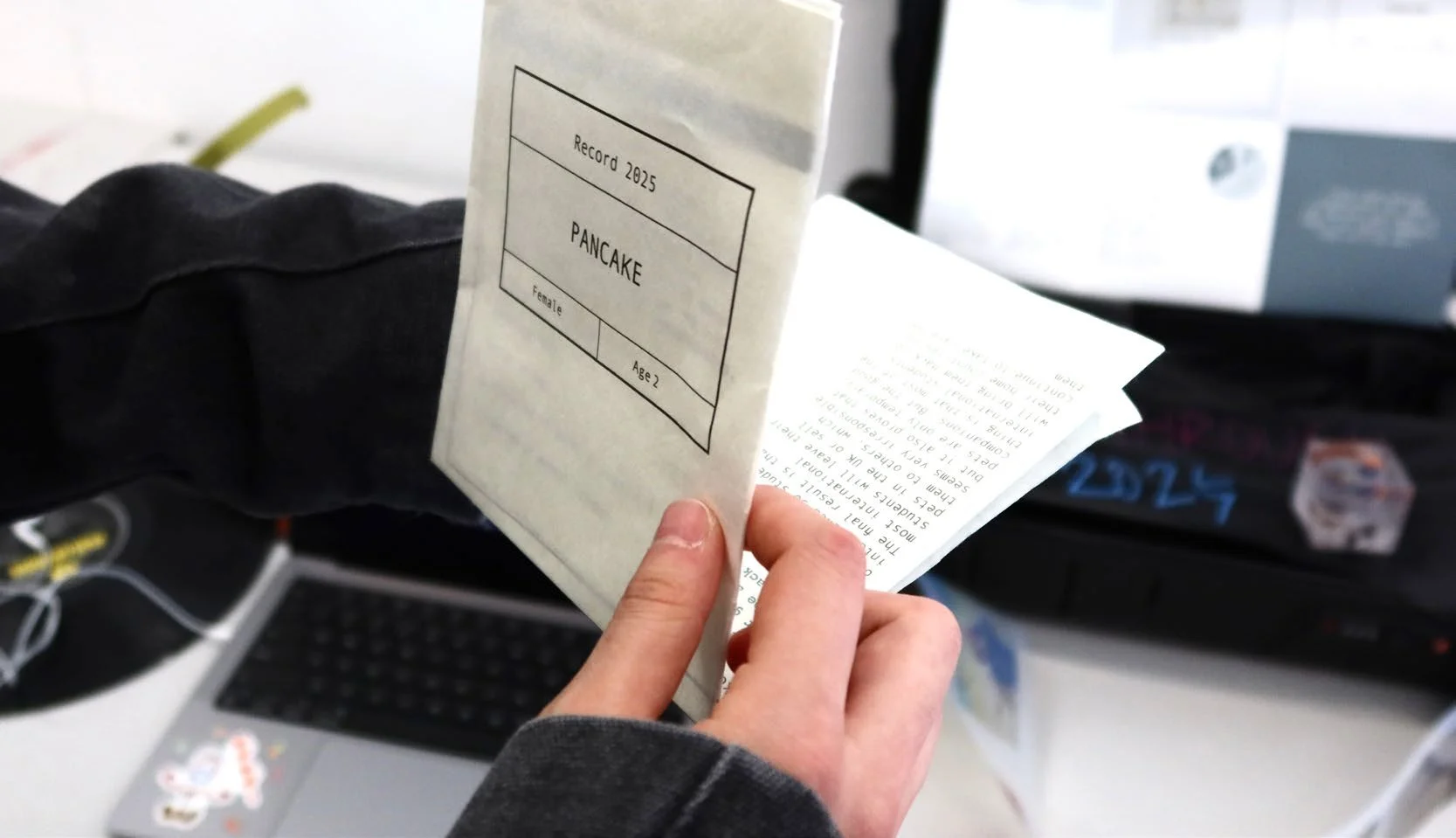
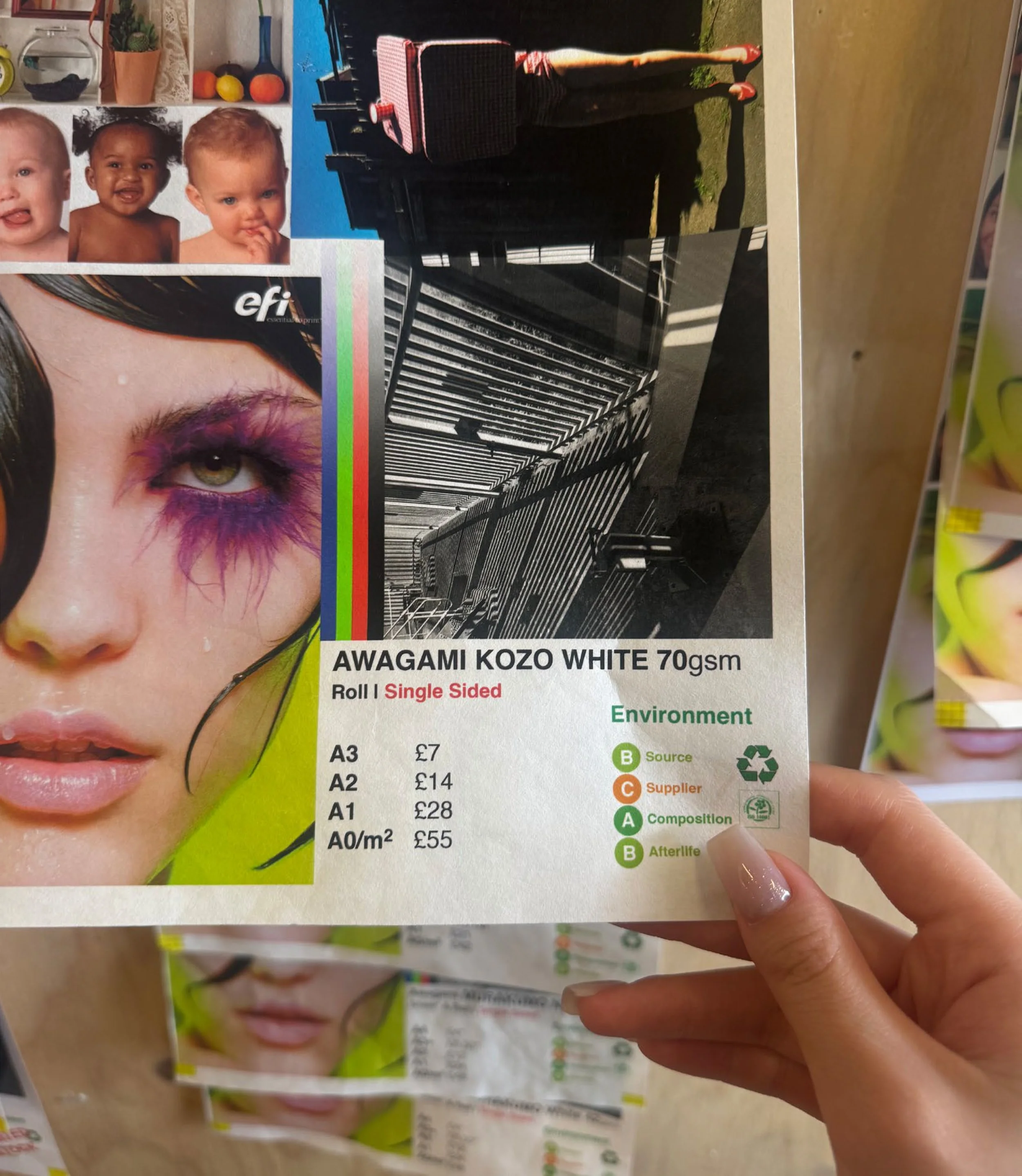
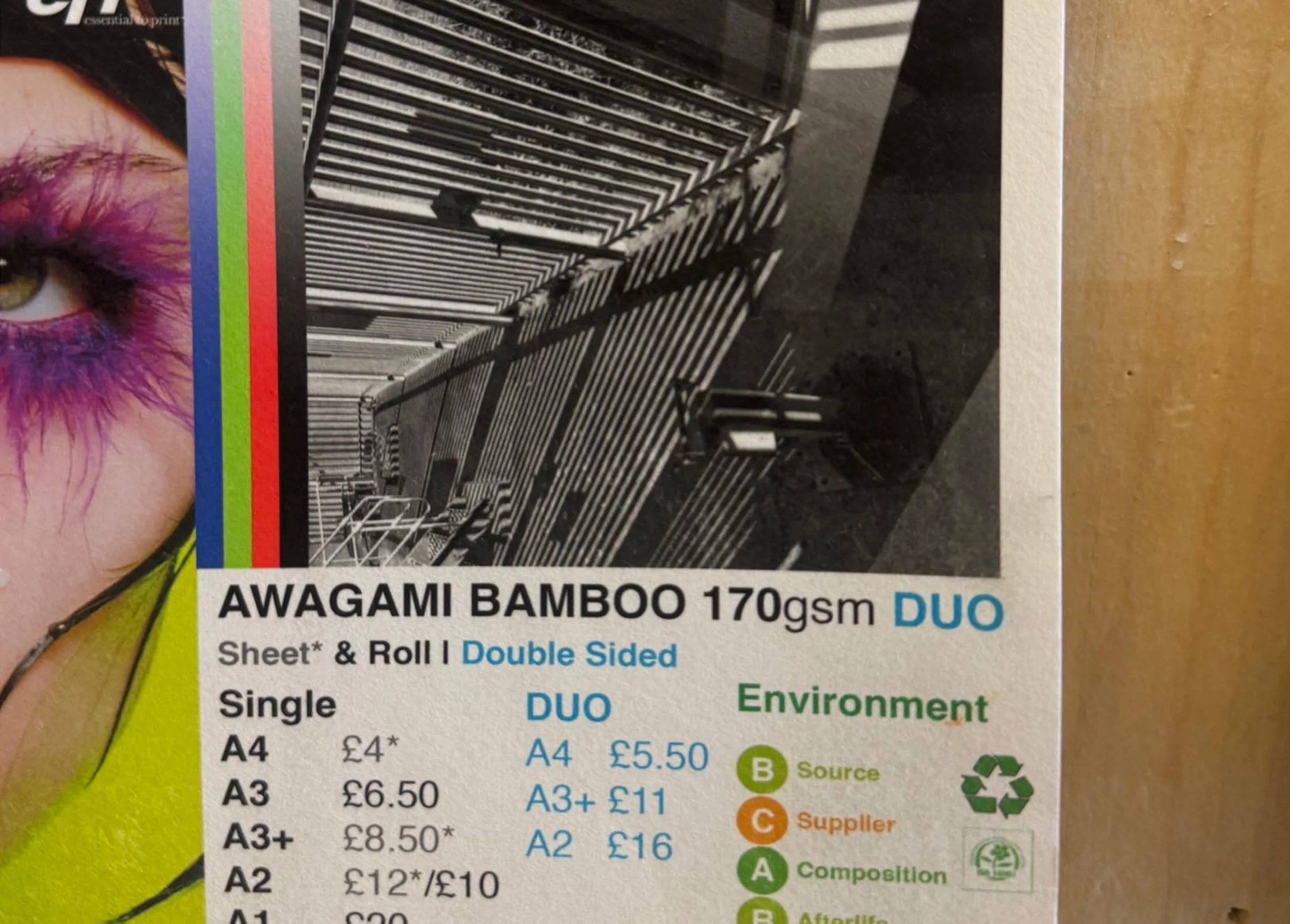
We went to an inkjet workshop and selected several papers of different thicknesses for testing. We considered the storage time of the paper, so we ended up using vacuum packaging to display it. Papers of different thicknesses will give the audience different touches and experiences.
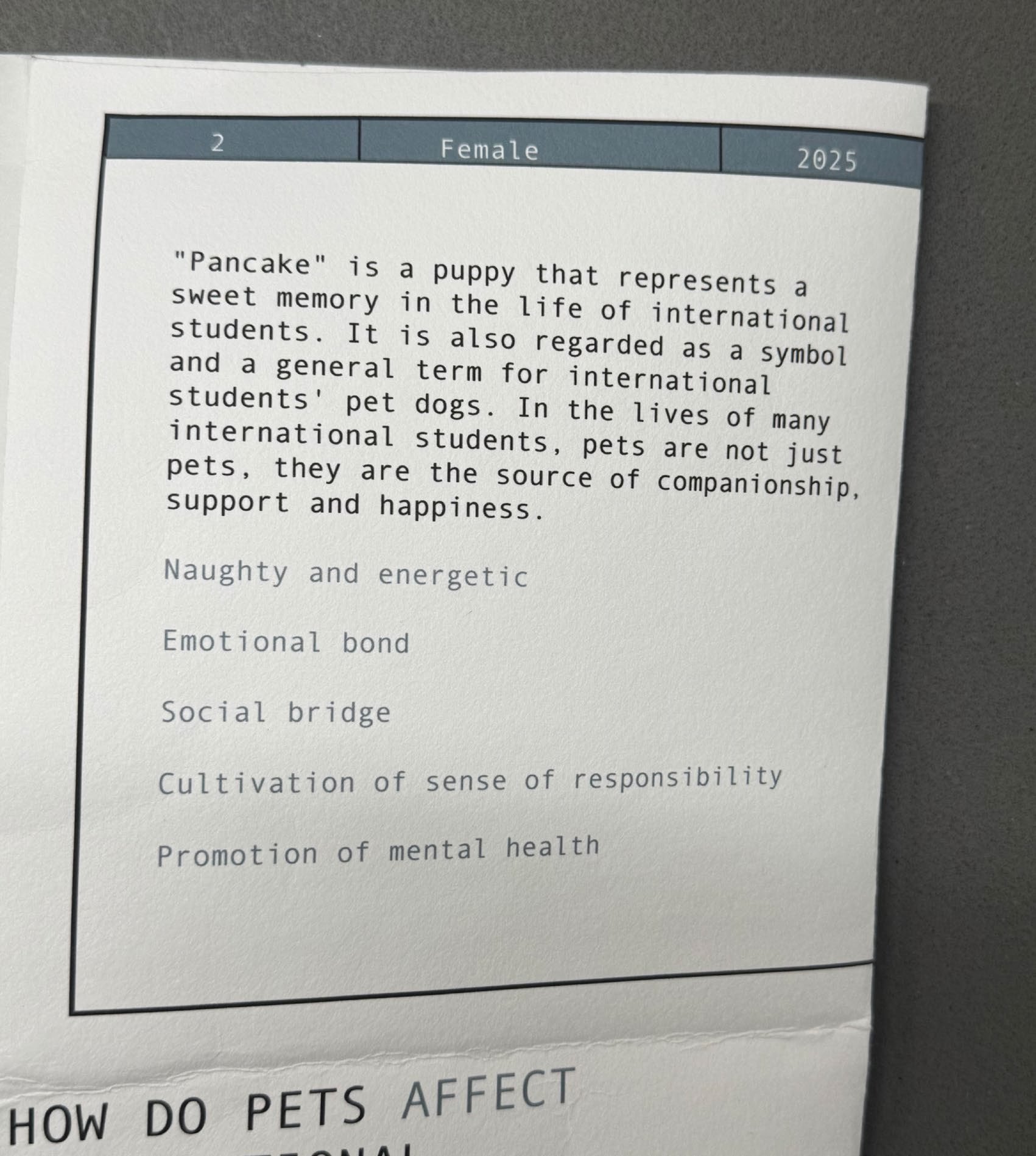
2 TYPES PAPER TEST
We finally chose to use thin paper as the material for our publication, a decision that was mainly based on visual and atmospheric considerations. Thin paper has a light and delicate texture, which can create a retro and historical atmosphere when exhibited. Its fragility and transparency allow the audience to experience a nostalgic emotion as if they were traveling back to a certain moment in the past during the process of observation and contact. The choice of this material not only enhances the visual level of the work, but also makes the entire display more storytelling and immersive. More importantly, the texture of thin paper complements our theme - the communication of the future, memory and secret information.
IDEA GENERATION-PETS
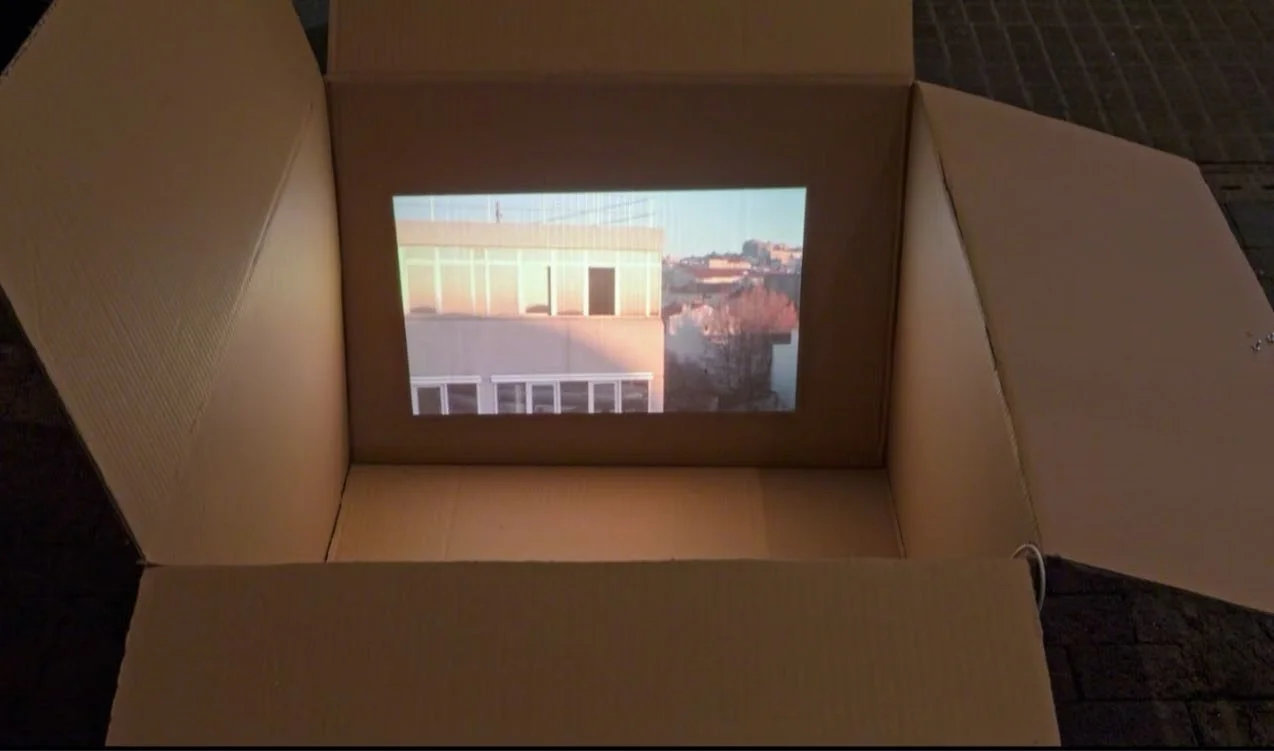
gina folly
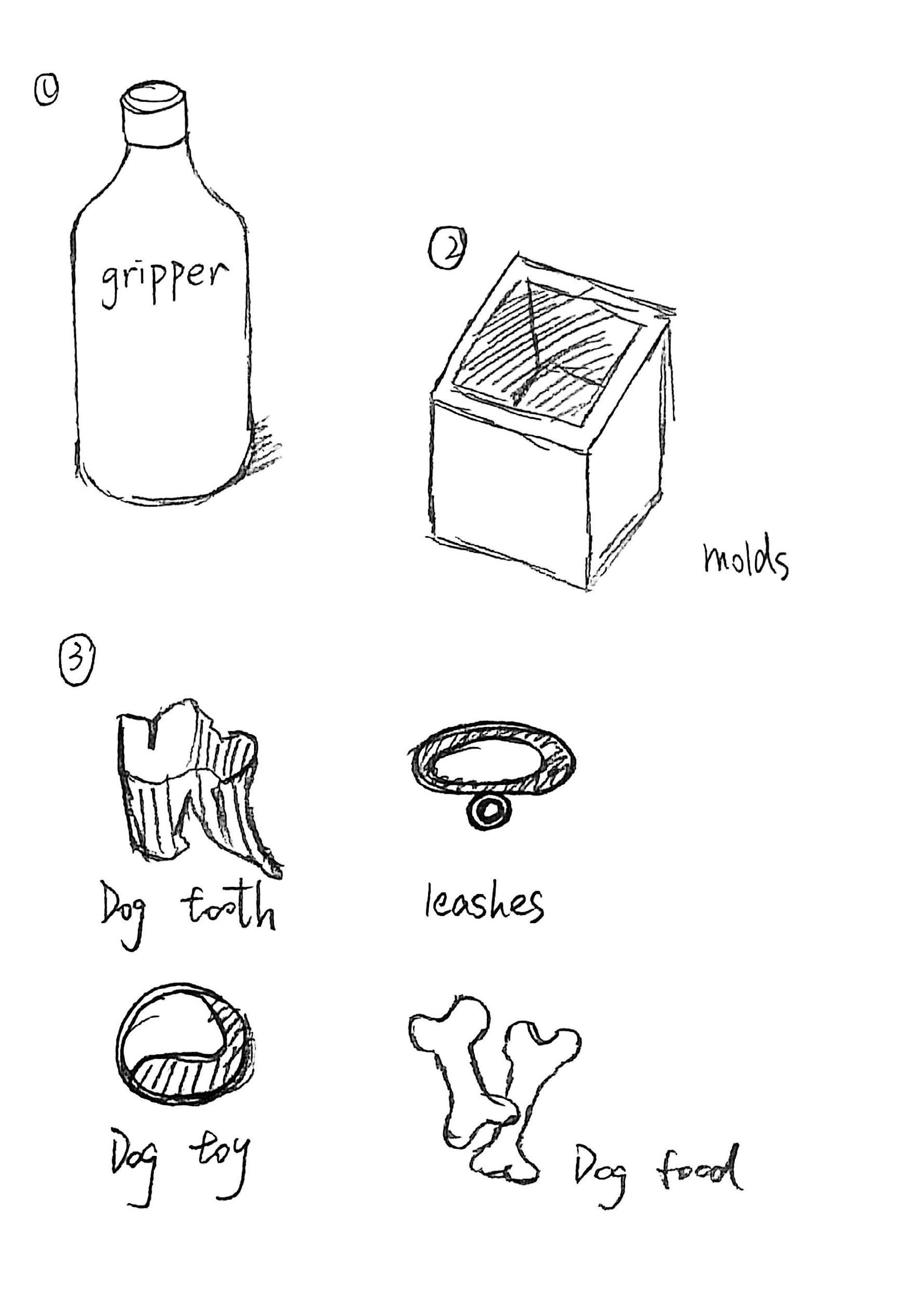
SKETCH OF 1ST IDEA:
VISUAL REFERENCE
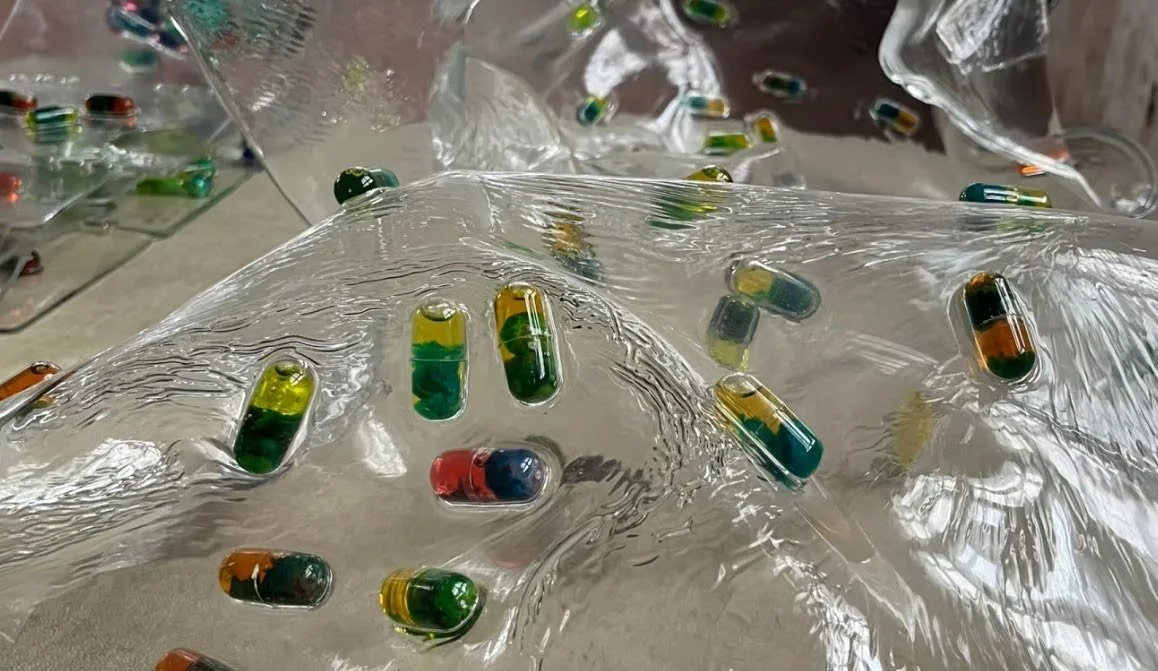
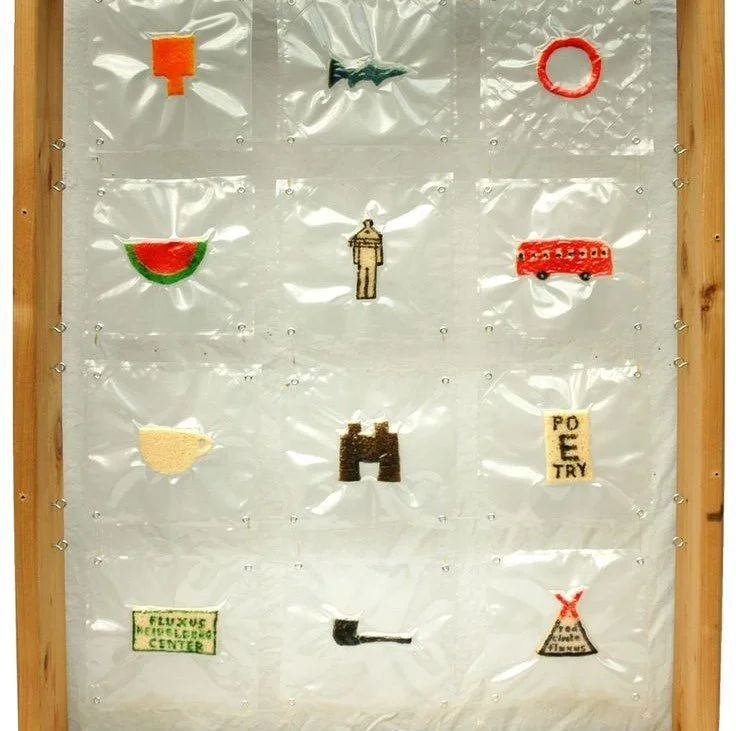
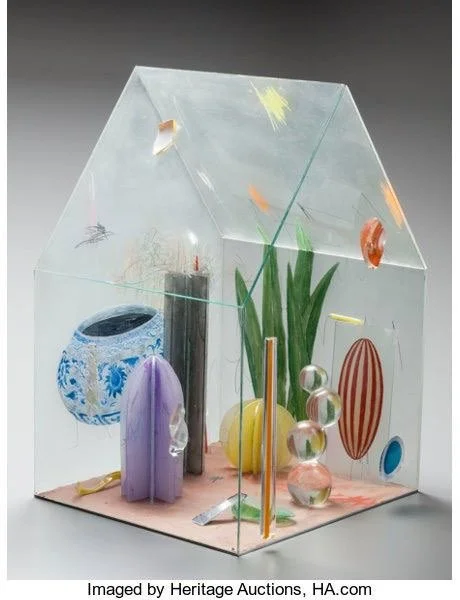
At the beginning, our inspiration came from Gina Folly and Miss Bugs's Do Not Harm. They both use mixed media to convey information.
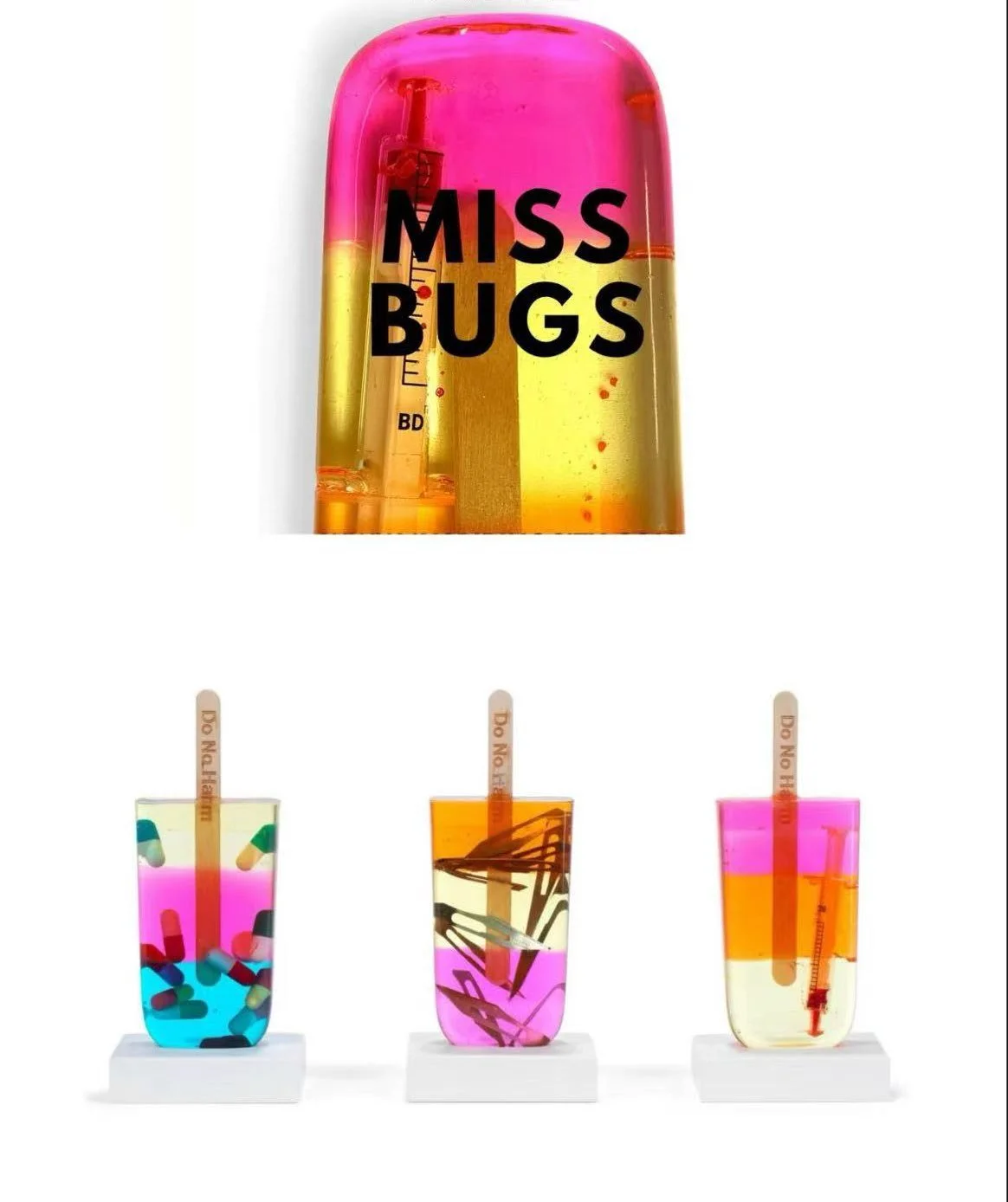
“do not harm”-miss bugs
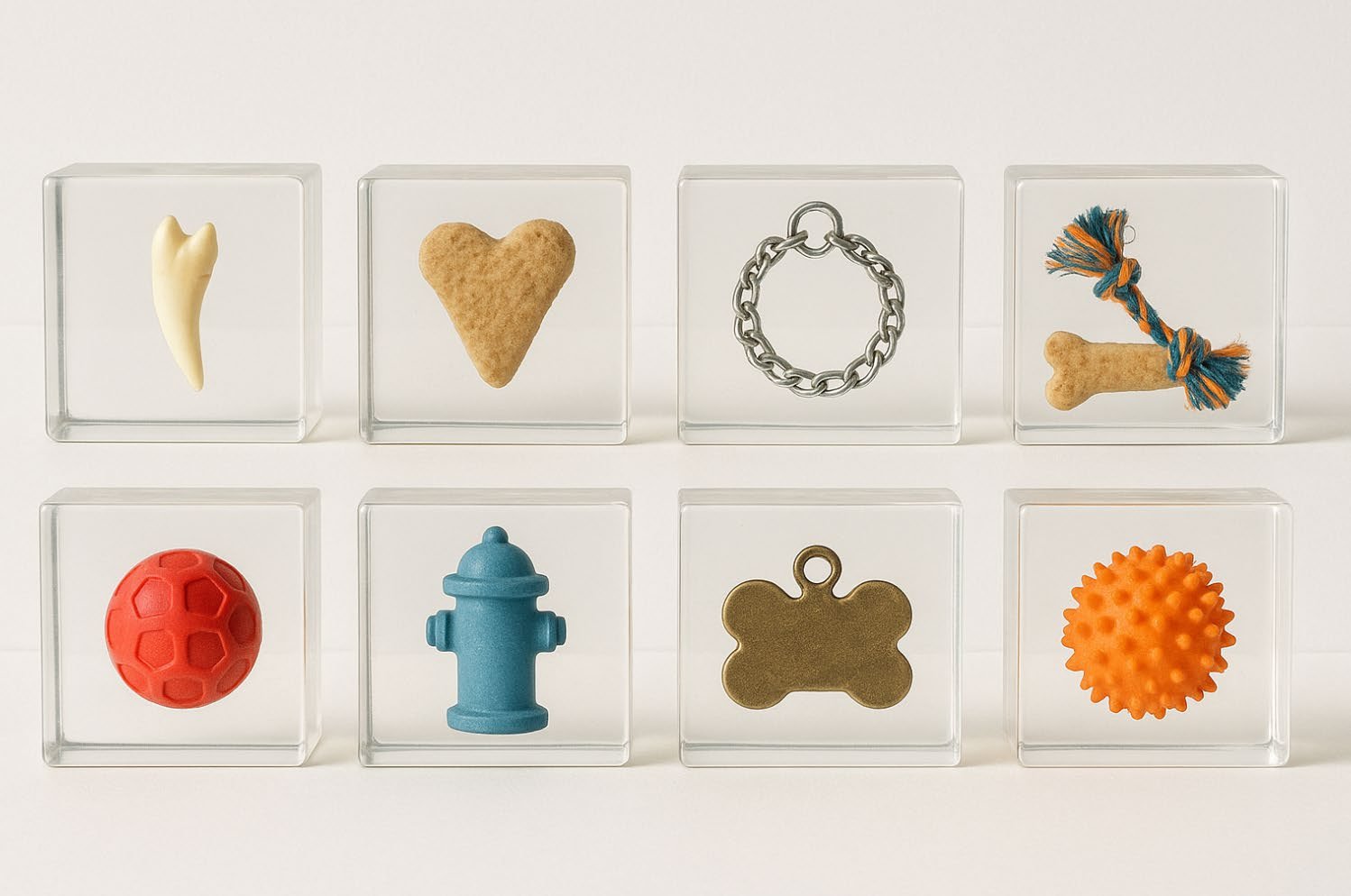
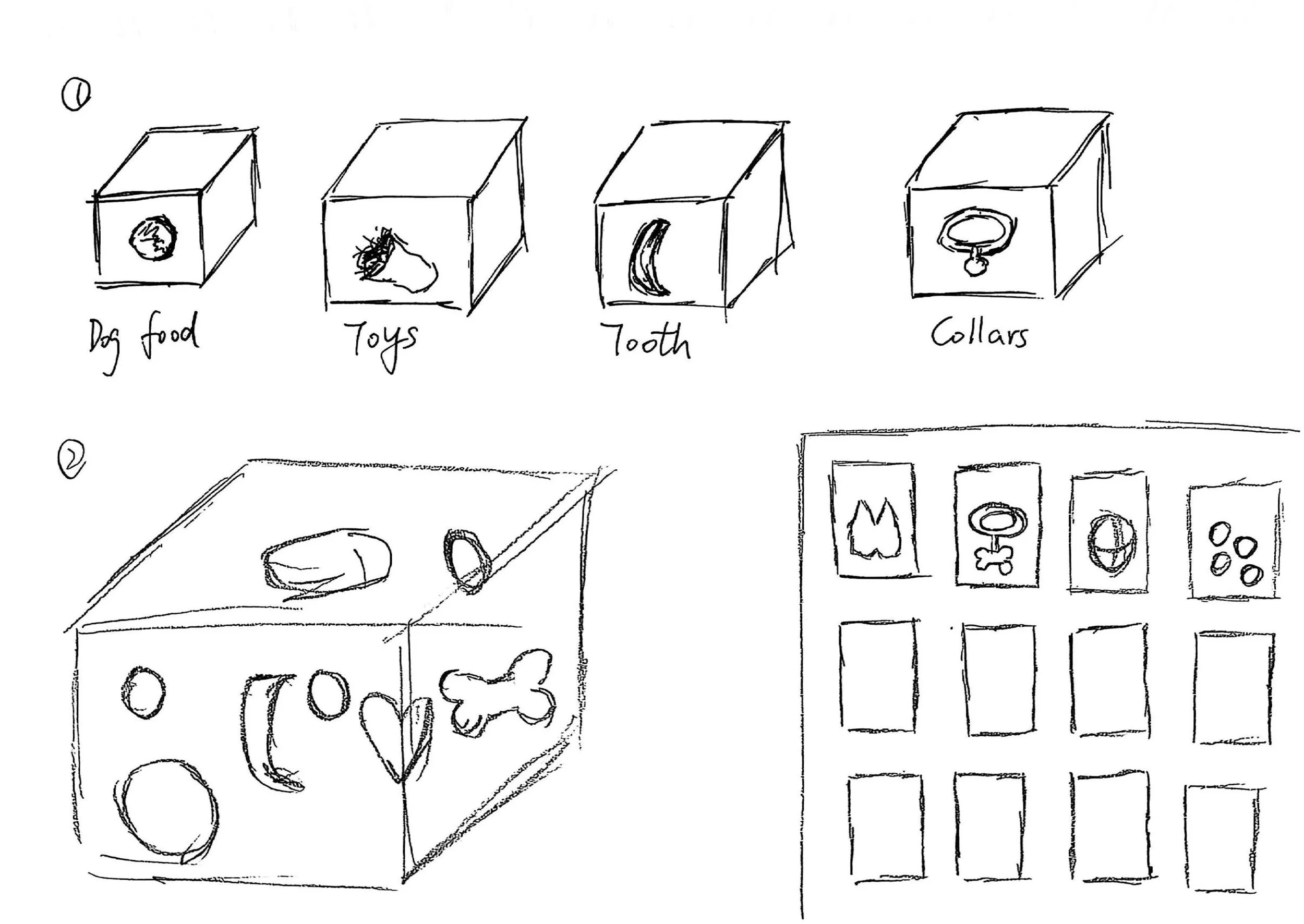
We plan to try to make a few or one device in the form of glue drops - which will contain supplies for pets throughout the entire growth stage, accompanying them and us.
Glue installation
easy to keep for longtime
Considering the time issue, we have to use materials that can last for a long time without being dissolved. So we can’t use plastic, because plastic will be dissolved over time.
Glue installation
easy to keep for longtime

2.INSTALLATION MAKING
PROCESS
-TESTING
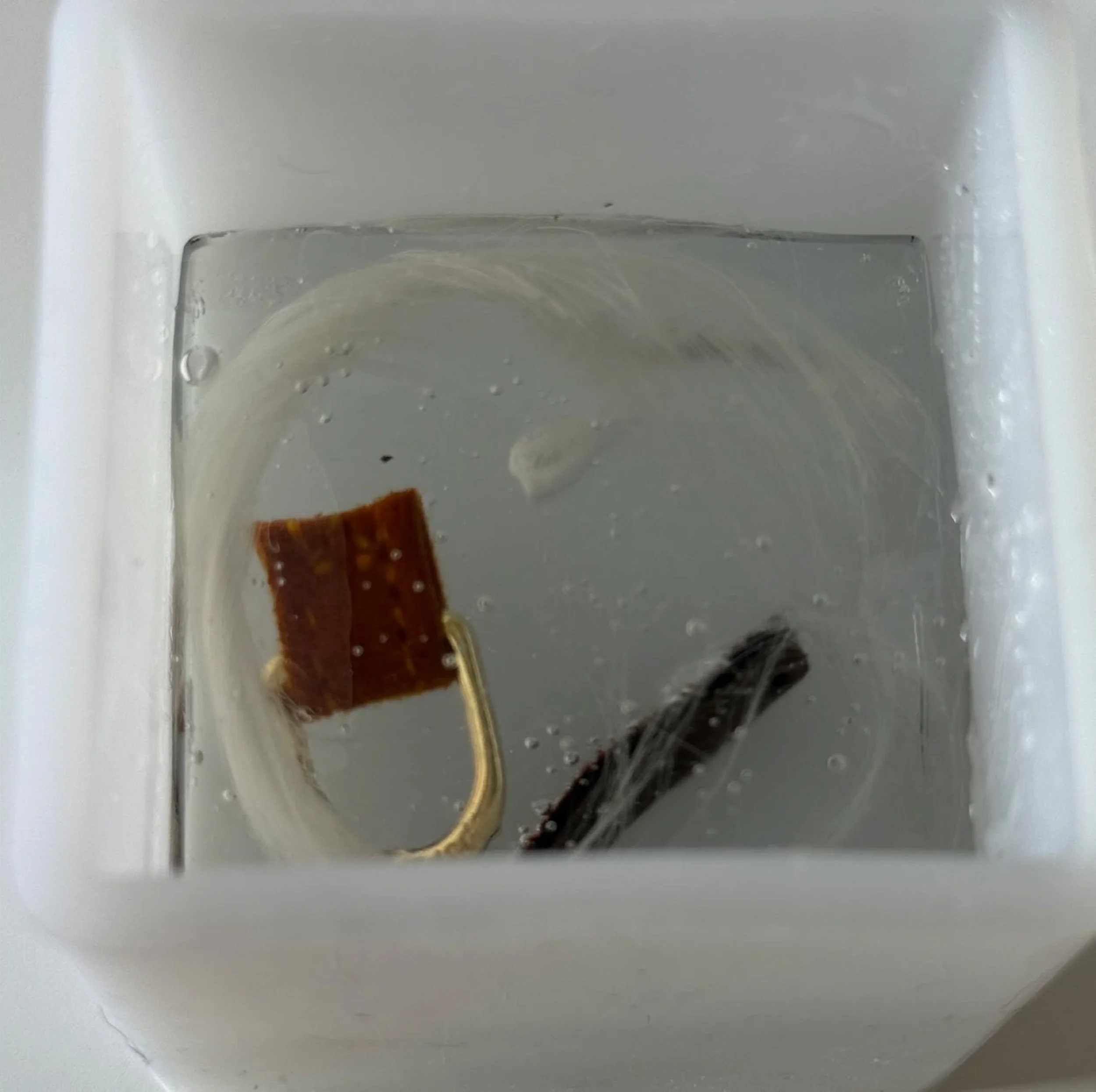
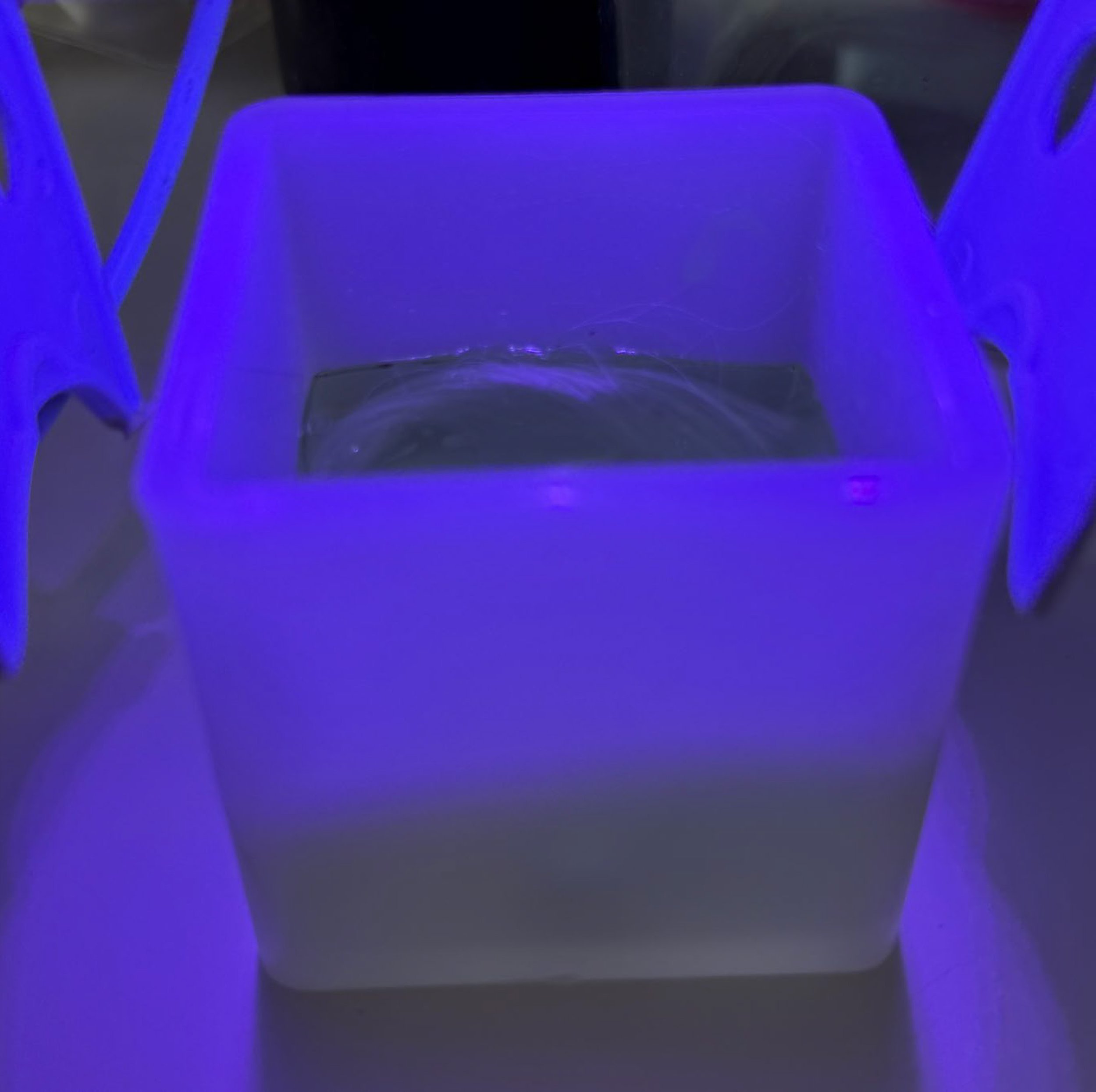
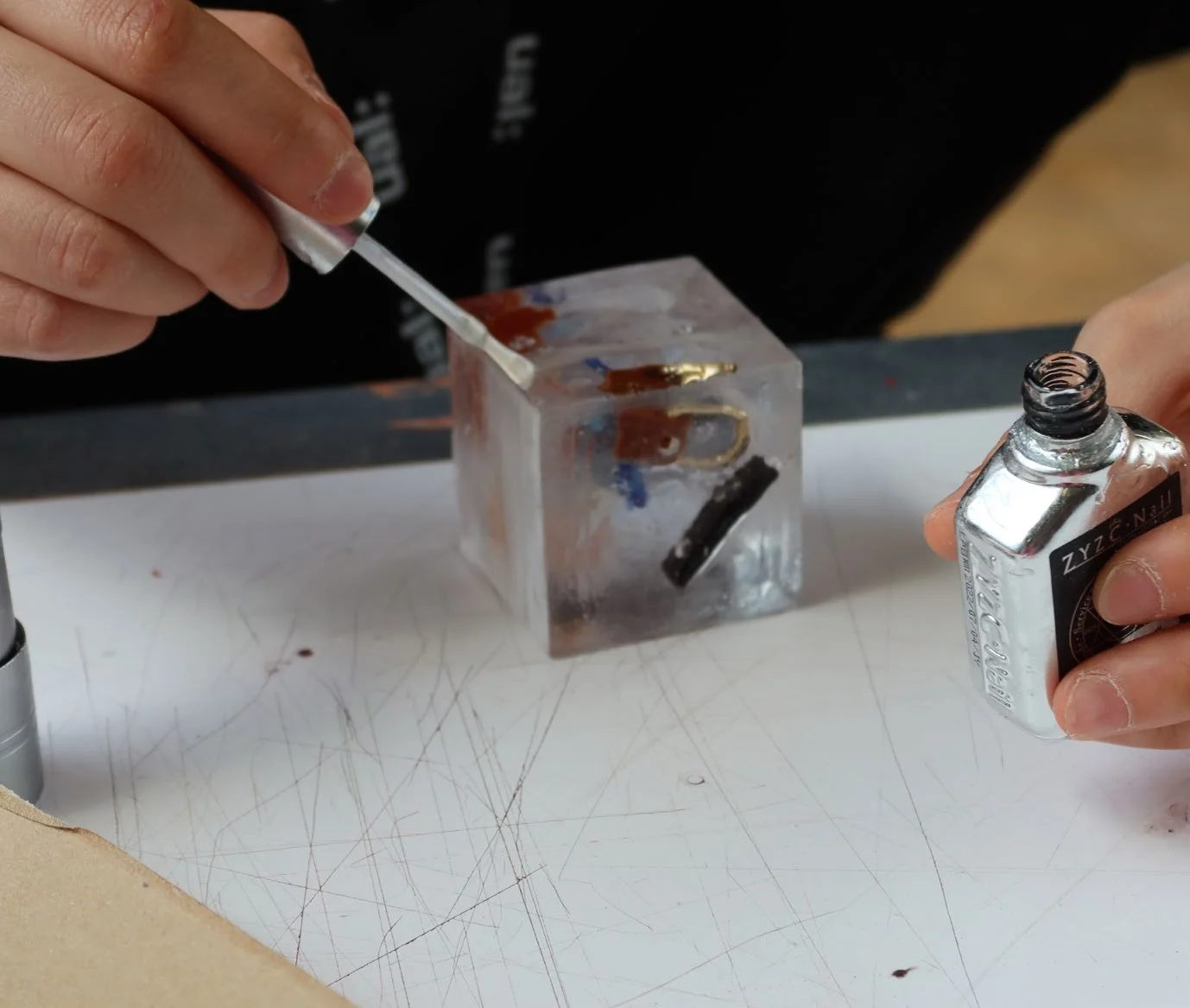
Because it was not so transparent at the beginning, it was not very clear to see the items stored inside. So we tested whether it could become clear after sanding and then applying the sealant.
VISUAL RESEARCH
Our philosophy is to let people in the future see the things of today. So the first idea that came to our mind was to store them permanently. These key researches well presented the concept of storage - so we chose the material of drip glue.

FINAL

SKETCH
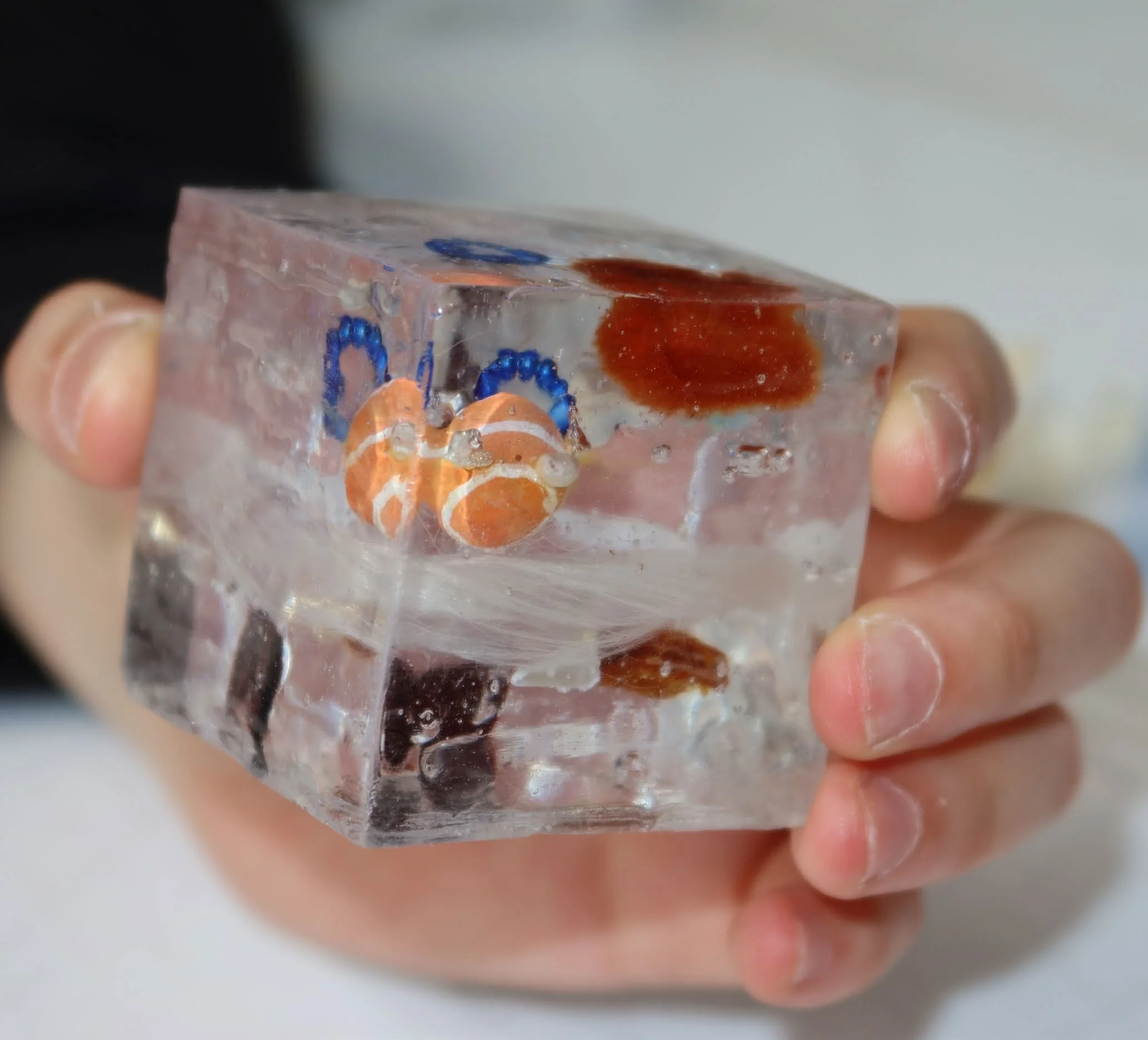
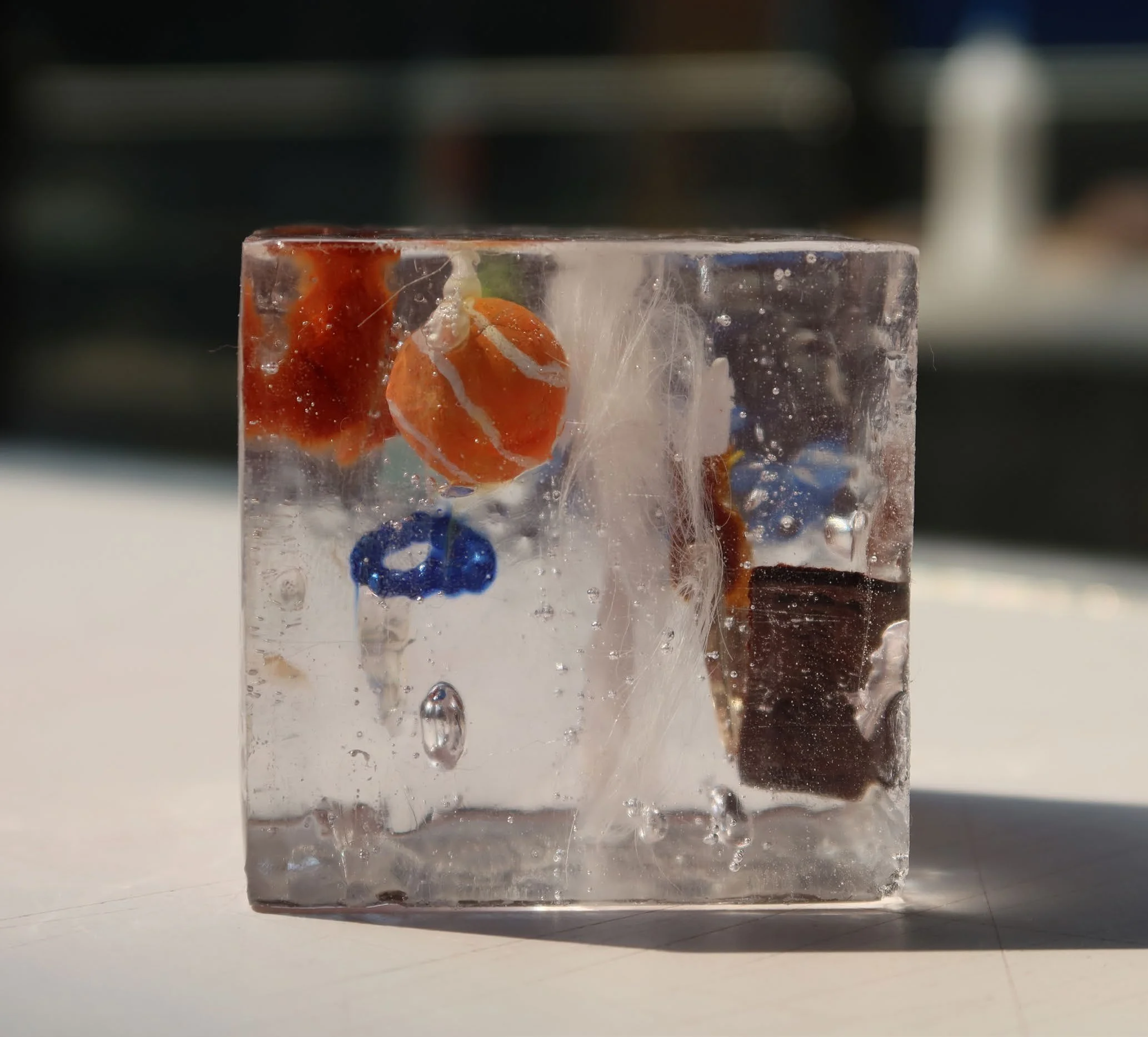
Our second outcome is the glue dripping installation. This is a container for storing pet-related emotions. We put pet-related elements into the glue dripping device. This material will not degrade easily, so it will be preserved over time.
3.FILM PRODUCTION
VISUAL INSPIRATION
MATERIAL TESTING
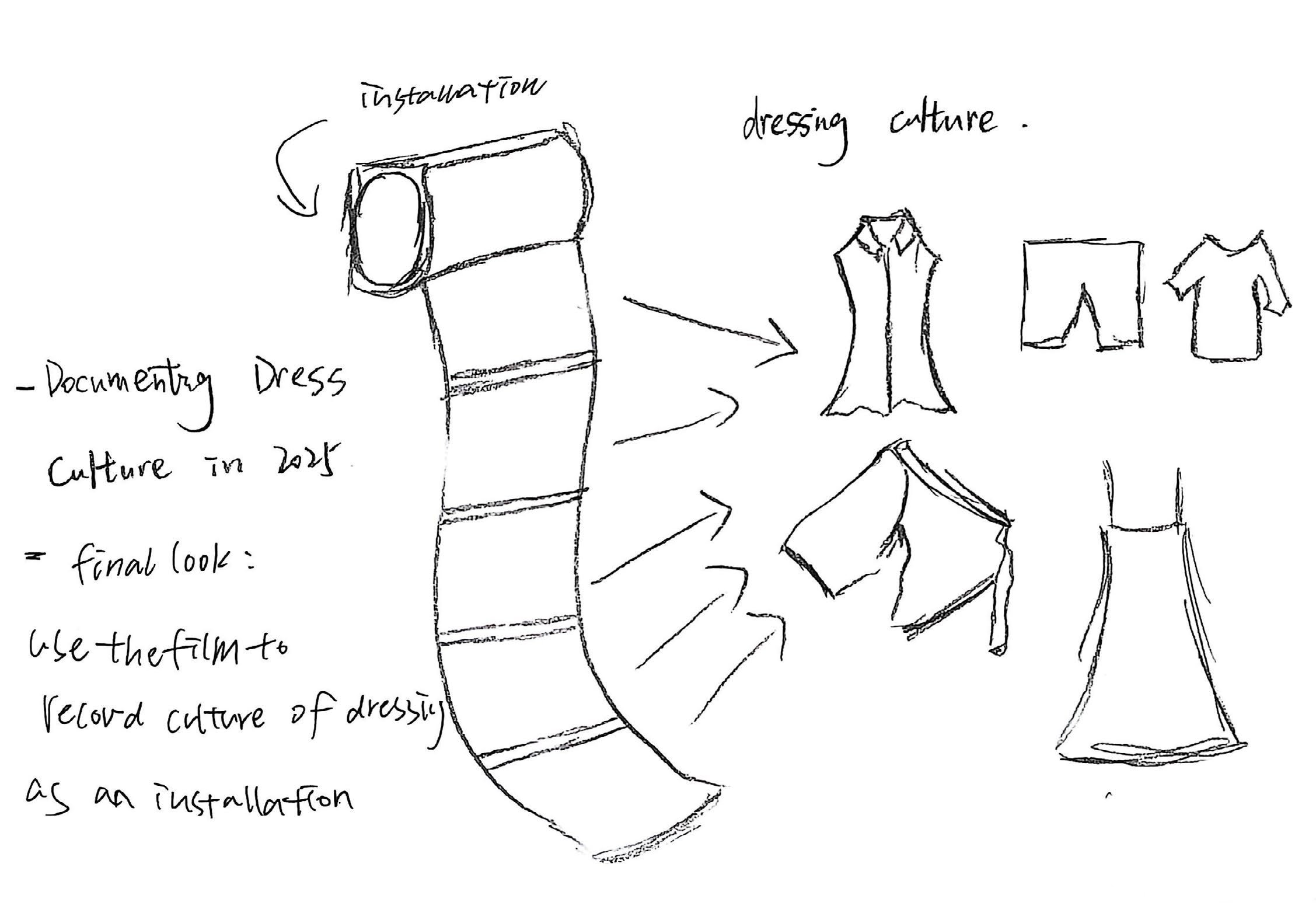
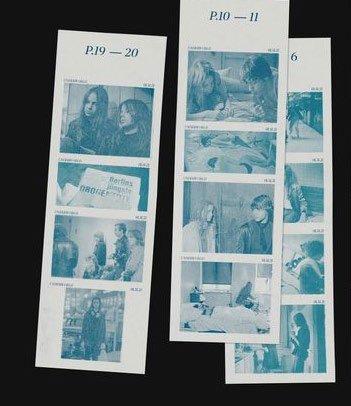
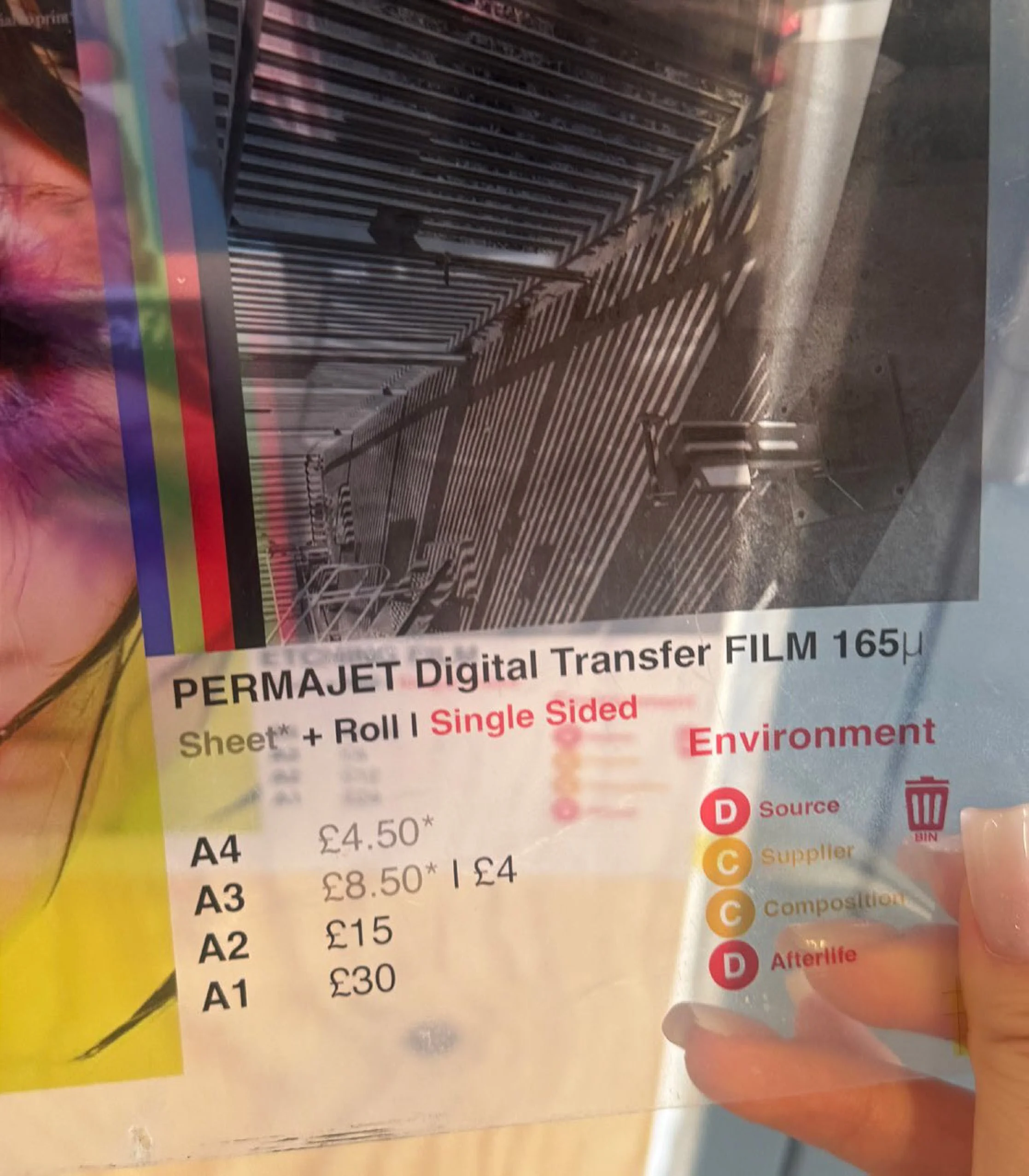
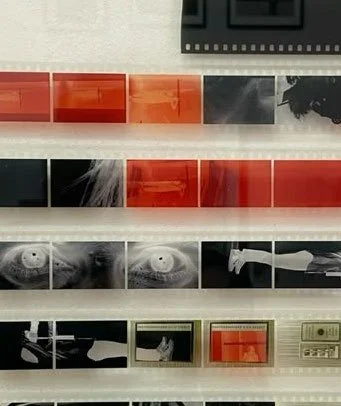
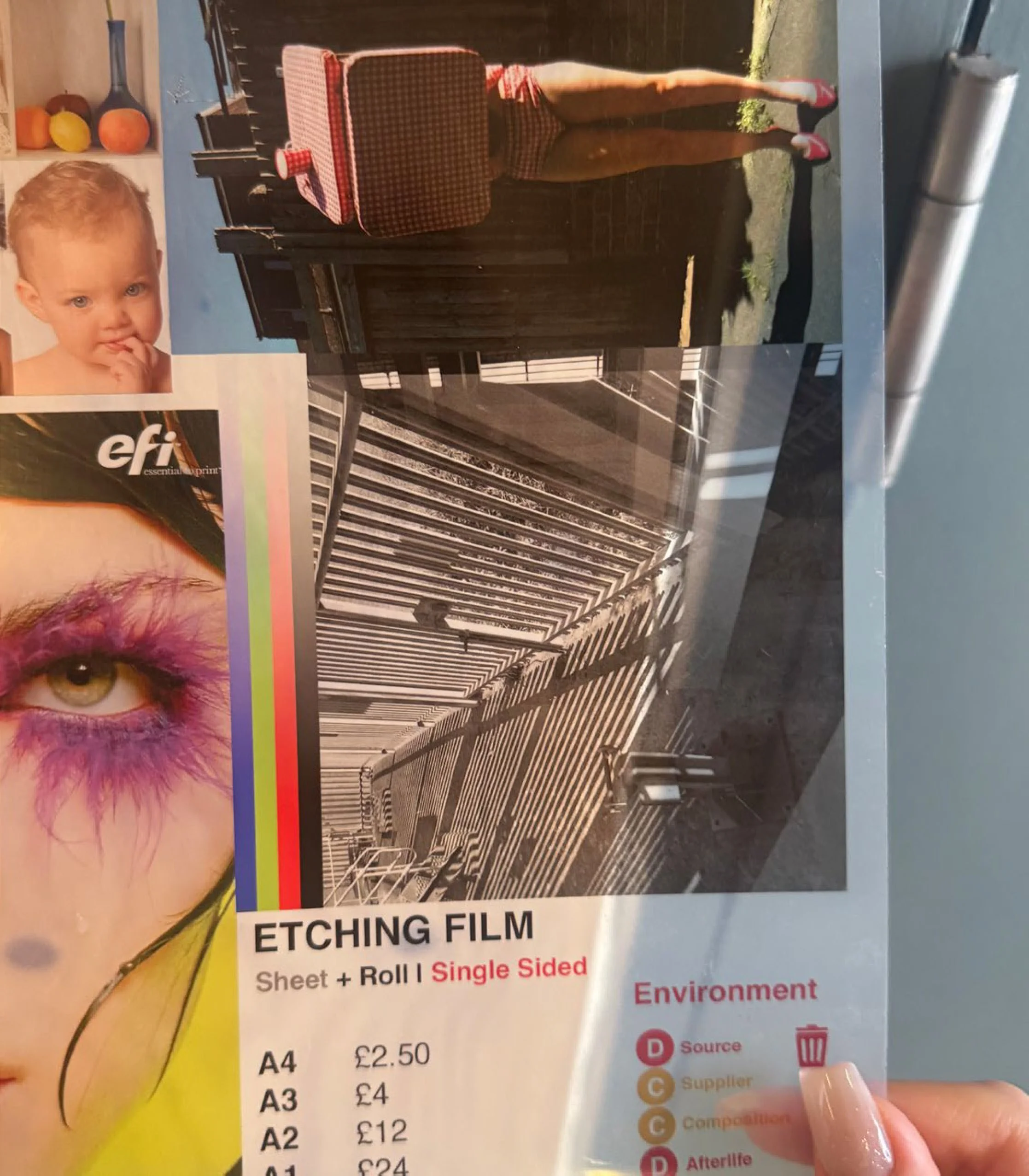
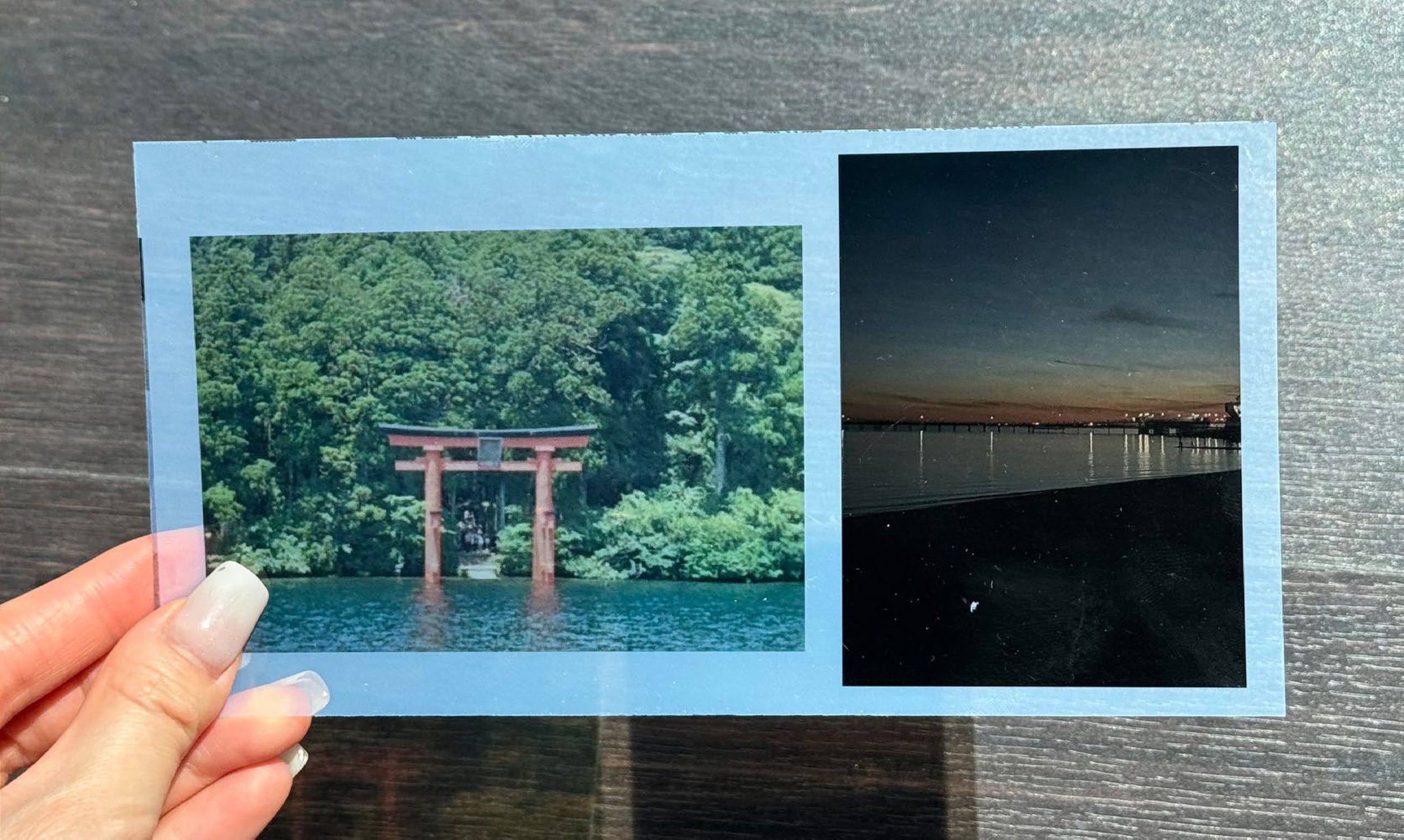
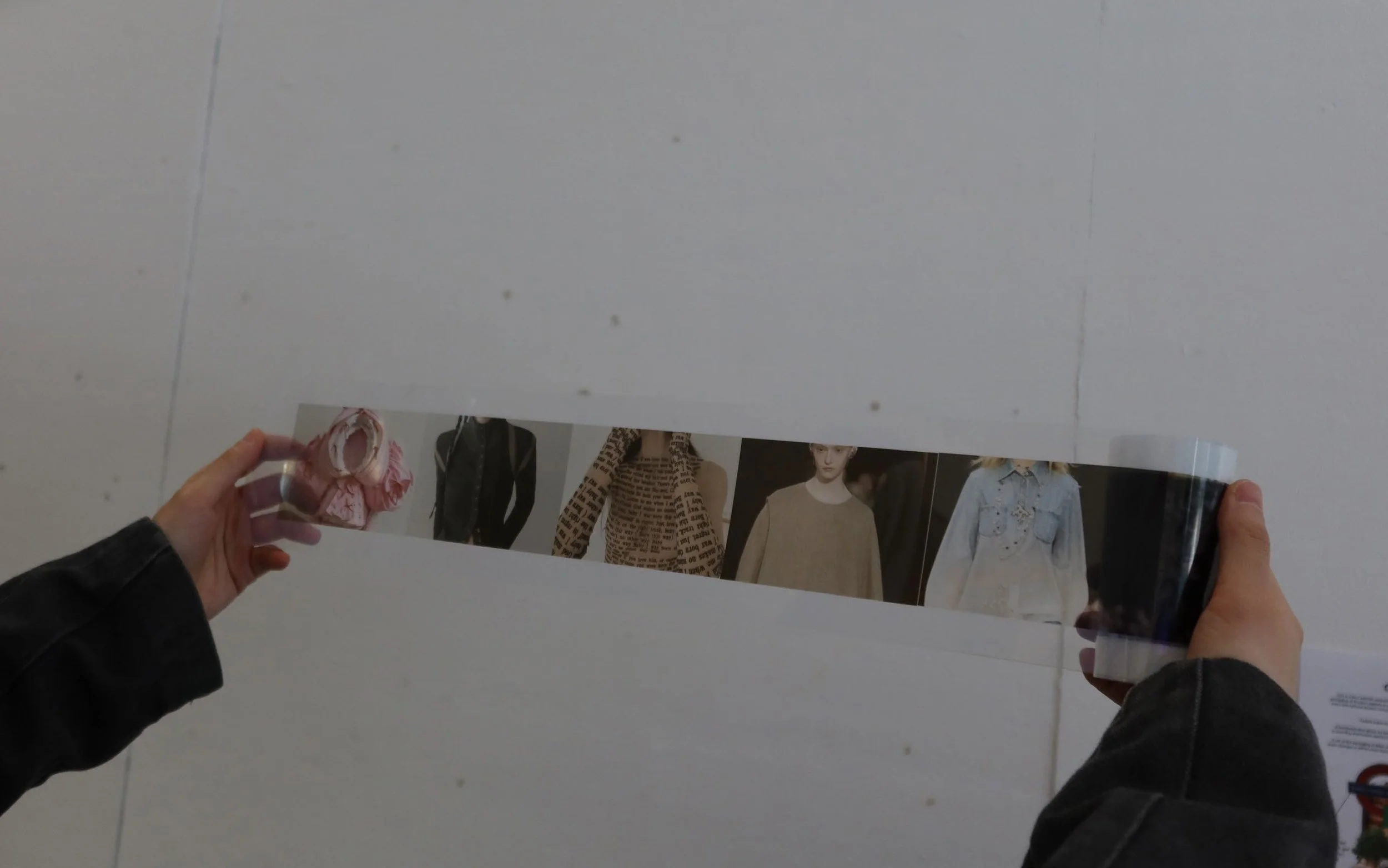
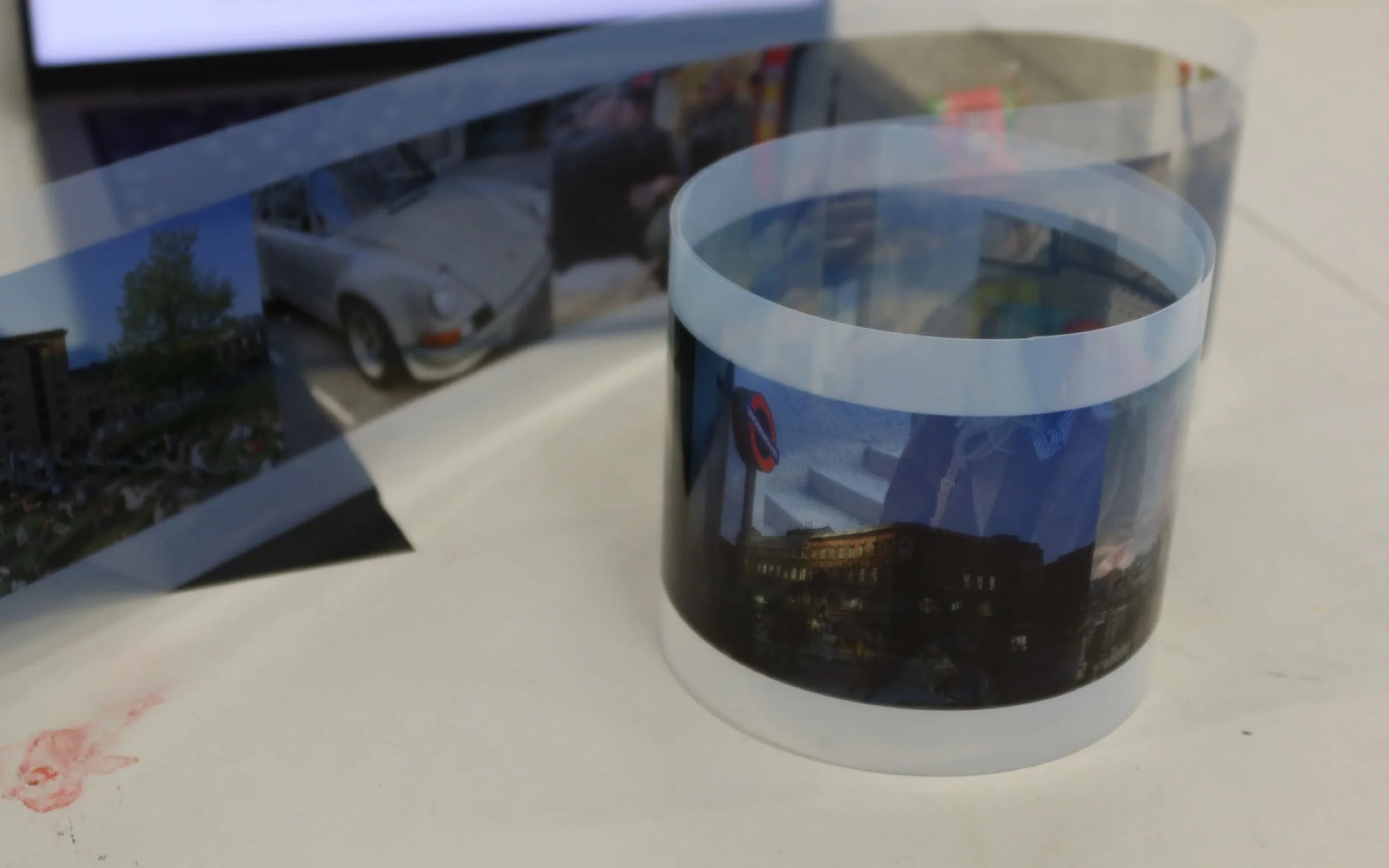
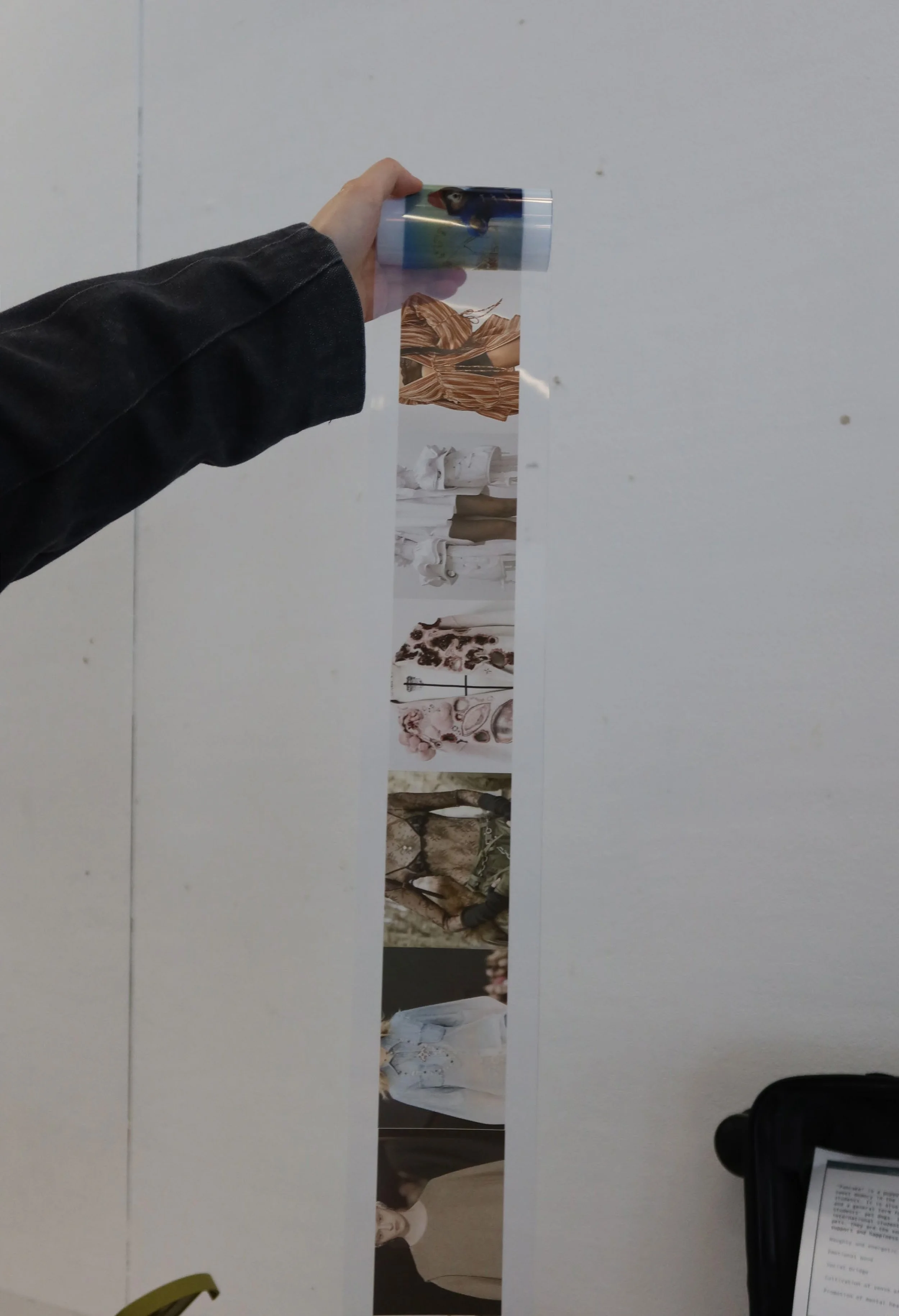
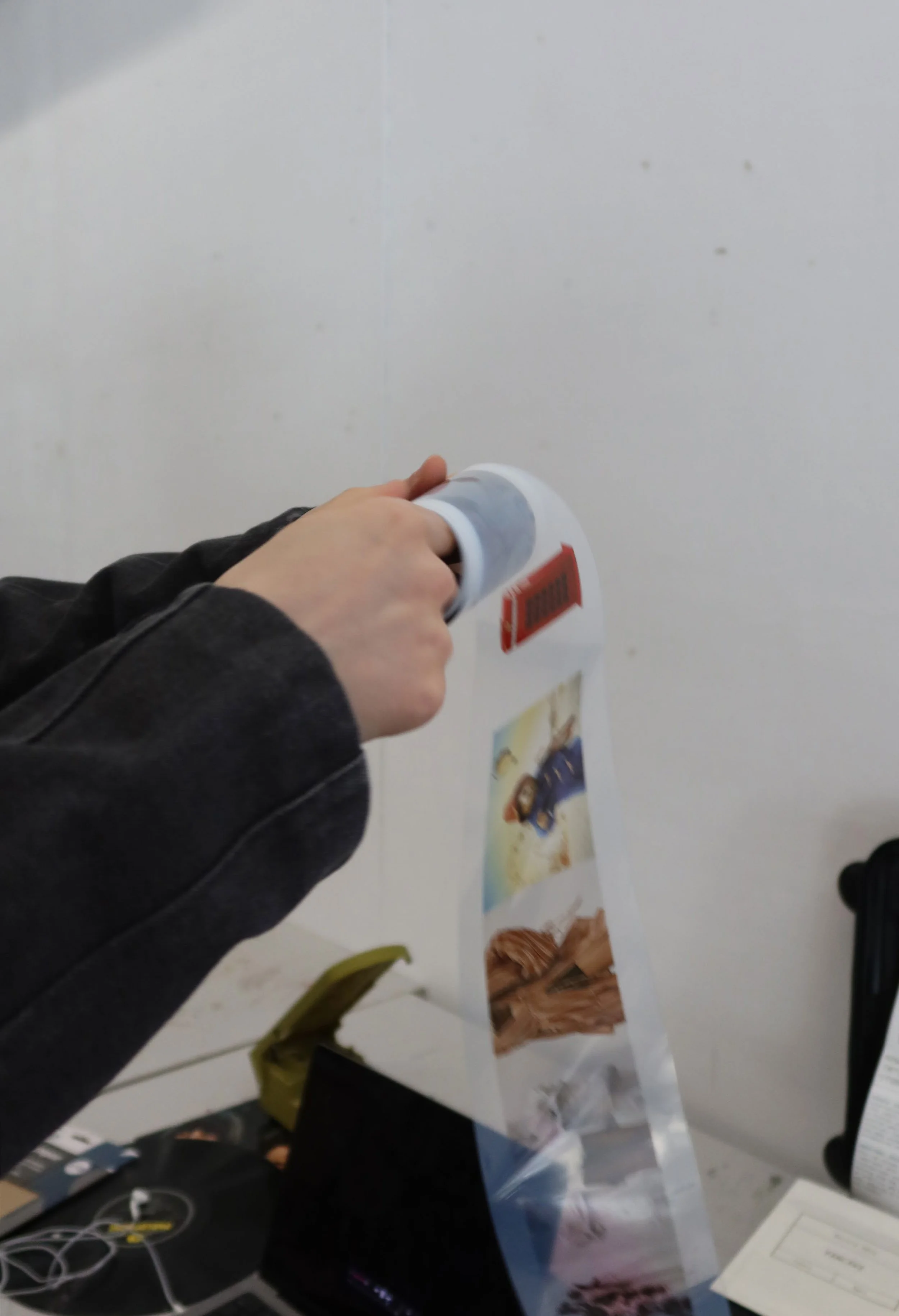
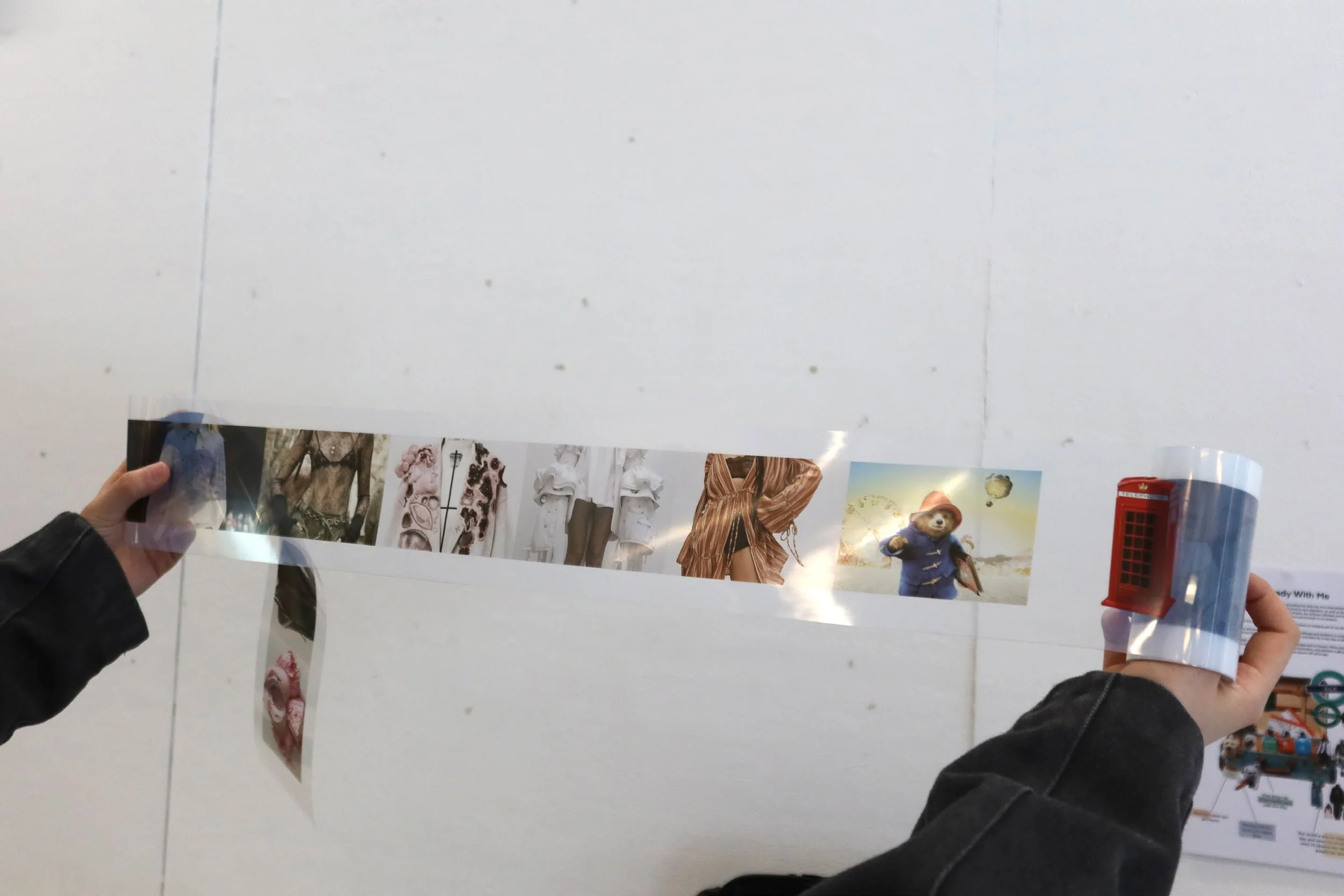
The two different inkjet papers can produce similar effects. We want to use film paper to simulate the texture of film. Preserving the original color can preserve it for a longer time. And also It blends better with the paper and doesn't look out of place.
Content research
final material
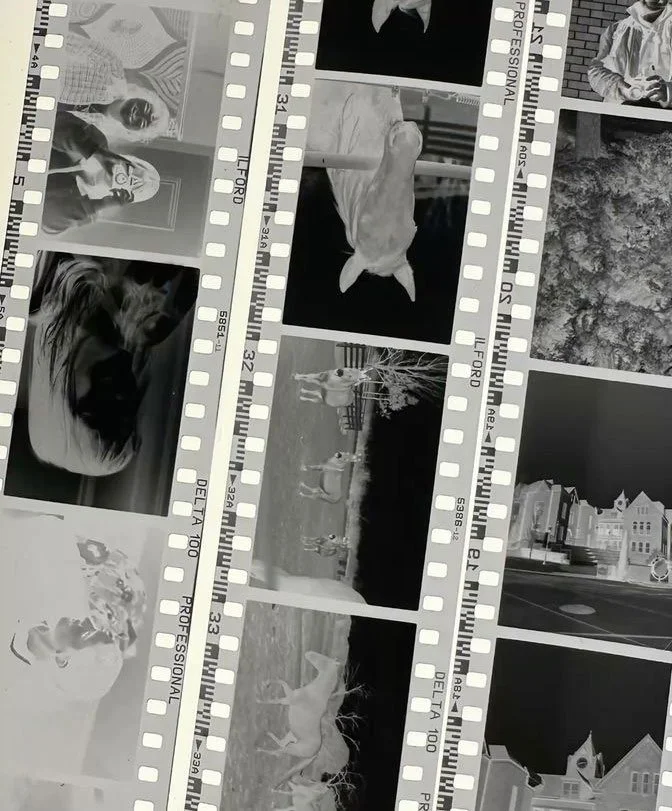
Disadvantages: The color fusion is not high, it does not look like film.

SKETCH
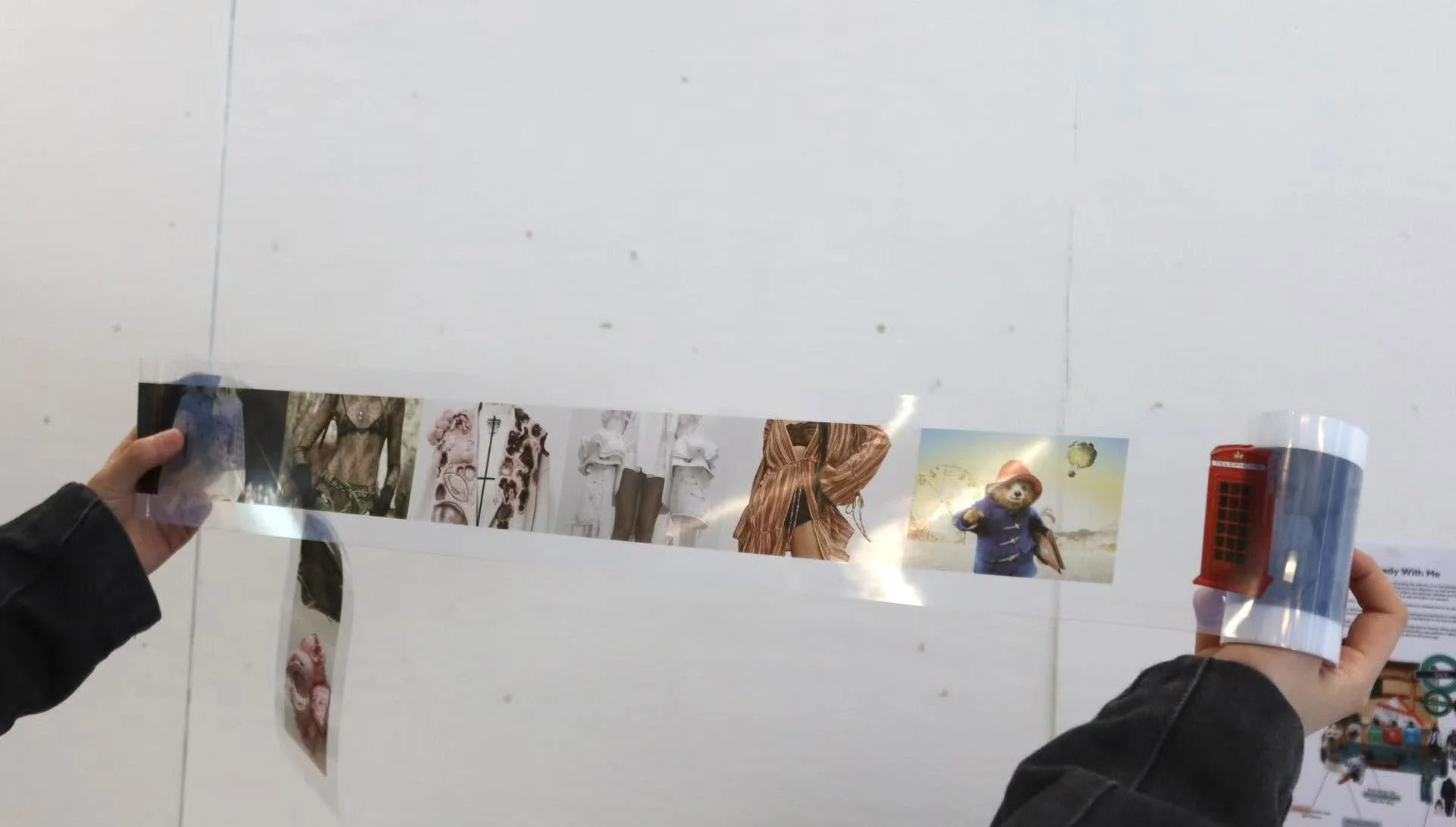
We went to the flea market and saw a lot of ways of recording life in the 19th century, as well as people’s clothing culture, transportation methods, etc. This gave us a lot of inspiration, and we can also use this method to record photos of our lives (our school, how to go to school, free time, etc.)
Testing Etching Film
PROCESS
We simulated 27 film strips to create a complete film reel of London life in 2025.
4.AUDIO PLAYER
SCAN TO HEAR
CONCEPT WITH CD PLAYER
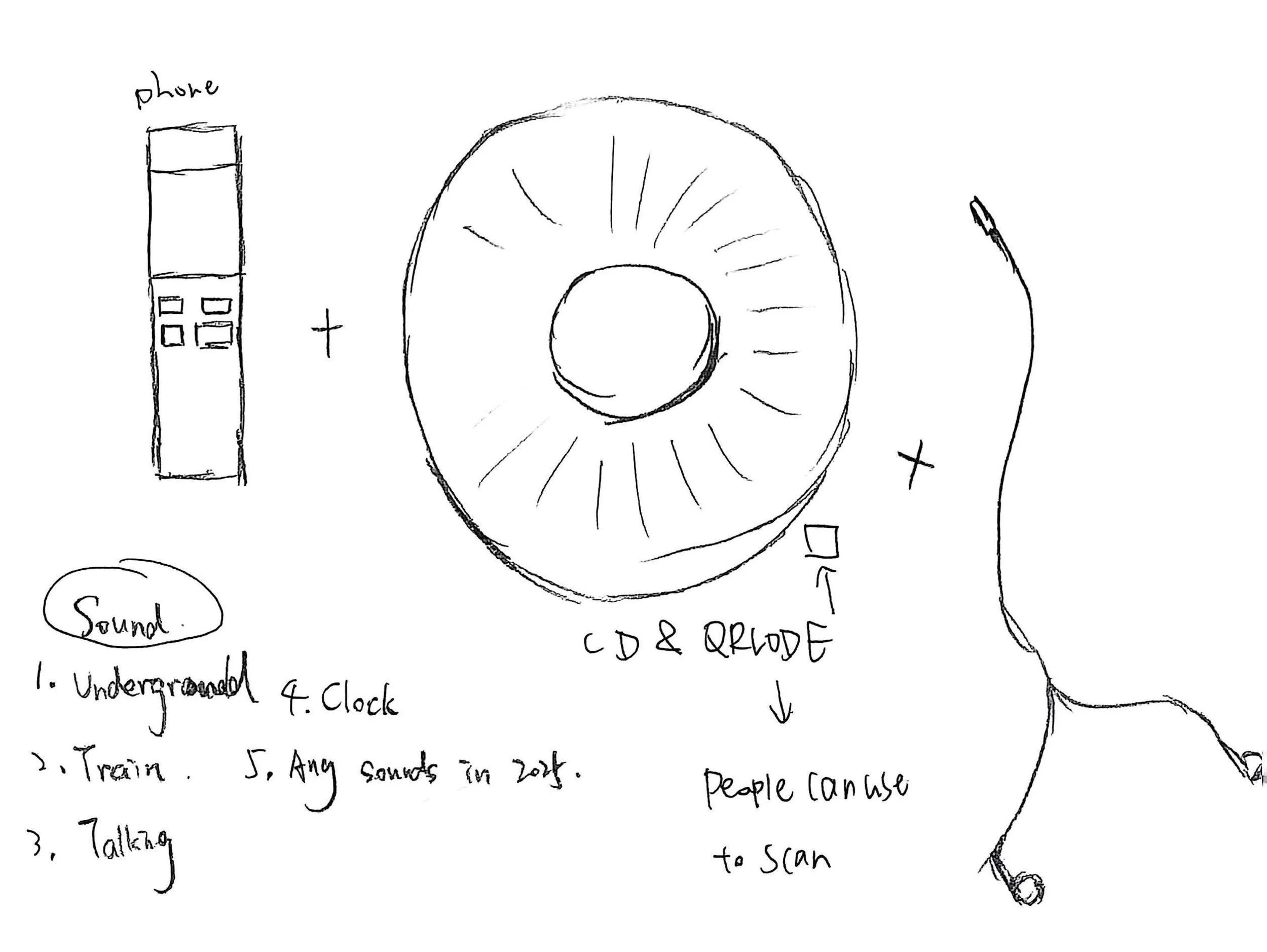
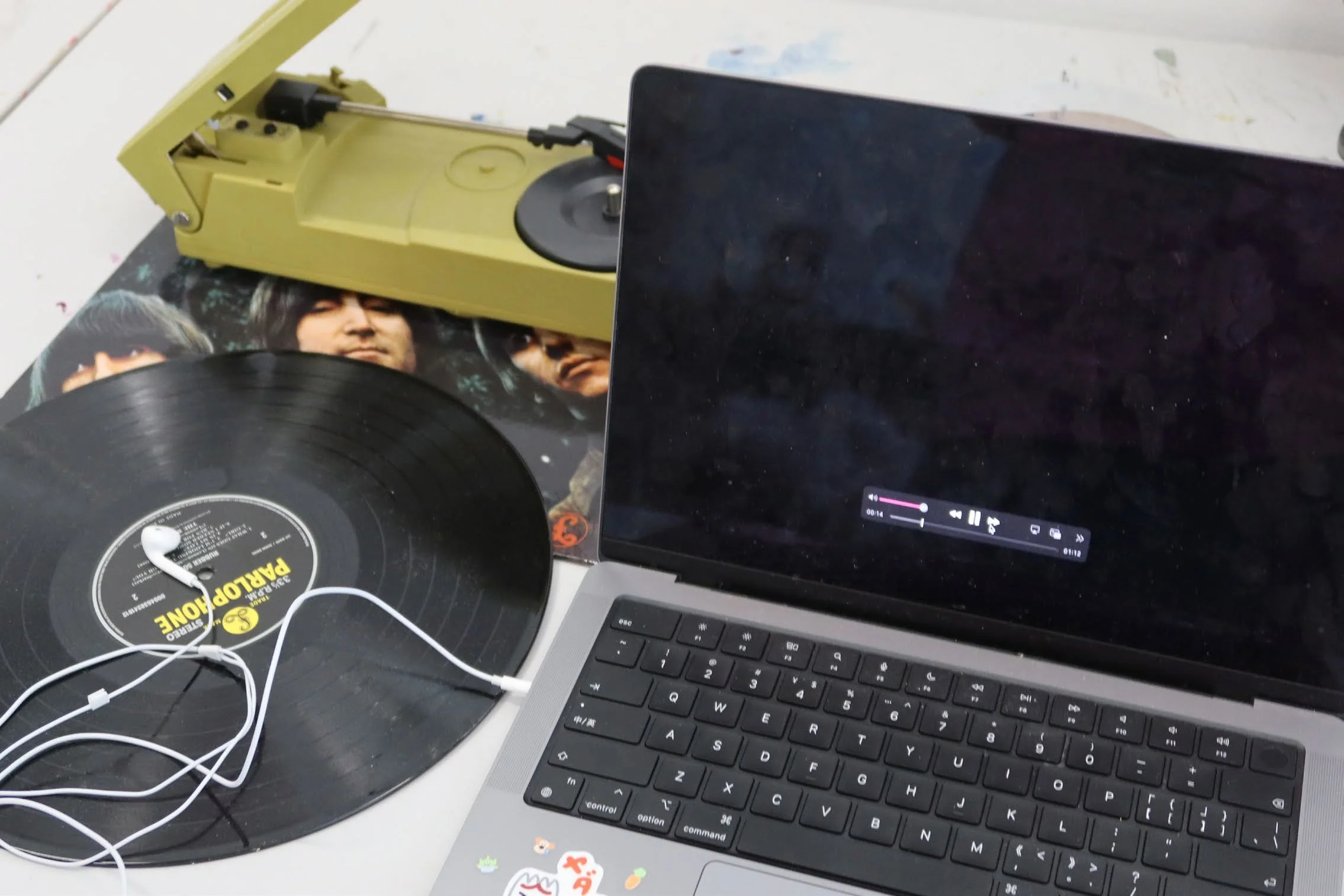
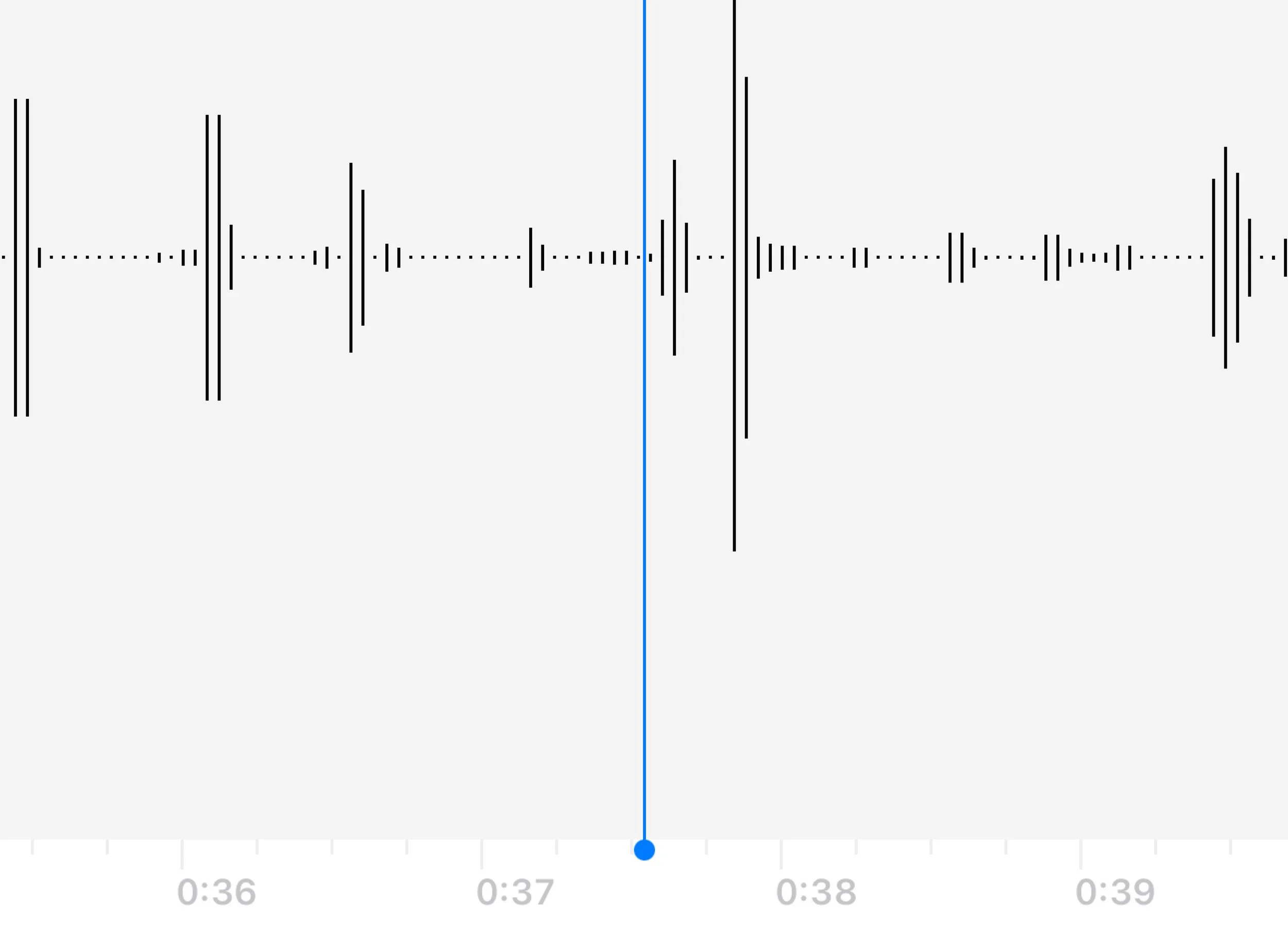
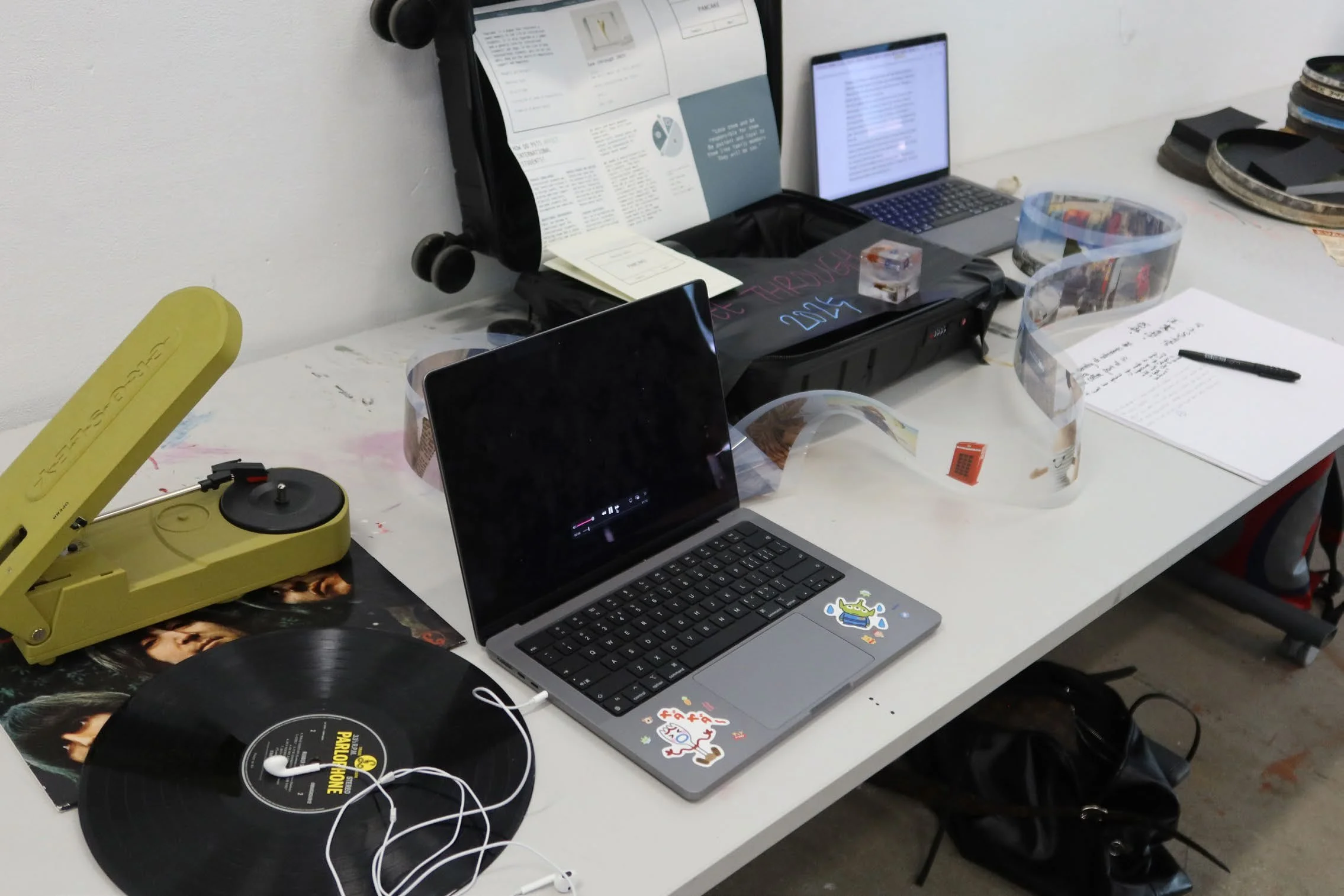
We recorded sounds to create a visual and auditory experience. Just watching the film won’t bring you into the life of 2025. So we created some background music. You can enjoy it with the music when you open the time capsule.
5.INTRODUCTION MAKING
VISUAL REFERENCE
SKETCH
TO EXPLAIN WHAT IN SUITCASE
—ARCHIVE FINAL
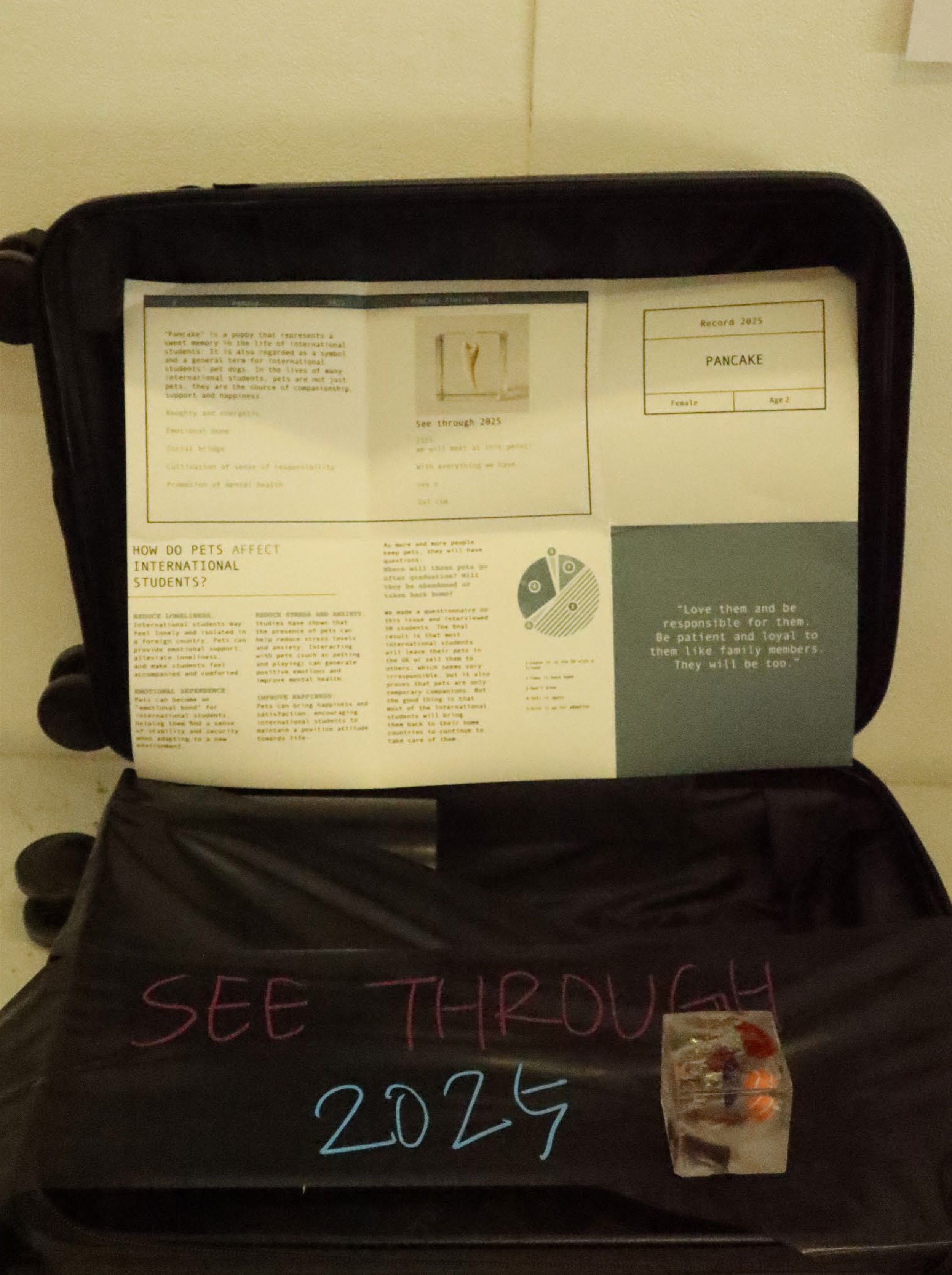
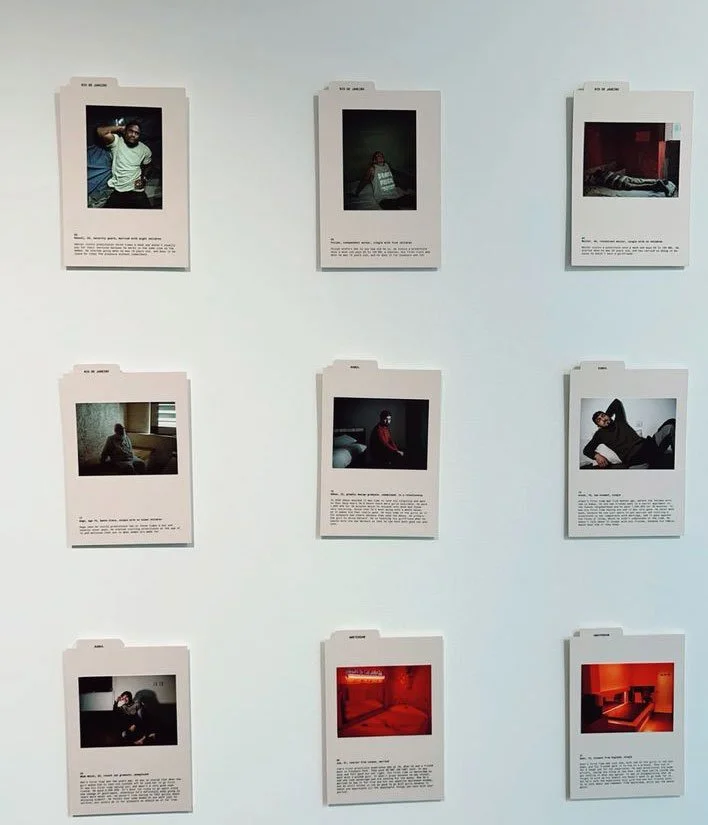
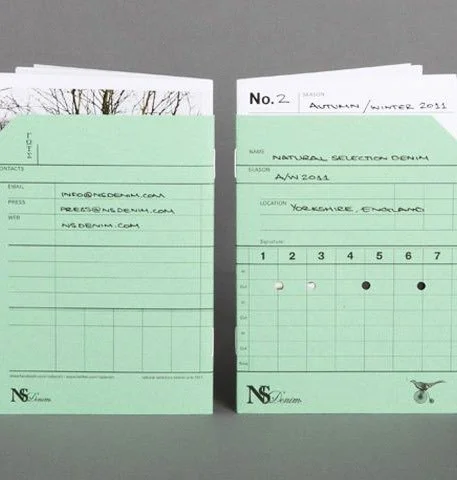
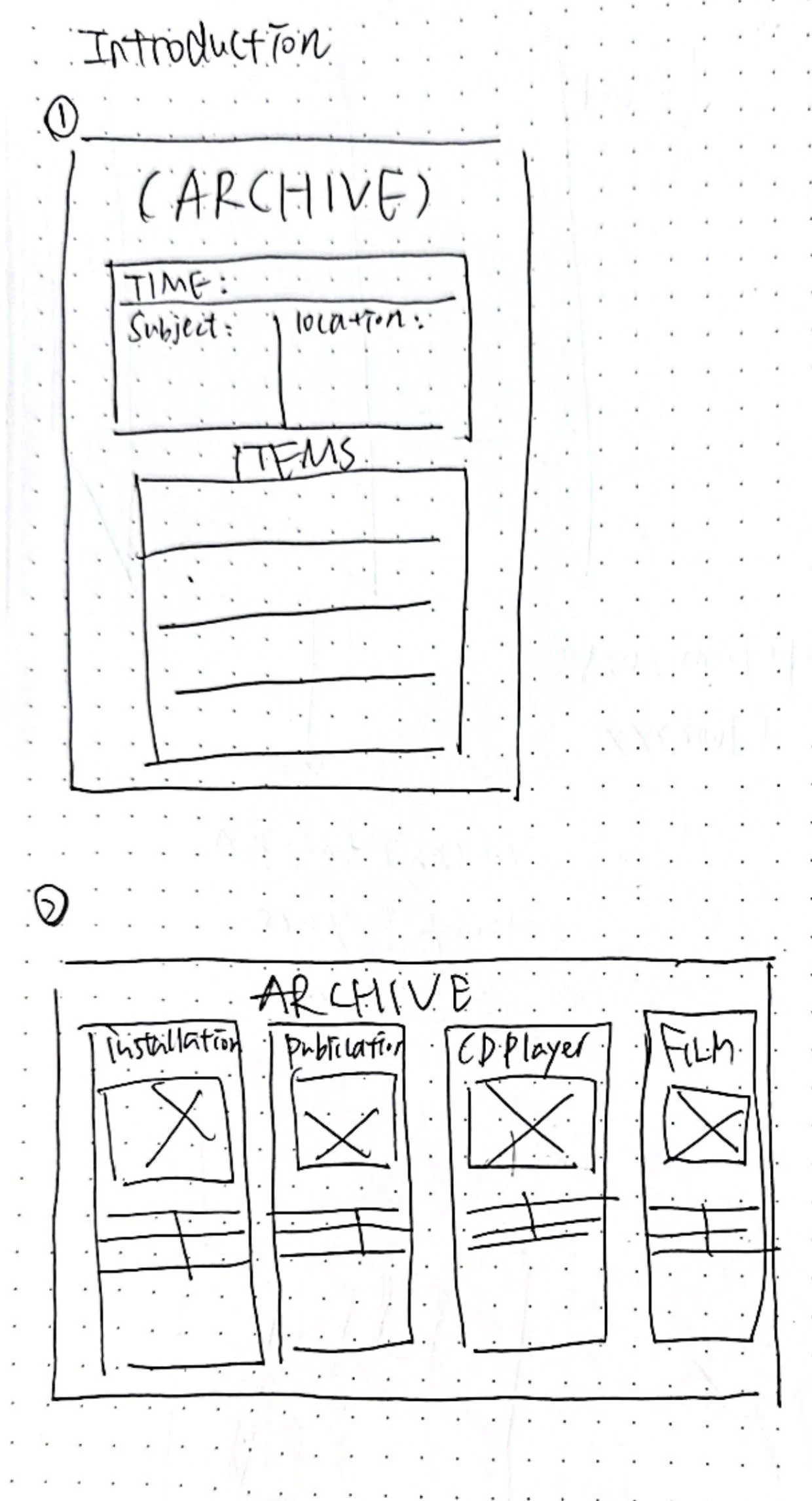
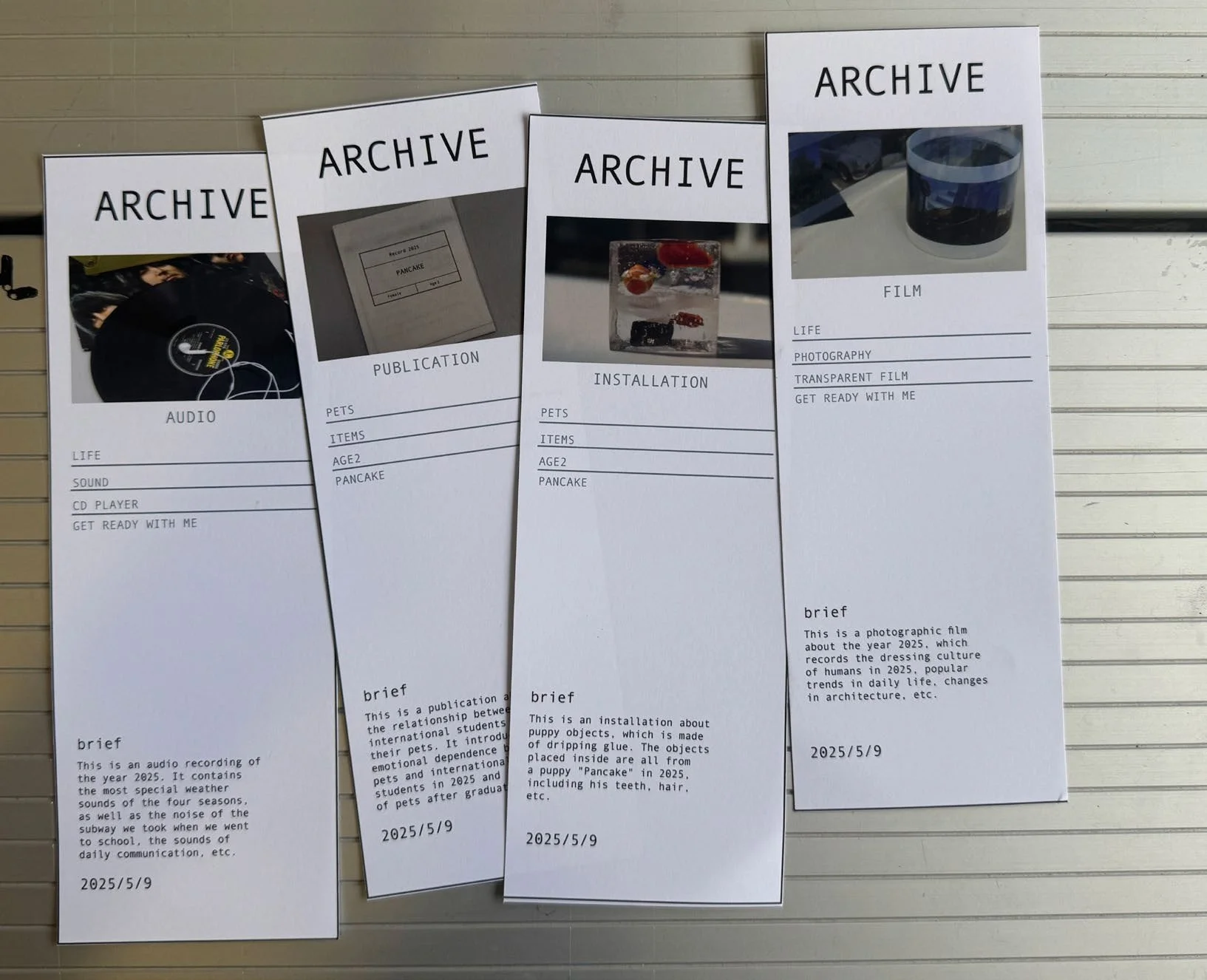
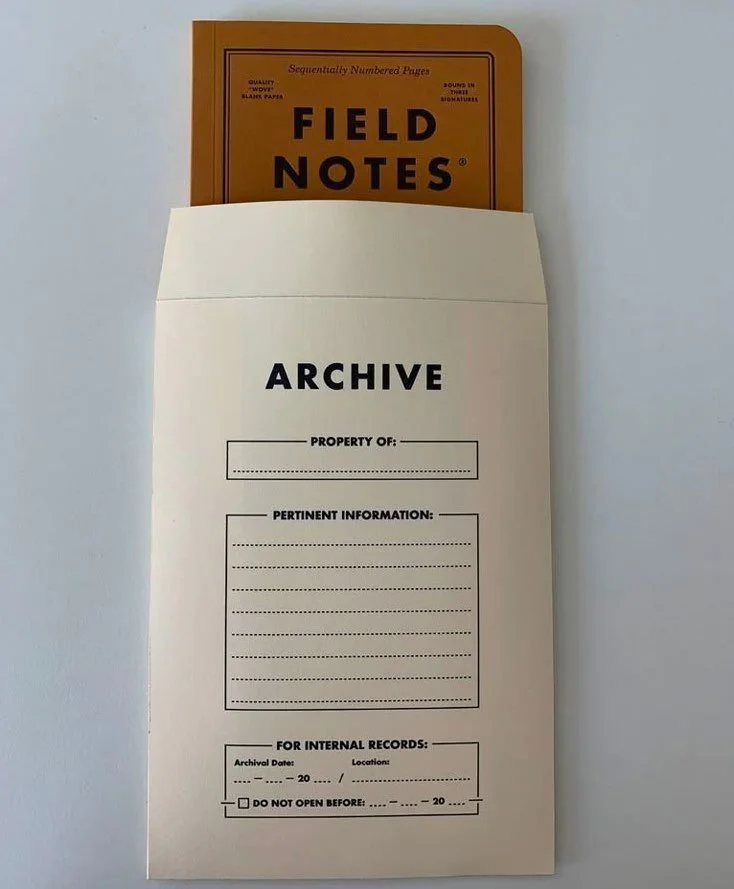
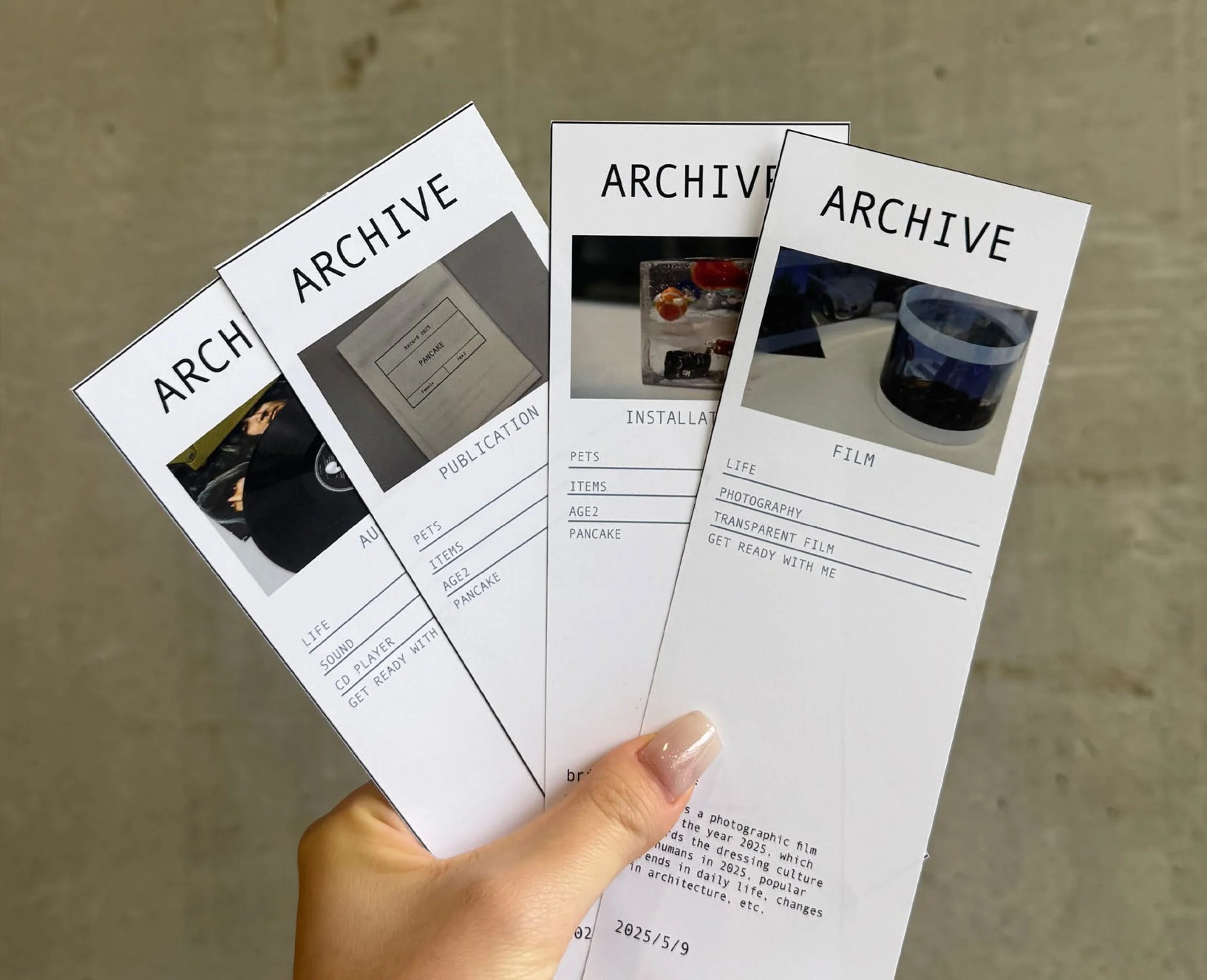
I created a perforated document that contained all the explanations and process for the outcome.
FILM
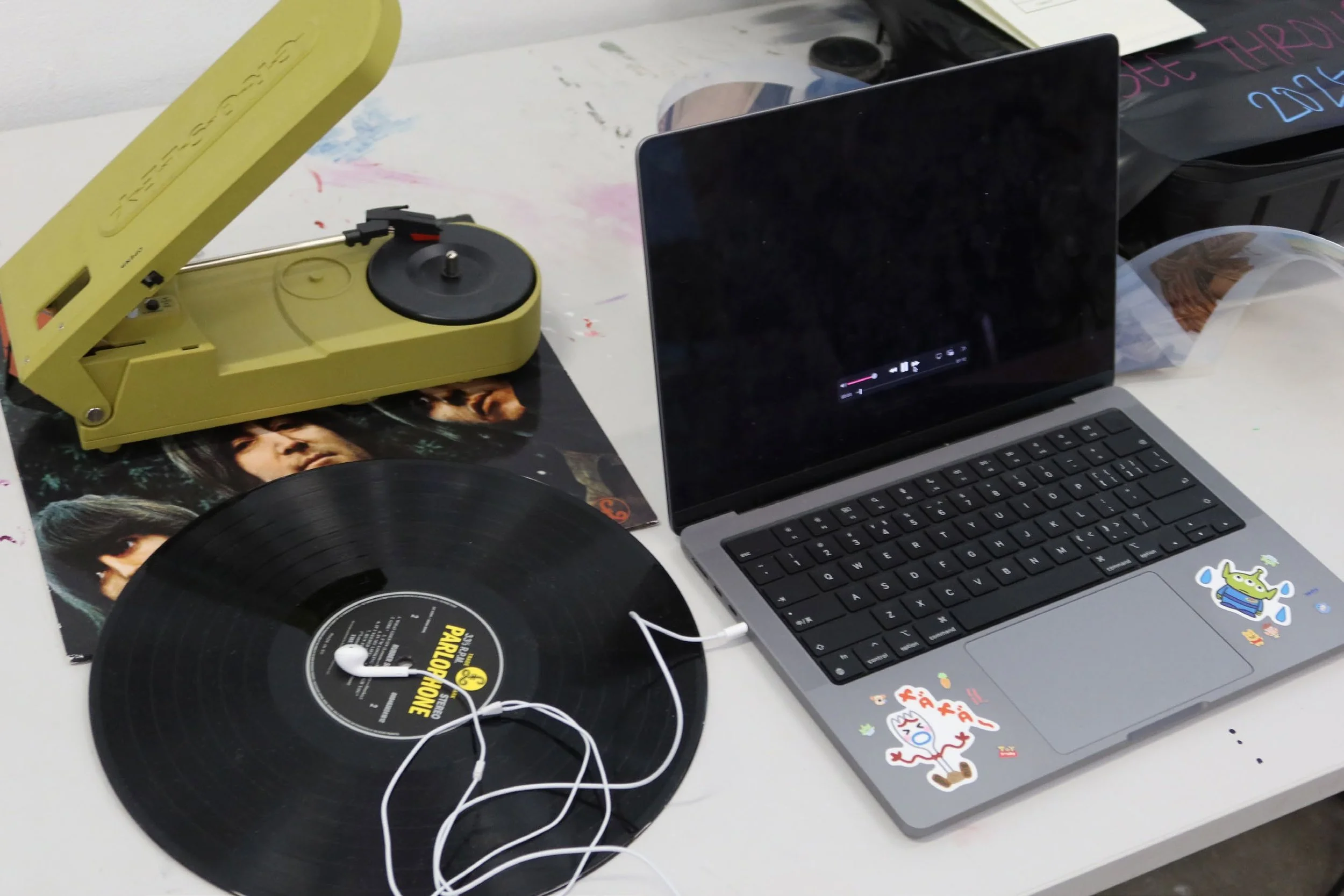
AUDIO
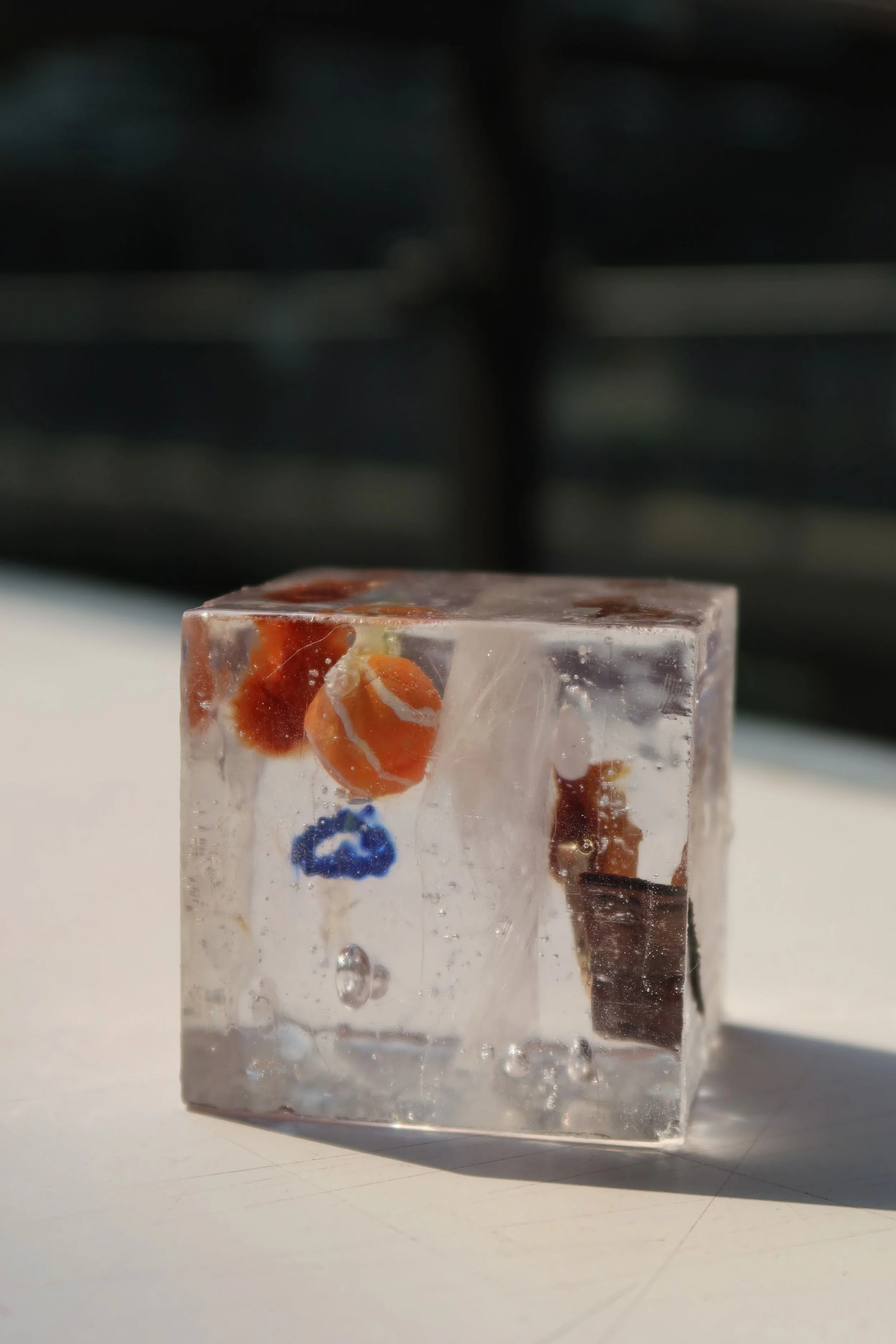
INSTALLATION
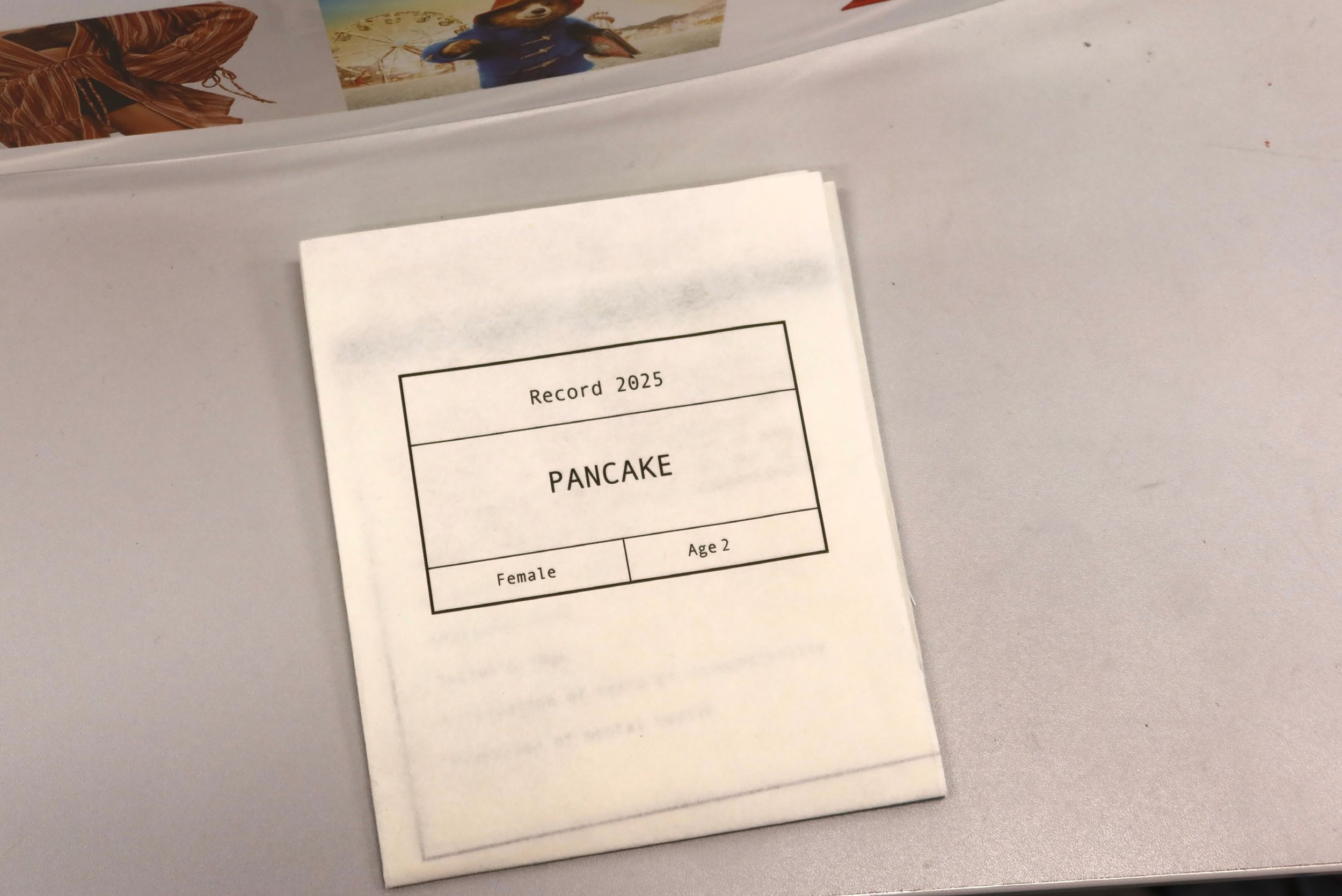
PUBLICATION
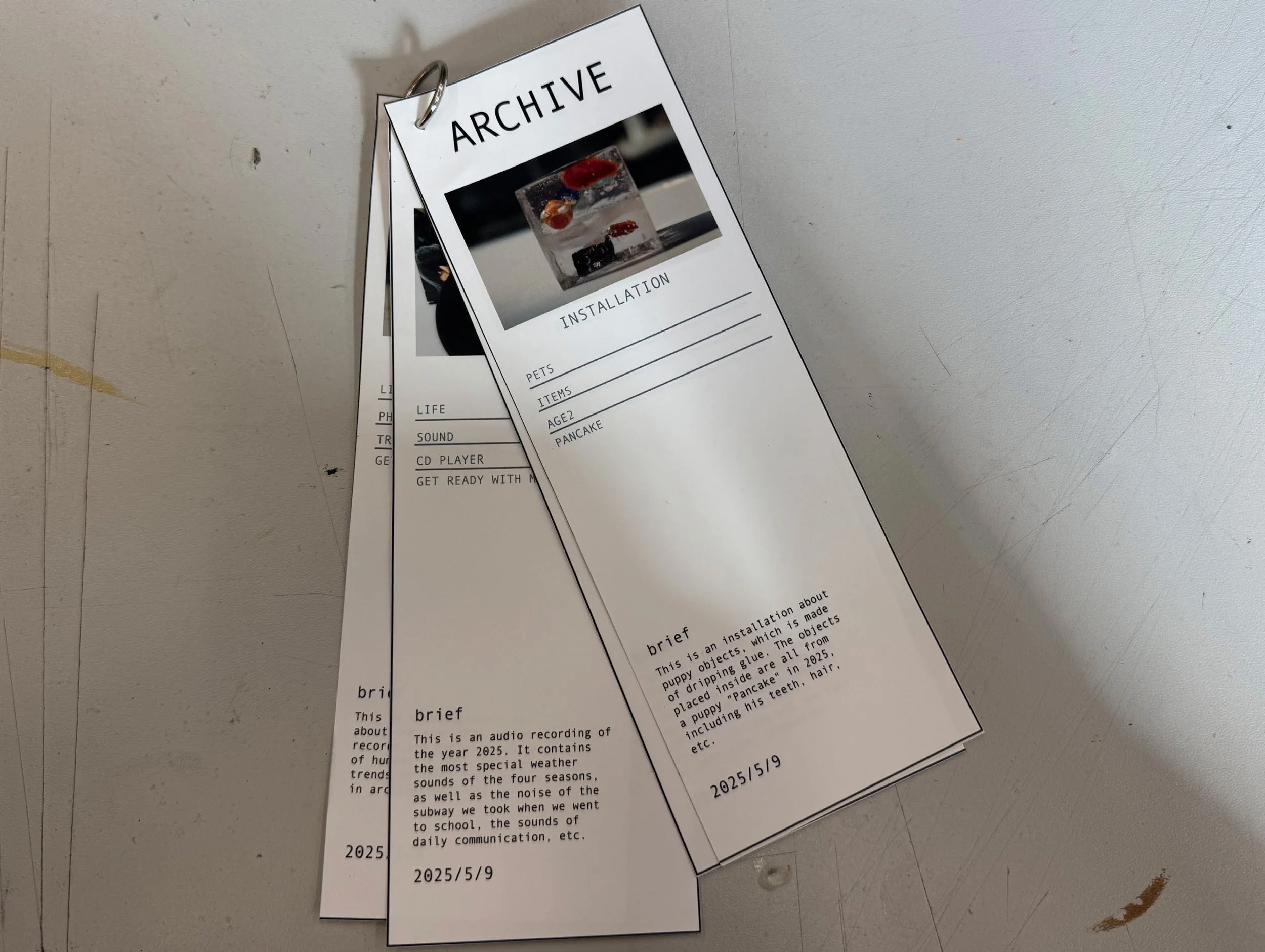
ARCHIVE
OUTCOME
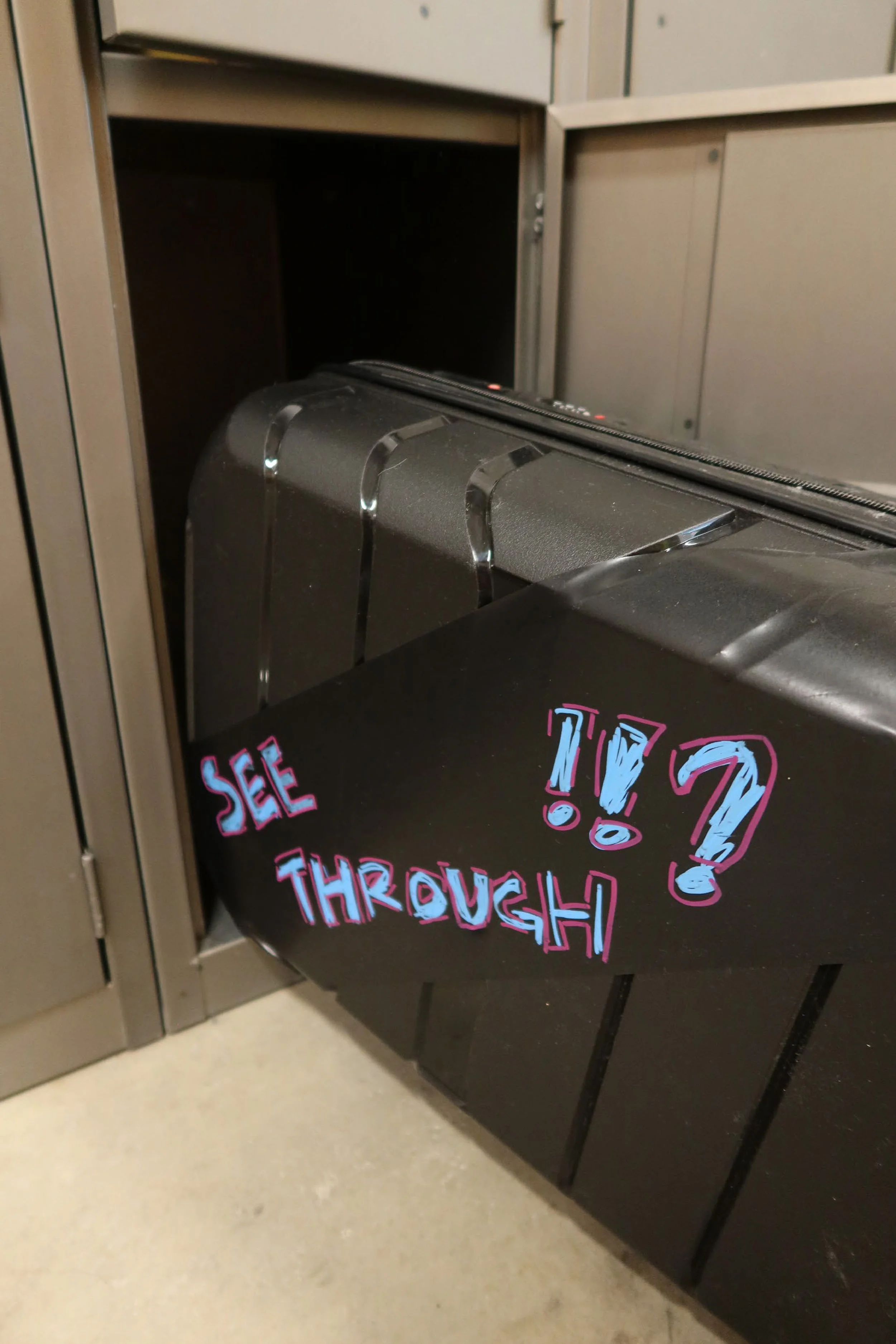
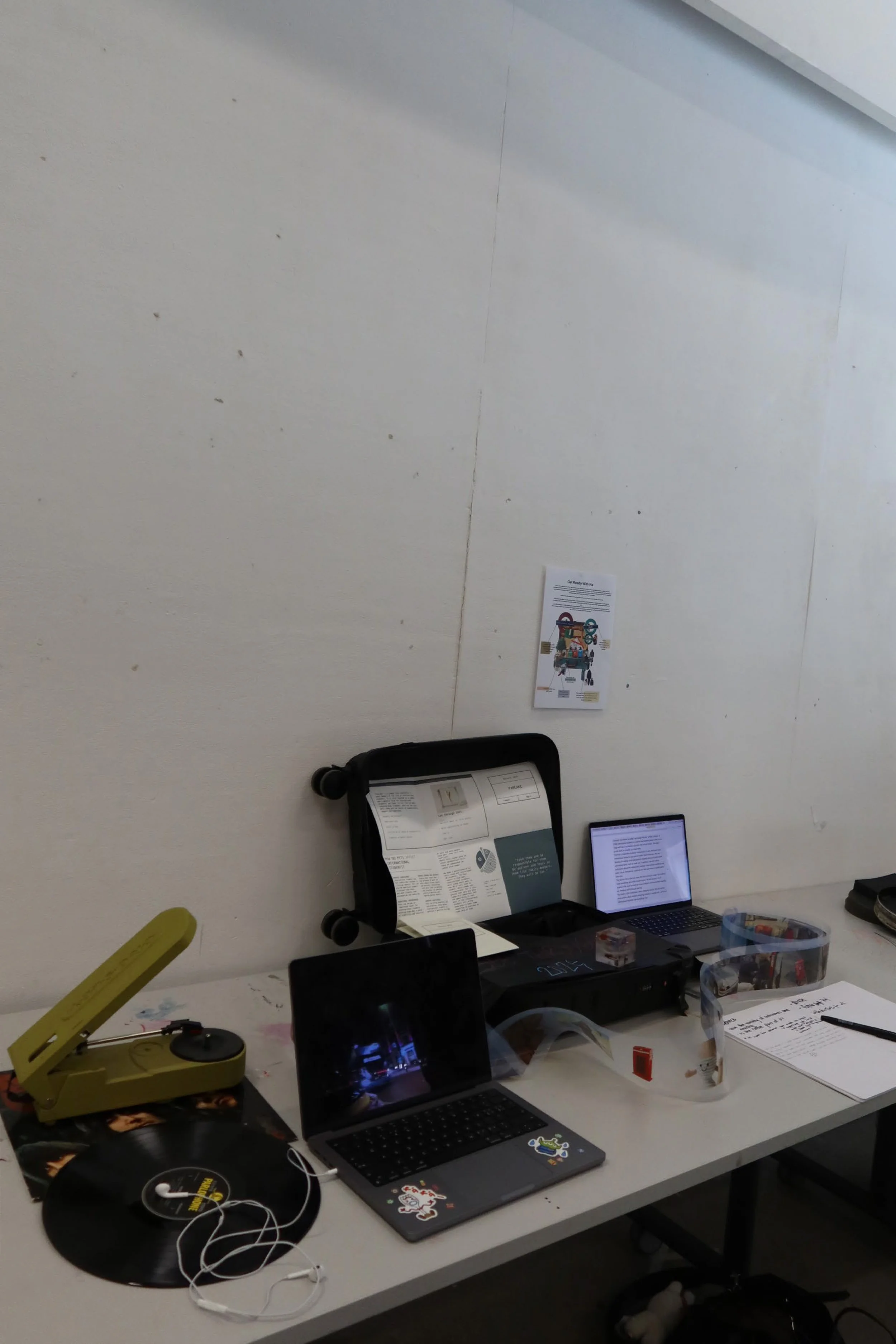
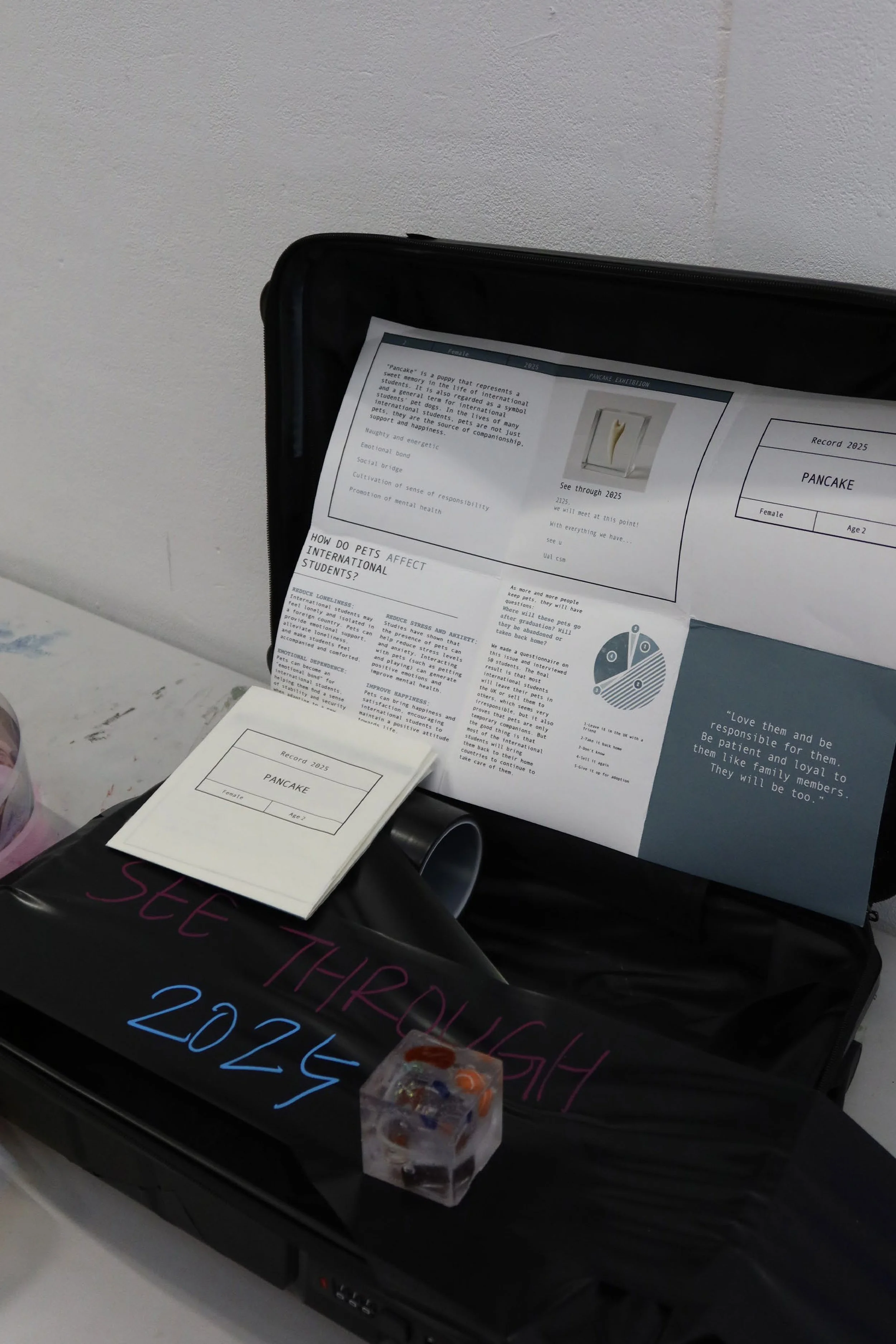
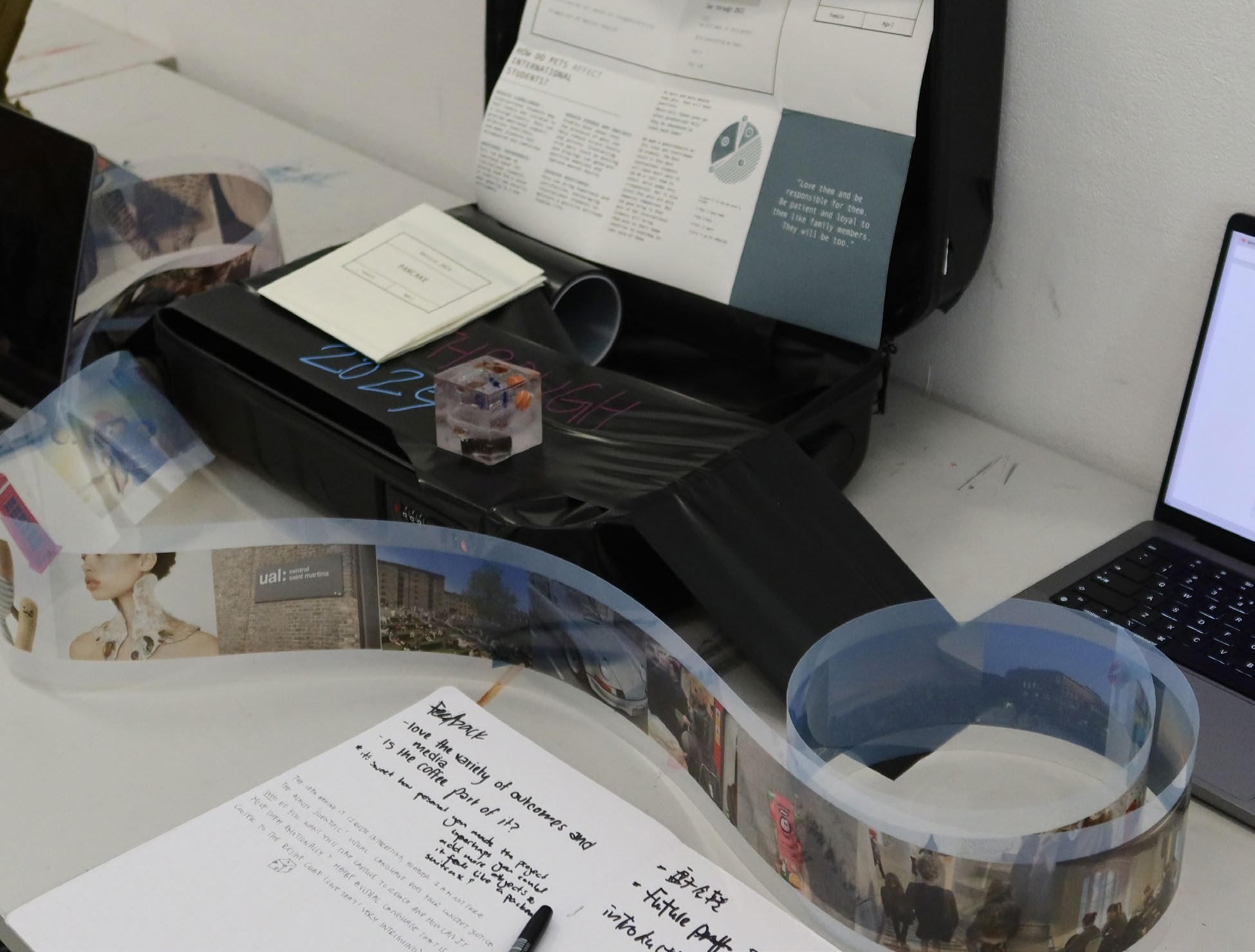
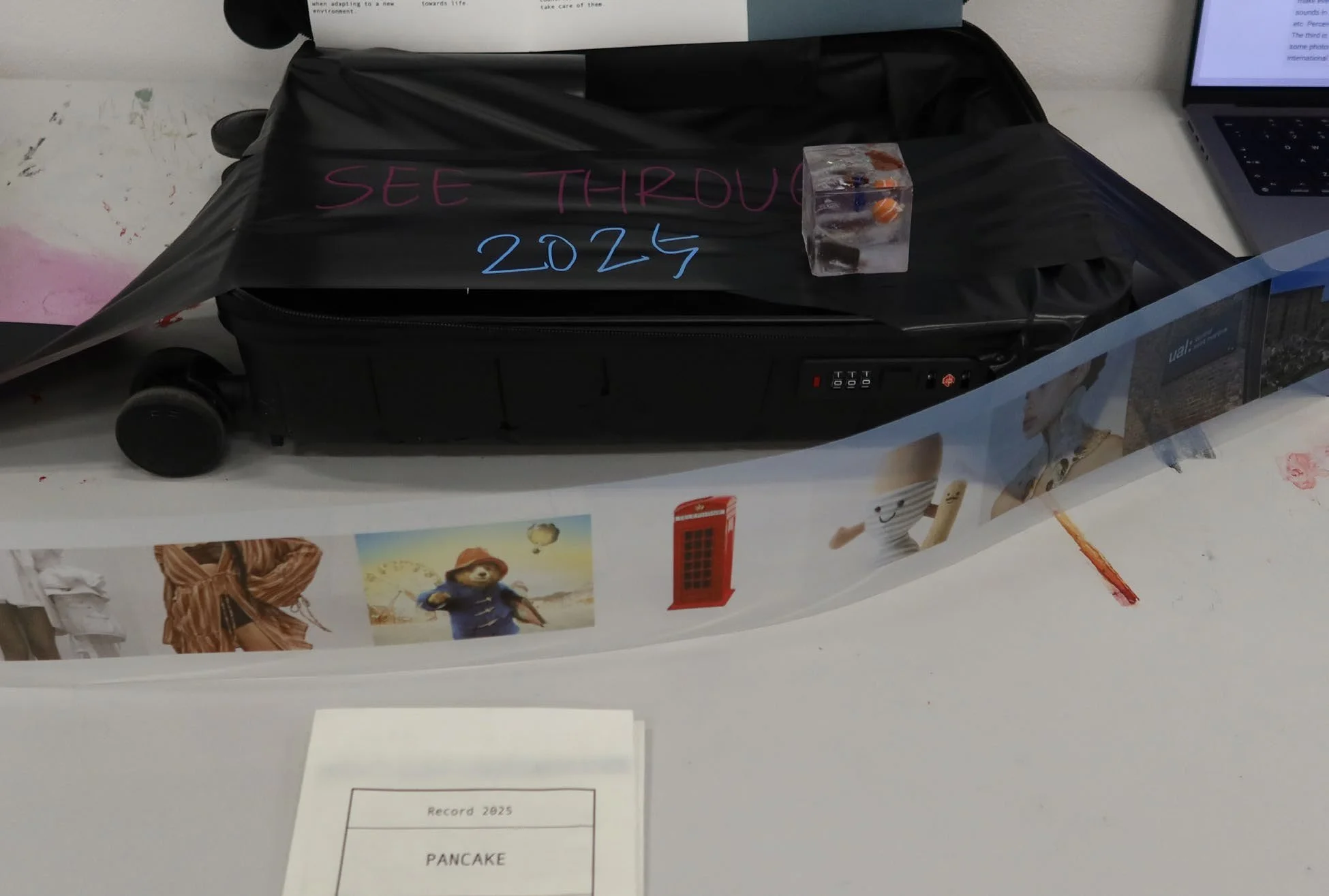
We simulated an unboxing process in the open studio, and then took out everything in the box for display.
OPEN STUDIO
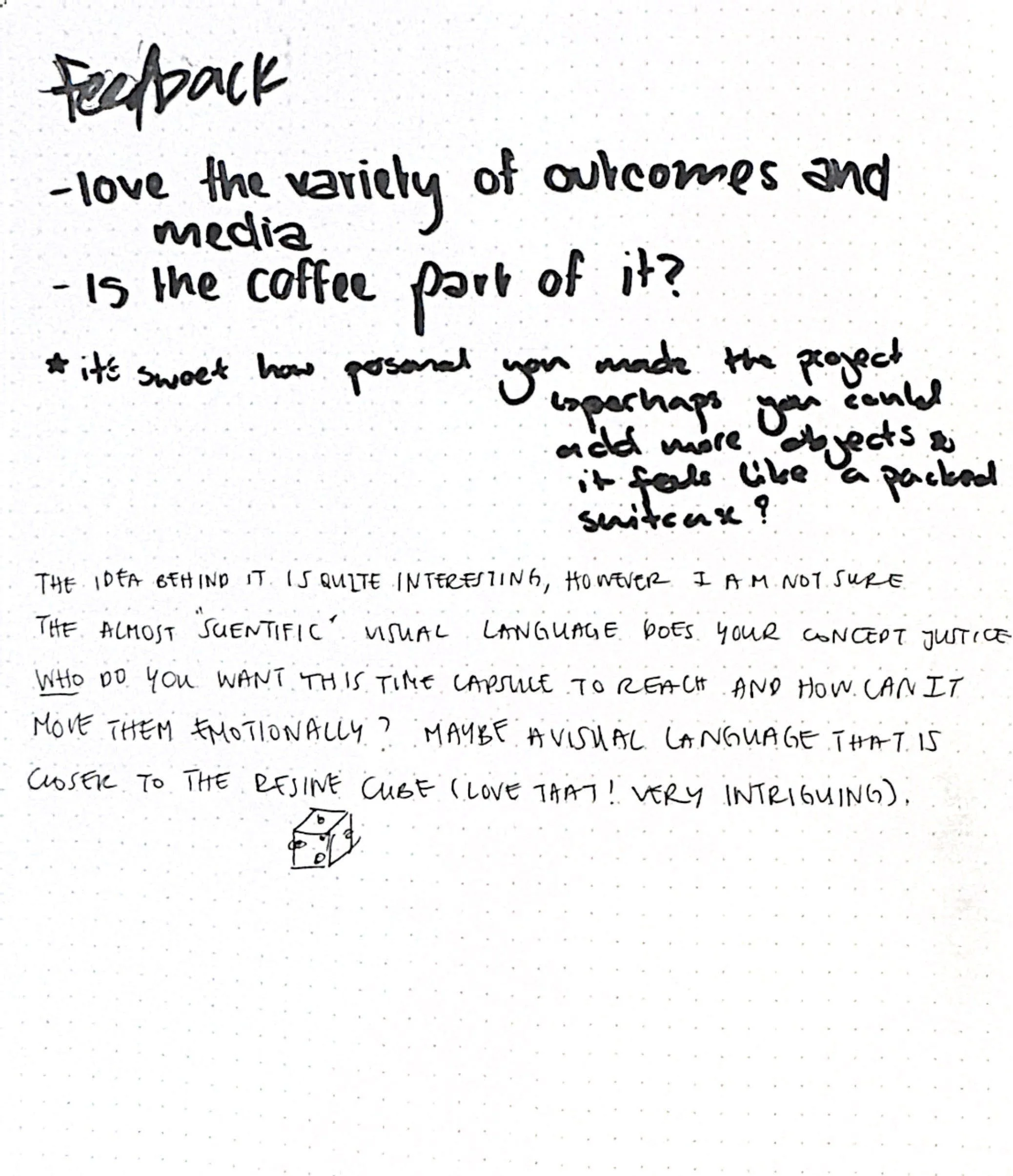
FEEDBACK+RELISATION
When summarizing the feedback after Open Studio, I realized that the core problem was that when people opened the time capsule, they felt that the content was not expressed clearly enough, and they still could not accurately understand the meaning of each item inside. Therefore, based on the team's suggestions, I designed an archive system to ensure that each item had a clear name and brief description in the display, and detailed their discovery process. This adjustment made me deeply realize that the most important thing for future expression is the clear presentation of content, including the description of each step and the documentation of the process. In addition, I also realized that it is very important to clarify the target audience - only by understanding the user group can we truly "prescribe the right medicine" and make the content more targeted and effective. This process made me realize that clear communication and accurate audience definition are the key to project improvement, and it is also the part that I need to continuously strengthen and improve in the future.
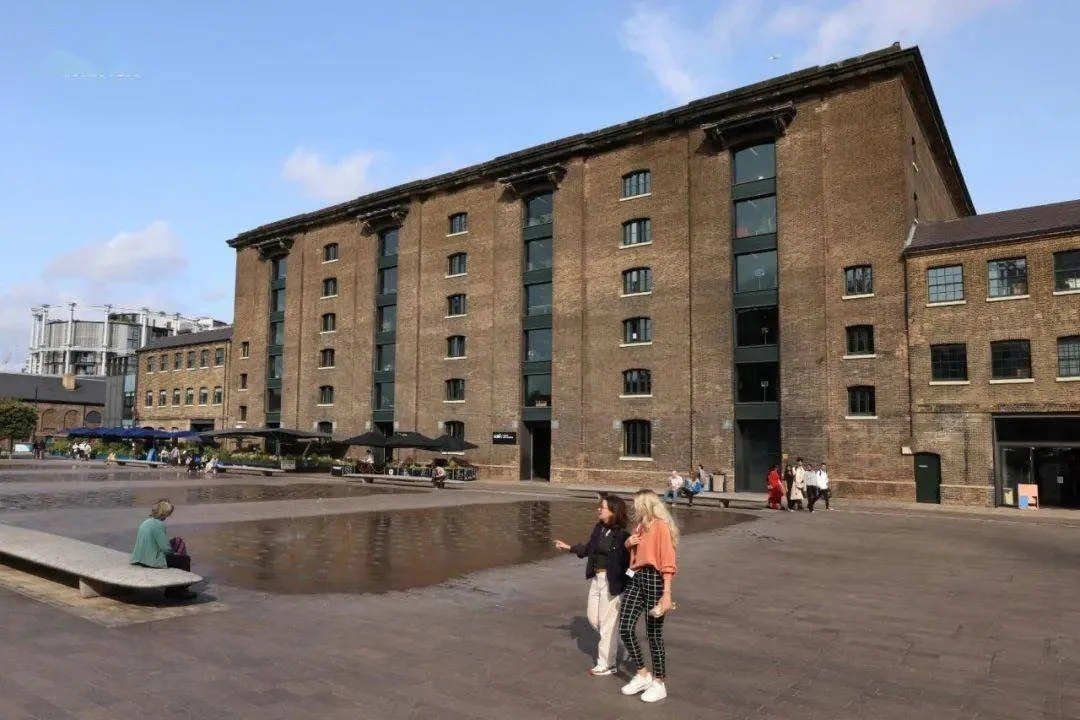
CONTEXT -STREET AS STAGE
"In choosing the location for the time capsule, I was deeply influenced by the 'energy' of Central Saint Martins itself. Drawing on Pierre Nora's concept of lieux de mémoire (sites of memory), the school locker became more than just a storage space; it transformed into a symbolic location. Just as Nora argues that lieux de mémoire become central to collective identity and history, the locker encapsulates the daily life, aspirations, and shared experiences of students within the hallowed halls of CSM. This resonates with Maurice Halbwachs's theory in On Collective Memory, which emphasizes that memories are socially constructed and maintained. Placing the time capsule within the CSM campus aims to foster an emotional connection for future students upon its opening, prompting reflections on the past and continuities with their own experiences. Inspired by the school's unique balance of historical resonance and contemporary vibrancy, the school locker becomes a tangible link between generations. Furthermore, according to the audience selection this choice has made to create an effective dialogue with this location."
Nora, P. (1989) 'Between Memory and History: Les Lieux de Mémoire'. Representations, 26, pp. 7-24.
Relph, E. (1976) Place and Placelessness. London: Pion.
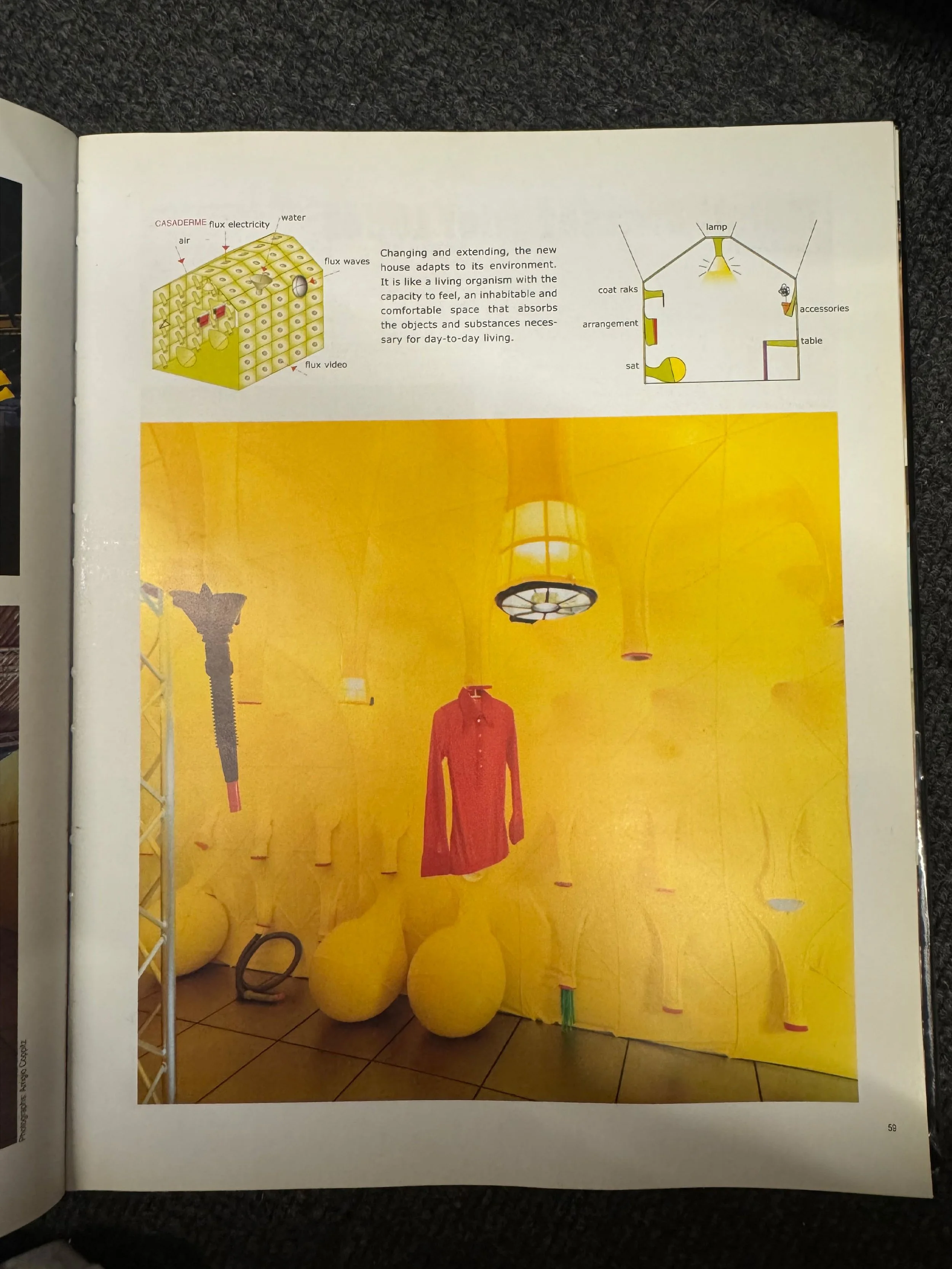
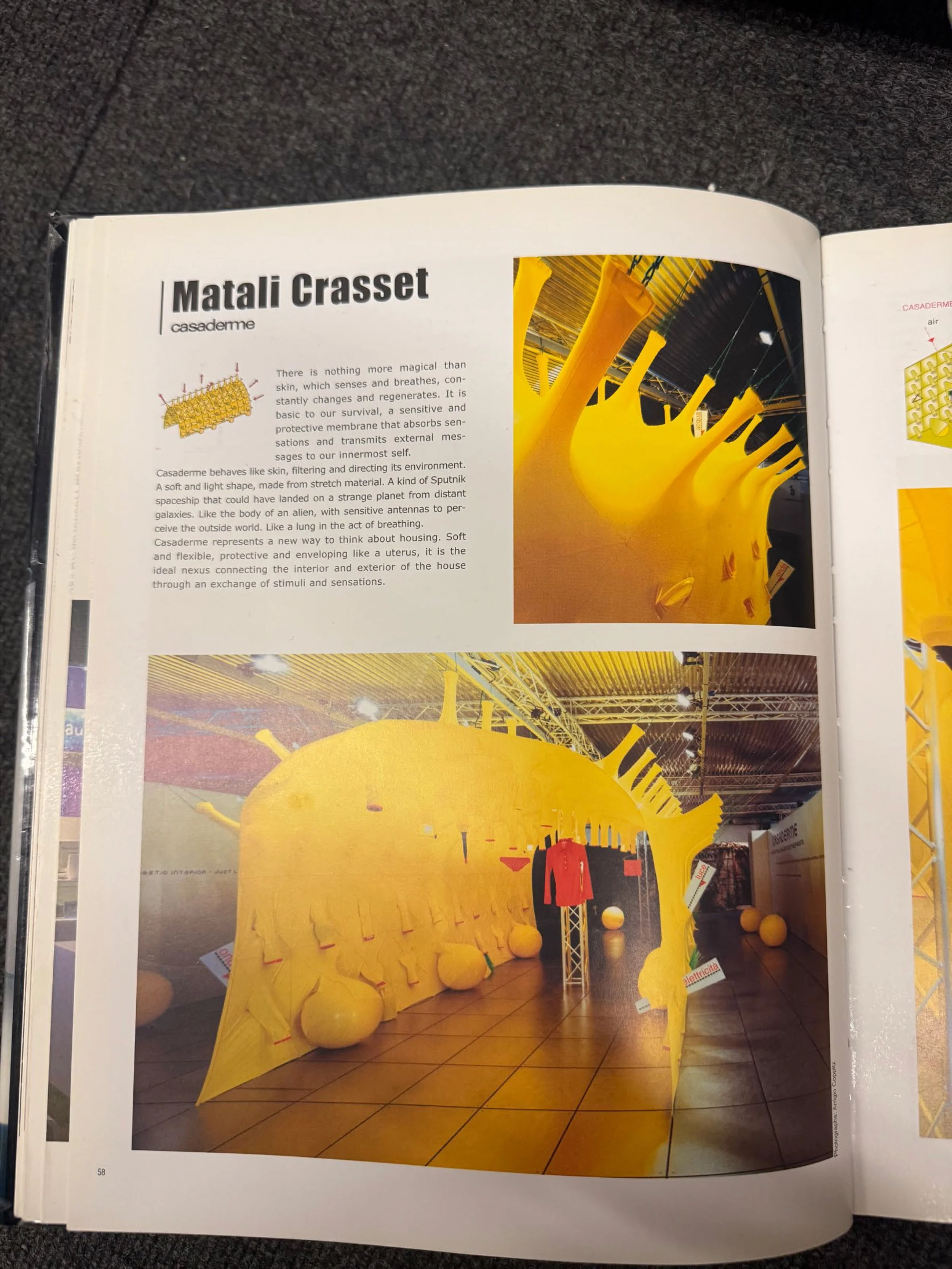
MATALI CRASSET
This reference made me realize that communication is not just a one-way expression, but also a dialogue. The key is to understand the audience, establish connections, and then guide them into the world of the work in an appropriate way. This is also the direction of my continuous improvement in the future - based on a clear audience positioning, learn to communicate with the audience in a more targeted and creative way, making every communication more real, in-depth and meaningful.
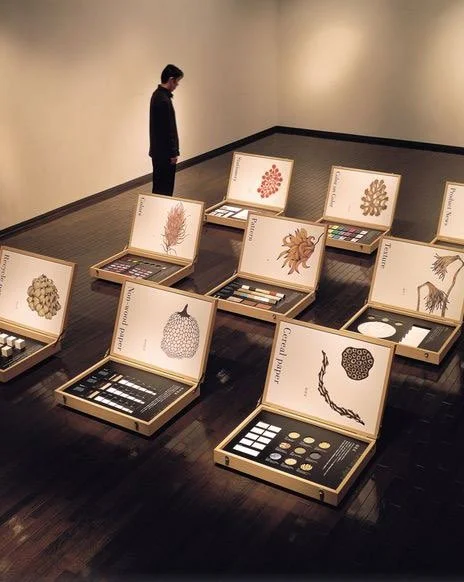
The determination of the location can bring different visual effects to the audience. Different installation styles and layouts will bring different visual impacts.